
Yes, you brush your teeth – but do you use mouthwash too?
Many do, even if it’s just to make their breath minty fresh.
But does mouthwash really do anything else, and how should we be using it?
A dentistry professor and a consumer protection researcher offered us some surprising facts.
What are the benefits of mouth rinses?
Unlike mouthwashes, which have to be diluted with water, mouth rinses are available ready to use from supermarkets, chemists or pharmacies.
They advertise their protection against bleeding gums or dental plaque.
And they can actually be “a very useful addition to oral hygiene”, says Stefan Zimmer, professor of tooth preservation and preventive dentistry at Witten/Herdecke University in Germany.
The antibacterial active ingredients in mouth rinses are good against bleeding gums, and thanks to the fluoride they contain, the tooth surface becomes more resistant to acids.
But that does not mean that you can skip other steps in dental care.
Mouth rinses cannot replace your toothbrush.
Another part of daily oral hygiene is a fluoride toothpaste and tools to clean between the teeth, such as dental floss or interdental brushes.
“We know that many people find these aids difficult to use and therefore often don’t realise their full benefits,” says Prof Zimmer.
In such cases, mouth rinses can be just as effective as dental floss.
Mouthwashes are particularly recommended for people who, for medical reasons, can no longer work thoroughly and reliably with a toothbrush or interdental brush and also for anyone who is at increased risk of tooth decay.
“Mouthwashes are also essential for teenagers with fixed braces,” says Lea Lukas, who tests oral hygiene products at a consumer watchdog in Germany.
How should we use mouthwash?
Mouthwash is simpler in practice than brushing teeth.
The amount indicated on the packaging – often 10ml – should be used to rinse the mouth for 30 seconds.
It’s important to use the right technique.
“Many people think it’s good to gargle with mouthwash solutions, but that doesn’t achieve much,” says Prof Zimmer.
Instead of working in the throat, the solution should work on the teeth, which is why you should move it back and forth in your mouth.
“You should also try to push the solution between your teeth so that it can work in the spaces between your teeth,” he says.
Then spit it out thoroughly.
“It is very important not to swallow the product.
“After spitting it out, don’t rinse with water either,” says Lukas.
Experts recommend using mouthwash solutions once or twice a day, depending on your needs.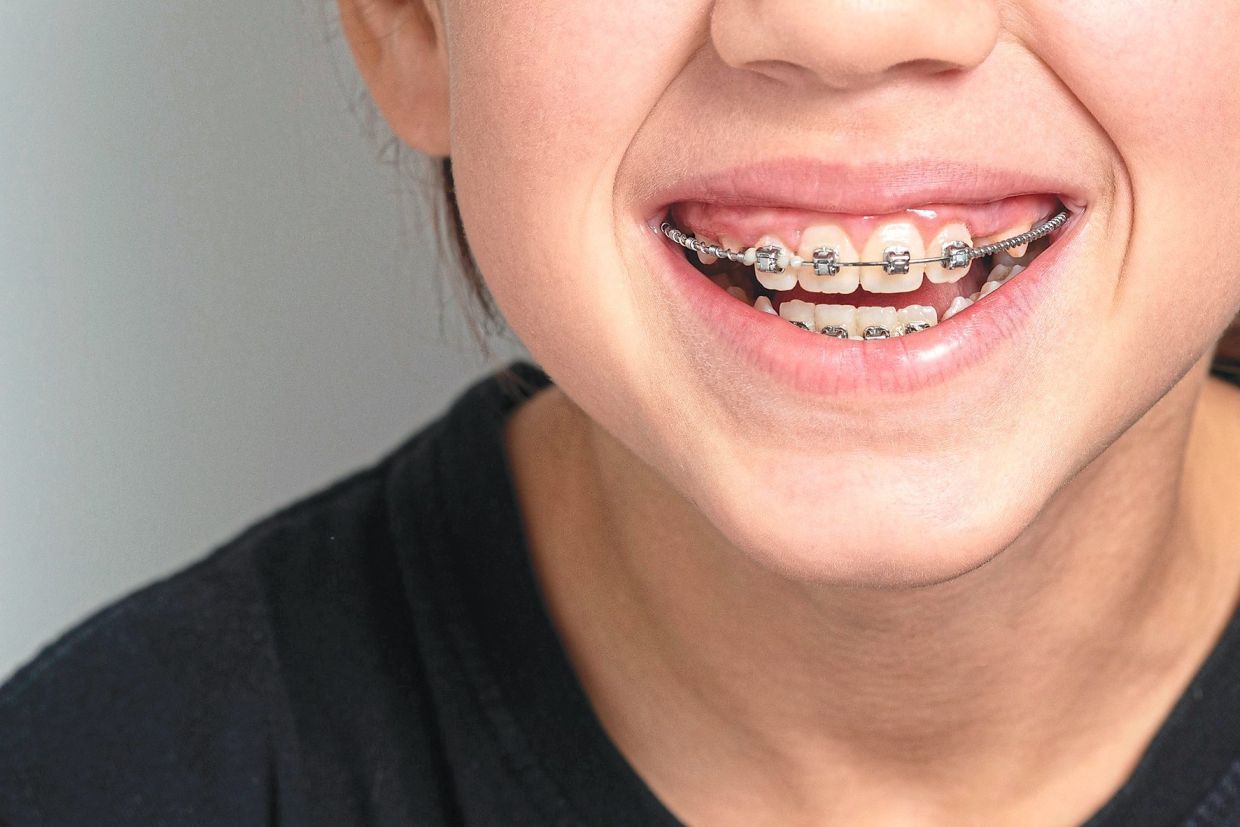
What to look out for when buying?
The sharper, the more effective?
Not really as the flavour has no influence on the effect of the mouthwash.
If you want to prevent tooth decay, make sure that it contains fluoride.
“The more fluoride it contains, the better the effect against tooth decay,” says Prof Zimmer.
On average, the fluoride concentration is between 200ppm and 500ppm (parts per million).
However, people with a high risk of tooth decay can also use higher doses of mouthwash.
If you want to combat bleeding gums, you should look out for antibacterial ingredients.
These could be chlorhexidine, zinc, cetylpyridinium chloride or essential oils.
Lukas says some groups of people such as pregnant women, people suffering from alcoholism, children and teenagers should make sure that the mouthwash solution does not contain alcohol.
Alongside the ingredients, taste also plays a role.
“You can certainly make sure to choose a mouthwash solution that you find pleasant in terms of flavour and sharpness so that you can use it reliably,” says Lukas.
From what age can children use mouthwash?
Children should only use mouthwashes from the age of around six – and always alcohol-free ones.
In other words, they should only use them when they can spit them out safely.
Then the solutions can become real helpers, because “children and teenagers are sometimes rather careless when brushing their teeth,” says Prof Zimmer.
Lukas says mouthwash solutions can be really useful at the point when your child’s teeth are changing, when their milk teeth fall out and first adult teeth grow in.
“Then parents can offer mouth rinses as a supplement.
“However, the products are no substitute for thorough tooth brushing,” she says.
Can mouthwash be harmful?
Some antibacterial substances and essential oils can lead to superficial discolouration of the teeth.
However, these can be removed again with the help of professional teeth cleaning, says Lukas.
And what about the suspicion that there could be a link between mouthwash and cancer, which was widely reported not long ago?
That came after a study by the Faculty of Medicine in Antwerp, Belgium, which was published in the Journal of Medical Microbiology.
The research team was able to detect a change in the bacterial composition in the mouth of 59 test subjects who used a specific mouthwash over a period of three months.
A bacterium that is associated with stomach and oesophageal cancer was found to be more prevalent.
“We have discussed this study with experts and consider it to be of little significance,” says Lukas.
However, the alcohol contained in some mouthwash solutions could become a problem.
It is converted into acetaldehyde in the body, Prof Zimmer says, a substance classed as carcinogenic.
However: “The contact time with a mouthwash solution is very short, so the concentration of acetaldehyde in the body is relatively low,” he says.
So you cannot assume there is a health risk from the use of mouthwash solutions containing alcohol alone.
“However, in combination with other risk factors such as poor oral hygiene, alcohol or smoking, mouthwash can slightly increase the risk of cancer,” says Prof Zimmer.
He therefore recommends using mouthwashes without alcohol if possible. – dpa