
We have all seen nurses tending to patients and wondered if we could ever do the same at home.
For many of us, there comes a time when caring for our own parents or elders is no longer a choice, but a responsibility.
It can feel overwhelming, but knowing the right approach makes all the difference.
With patience, proper skills and a little preparation, you can provide care that not only keeps your loved one safe and comfortable, but also preserves their dignity and quality of life.
Necessary traits
Looking after an elderly person at home can be both mentally and physically exhausting.
At times, the demands of caregiving can lead to sleep deprivation and emotional fatigue, especially when the elderly person is fully dependent on you for daily tasks such as feeding, toileting, changing clothes and managing diapers.
In such situations, it is essential for you to remain calm, patient and understanding.
Maintaining proper hygiene and personal care is essential for the health, comfort and dignity of elderly individuals, especially those who are partially or fully dependent on you.
This helps the elderly feel comfortable and respected.
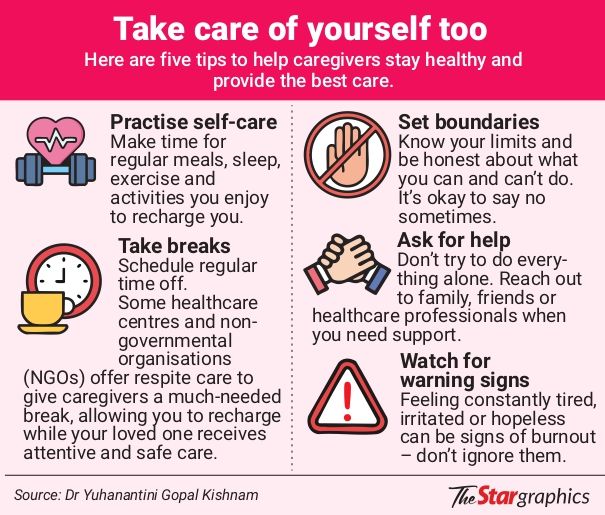
One thing that is often overlooked is the caregiver’s own hygiene and personal care skills.
You too need to be comfortable and maintain your own hygiene in order to perform your best and ensure your charge is clean and comfortable (see Take care of yourself too).
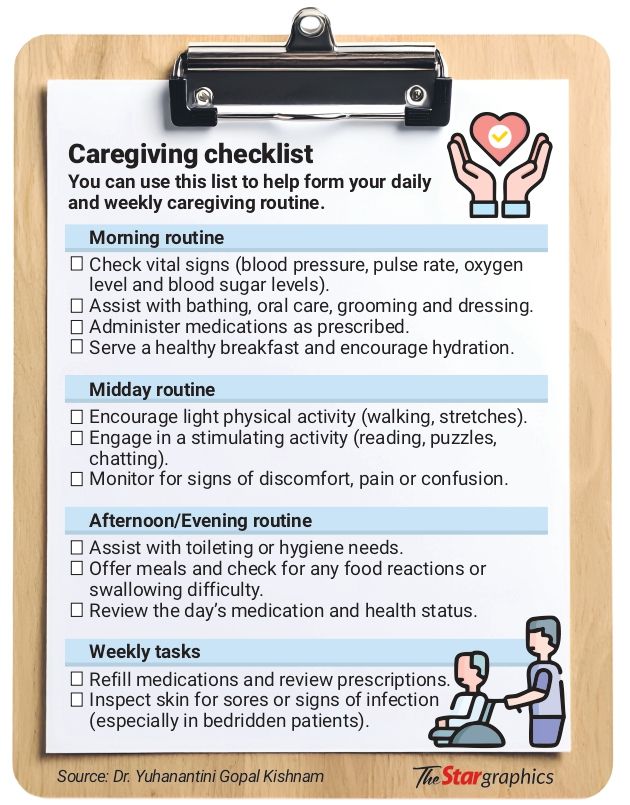
It is also important to possess time management skills as your charge will have a daily schedule for medications, meals and activities.
Managing time efficiently helps keep things organised and makes the environment less stressful for both you and the patient (See Caregiving checklist).
Know your charge’s condition
It becomes much easier for you to manage elderly individuals when you understand common chronic diseases such as dementia, diabetes, arthritis and stroke, and recognise their warning signs.
For example, individuals with dementia often experience memory loss and tend to ask repetitive questions.
If you are aware of these typical symptoms and can recognise early warning signs, you will be better equipped to respond with patience and implement the appropriate care strategies.
Caregivers should also know what to do during emergency situations like falls, stroke or allergic reactions.
Basic first aid skills like cleaning small cuts, helping with choking and treating minor burns are important.
ALSO READ: Putting together a family first aid kit
A caregiver should also learn safe techniques to help with walking, transferring or toileting to prevent any falls or injuries.
Knowing possible side effects of medication is also useful so you know what to expect and can handle the patient accordingly.
Creating a safe zone
You can do this by removing potential hazards first.
Keep floors clear of clutter, use non-slip mats, and remove loose rugs to prevent falls.
This is especially important for homes with people recovering from fractures or surgery.
Secondly, choose good lighting.
Make sure all rooms, hallways and stairs are well-lit, especially at night.
For bathrooms, ensure the floor is dry, and install grab bars near the toilet and shower.
Use a shower chair too.
As for furniture, use sturdy chairs with armrests and beds that are easy to get in and out of.
Lastly, create a calm and clean space by keeping the home tidy and quiet.
This helps to reduce stress and confusion, especially for those with dementia.
Deal gently with emotions
Many seniors feel lonely, anxious or depressed, especially if they live alone or have lost loved ones.
You can make a big difference by offering companionship, encouragement and emotional support.
Spend quality time with them.
Sit and talk, listen to their stories, or enjoy a cup of tea together.
Just being present can make them feel valued.
Also, encourage social interaction.
Help them stay connected with family and friends through phone calls, video chats or visits.
Bring them to family events or outdoor gatherings if possible.
You can also promote hobbies and interests.
Support activities they enjoy like gardening, knitting, reading or listening to music.
This keeps their mind active and brings joy.
If ever they look sad, offer emotional support.
Be patient, kind and understanding.
Let them talk about their feelings and don’t dismiss their worries or sadness.
Lastly, celebrate small things.
Mark birthdays, holidays, or even small achievements.
A simple celebration can bring happiness and help them feel remembered.
Communication skills are crucial
Communication plays a very important role in caregiving.
It helps build trust, reduce confusion and ensure that the elderly person’s needs are understood and met.
For older persons with dementia or hearing loss, communication must be handled with extra care and patience.
Some older adults may take longer to respond, repeat questions or forget things.
Caregivers should stay calm and avoid showing frustration.
Your tone of voice should be gentle, clear and respectful.
Speaking too loudly or in an angry tone can cause fear or confusion, especially for someone with dementia.
Body language also matters.
A warm smile, eye contact and an open posture help make the person feel safe and understood.
For someone who struggles to hear, facing them while talking helps them read lips and facial expressions.
Here are some examples of communication approaches:
- To an elderly person with dementia: Instead of saying, “Your mother has passed away”, which can cause sadness or confusion, you can gently make conversation and say, “She must have been very special to you. What do you remember most about her?”
- To an elderly person with hearing loss: Sit yourself in front of them, speak clearly without shouting and write down simple instructions.
You can also use hand gestures to explain.
- To an elderly person who just suffered a stroke and has speech difficulties: Listen patiently, give them time to speak, and encourage them to use hand gestures or pictures.
Hygiene and dignity
Maintaining proper hygiene and personal care is essential for the health, comfort and dignity of elderly individuals, especially those who are partially or fully dependent on you.
This helps the patient feel comfortable and respected.
If you are unable to bathe the patient daily, aim for at least two to three times a week.
Brush the patient’s teeth or clean their dentures with the appropriate cleansers at least twice a day.
ALSO READ: How caregivers can brush their dependent patient's teeth
To avoid dry mouth, use alcohol-free mouthwash and offer water frequently.
Moisturise their skin by applying lotion daily to prevent dryness and cracking.
Check for sores too, especially if the senior is less mobile or bed-bound.
Keep nails trimmed and clean to prevent infections.
Wash hair weekly or as needed.
Also, shave facial hair gently to avoid nicks.
Seniors may resist hygiene help due to embarrassment, confusion (especially with dementia), fear of falling or feeling a loss of independence.
To make things easier, caregivers should be respectful, protect their privacy and explain each step calmly.
Go slowly, be gentle and use calming distractions like music or conversation.
If resistance continues, it’s a good idea to seek advice from a doctor or geriatric specialist.
Dr Yuhanantini Gopal Kishnam is a medical officer at a private hospital. For more information, email starhealth@thestar.com.my. The information provided is for educational and communication purposes only, and should not be considered as medical advice. The Star does not give any warranty on accuracy, completeness, functionality, usefulness or other assurances as to the content appearing in this article. The Star disclaims all responsibility for any losses, damage to property or personal injury suffered directly or indirectly from reliance on such information.
Already a subscriber? Log in
Get 20% OFF The Star Digital Access
Cancel anytime. Ad-free. Unlimited access with perks.