Achieving a balance between life and Covid-19


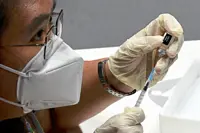
At the beginning of the pandemic, IMR was the only laboratory doing genetic sequencing of Covid-19 samples from around the country. — Photos: Filepic

Our state borders have opened up and after months of being confined at home, we are enjoying the freedom to move around once again.

Likewise, the SARS-CoV-2 virus is also keen to spread its wings, but not for the purpose of a vacation.

So do continue to take precautionary measures to keep safe as Covid-19 is going to be around for a while.

Although three-quarters of our population has been vaccinated to date, the Covid-19 positivity rate still remains high.

“I’m optimistic that when more adults and children are vaccinated, the virus will not be able to multiply.

“Six months from now, if the virus circulation is less and you let your guard down, you may not get infected.

“Everything depends on how much we can control the circulation of the virus,” says Institute for Medical Research (IMR) Virology Unit head Dr Ravindran Thayan.

Frequent mutations

Viruses are constantly changing – these genetic variations occur over time and can lead to the emergence of new variants that may have different characteristics.

He explains: “The virus is very smart – its natural feature is to multiply in the person who is infected or via infecting others.

“There are steps in this replication process, and sometimes, there are errors.

“These errors lead to virus mutations, which can give the virus an advantage or disadvantage.”

He adds that the more viral load there is in the body, the higher the chances of mutations occurring.

Genetic mutations in viruses like SARS-CoV-2, seen here in a colour-enhanced transmission electron micrograph, can produce new variants with different characteristics, e.g. being more infectious. — US NIAID/AFP

The IMR started carrying out genome sequencing of Covid-19 samples last year (2020), but due to the laborious work involved, one batch of samples would take up to two weeks to sequence.

With more players roped in by the Health Ministry to help out, the capacity to do so has increased and 1,000 samples a month can now be sequenced, compared to 200 previously.

Random samples are collected by the IMR from various sources, e.g. airports, work clusters, hospitals and unvaccinated children, and distributed to other centres to decode the genes and learn more about the virus.

All samples with a Ct value of below 25 are sent for whole genome sequencing.

A Ct (cycle threshold) value refers to the number of “cycles” it takes to make copies of the virus.

The lower the Ct value, the greater the amount of viral load there is in the sample.

Based on the past three months’ worth of sequencing, three out of four SARS-CoV-2 viral variants in Malaysia were Delta, while the other quarter were other variants.

When it strikes

An individual is considered most vulnerable at the initial stage of infection when the virus enters the respiratory tract.

Says Dr Ravindran: “That’s the point when we are very infective and can pass the virus to others.

“With the Delta variant, even when you talk (without a face mask) in an enclosed area, you can infect others.

“As the days go by, the immune system will respond and cause a reduction in viral load.

“That’s the natural way the body fights the virus.”

The aim of vaccines is to prime the body, so that when an individual is exposed to the virus, their immune system is able to respond rapidly.

“There are some people who have had the virus for a very long time in the body, and from the Ct values, we find that the virus doesn’t multiply enough to infect others.

“They may be positive upon testing, but are not infective.

“The original virus didn’t have many mutations, but with the Delta variant, there are many things we don’t understand,” he says.

There are many cases of people complaining of reinfection despite being fully vaccinated.

Yes, you can repeatedly get infected, even with the same viral variant, if you are not careful.

“Why? Because people let their guard down,” says Dr Ravindran.

“Remember, your entry point (i.e. your nose) is still open.

“Vaccination is supposed to provide antibodies, but it doesn’t close the cells in the respiratory tract that the virus is targeting.

“If you are vaccinated and end up in categories 4 or 5, it is probably due to other underlying medical problems that do not prime the vaccinated immune system to respond.”

These people are then treated with regimens such as monoclonal antibodies.

These are laboratory-made proteins that mimic the immune system’s ability to fight off harmful pathogens.

The longer you allow the virus to stay in your body, the higher the chances of it mutating.

Faster virus removal

For those who are vaccinated, the duration of the virus staying in the body is shorter – usually only four or five days.

Dr Ravindran is confident that humans will win the war against Covid-19.
The scientist says: “Yes, everyone will have a natural antibody reaction, but in the unvaccinated, it will take some time for the immune system to respond – maybe up to two weeks; the symptoms are also worse.

“So, this gives the virus more time to multiply and more chances to make errors (mutations) that can result in variants of concern or variants of interest.”

Antibodies naturally decrease over time, although at present, there is insufficient data to determine if there is a significant decline in vaccine effectiveness against any form of clinical illness from SARS-CoV-2 infection beyond six months post-vaccination.

A booster shot is administered when individuals have completed their vaccine series and after protection against the virus has decreased over time.

Dr Ravindran says: “Vaccinations help sustain a reduction in the disease, as many countries are seeing an increase in cases due to the Delta variant.

“Some groups of people may need more doses because the primary series (one or two doses) of vaccination doesn’t give them a very good immune response.

“With the third dose, we hope it is sufficient to cause the immune system to respond; if it doesn’t work, we have to treat them with other pharmaceutical measures.”

Malaysia has started administering booster shots to groups deemed to be high-risk, such as the elderly, the immunocompromised and healthcare workers, but it is not mandatory.

“Not everyone needs a booster, and sometimes, we’ve got to trust our own immune system to fight the virus.

“But if your immune system fails to respond despite the vaccination, please go to the nearest hospital immediately and get treated with other regimens,” he advises.

Based on previous pandemics, Dr Ravindran says humans will always overcome these viruses as seen in the case of the SARS-CoV-1 virus, which has been completely wiped out.

The SARS-CoV-1 virus was the cause of the 2002-2004 SARS (severe acute respiratory syndrome) outbreak.

“The only problem at present is the disparity in vaccine distribution.

“Some parts of the world haven’t even gotten their first dose yet.

“We are slowly reopening our international borders, and if you go to a country where the virus is still circulating, you can bring it back here,” he cautions.

Get 20% OFF The Star Digital Access

Monthly Plan

RM 13.90/month

RM 11.12/month

Billed as RM 11.12 for the 1st month, RM 13.90 thereafter.

Best Value

Annual Plan

RM 12.33/month

RM 9.87/month

Billed as RM 118.40 for the 1st year, RM 148 thereafter.

Follow us on our official WhatsApp channel for breaking news alerts and key updates!

Next In Health

Potential pesticides on coffee beans�in Europe
Malaysians are not ageing well
Can our bodies adapt to heatwaves?�
When water takes lives�
What is a head spa?
How elections can affect our emotions
Nutrition during the golden years�
When you're trapped by an earthquake
No, creatine won't make you go bald
Doctors, please treat the woman, not just her cancer

Others Also Read