It's 6.45pm and Sarimah is juggling dinner, schoolwork and two tired children. The rice cooker beeps, the fish is still in the pan and her phone is ringing beneath a pile of worksheets.
Six-year-old Shiela needs help colouring while four-year-old Sakinah is crying because her sister touched her pencil. Sarimah knows the quickest way to restore calm: one tap on the remote and both children fall silent.
But something her family doctor once said stays with her: “Don’t only ask how long your children watch cartoons. Ask what the cartoons are teaching them.”
She does not ban screens or become a perfect parent overnight, but she makes one small change. Cartoons become a planned part of the day, not the answer to every cry, tantrum or boredom. Like many parents, she is learning to let screens help, without allowing them to take over.
Cartoons can act as teachers
After dinner, Shiela and Sakinah have their “cartoon time”. These are not short videos, but selected shows, watched together whenever possible. When the children watch Barney, Sarimah notices the gentle language around friendship and sharing.
Later, when Sakinah refuses to share a toy, Sarimah asks, “What did they say in the show? Can we use kind words?”
Shiela answers, “Sharing is caring.” It sounds small, but childhood is built on small, repeated messages.
Cartoons that use warm language can help children hear words like “please”, “thank you” and “you are my friend”. When positive language on screen is reinforced by parents in daily life, children may be more likely to understand and practise it.
On another evening, Sarimah chooses Sesame Street. At first, Sakinah only laughs at the furry characters. But soon, Shiela starts repeating letters. Sakinah points at colours. They learn new words without realising they are learning. This is the strength of a good educational programme. It does not feel like a lesson but it teaches, nonetheless.
Sesame Street has remained valuable because it introduces language, numbers, emotions, humour and inclusion. Children learn that people and characters can look different, speak differently and behave differently, yet still belong together.
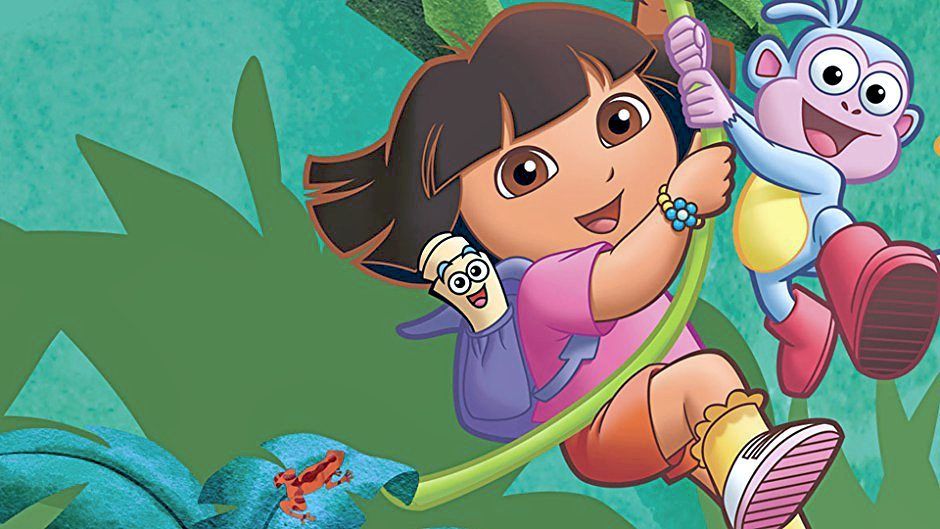
For a young child, that is a powerful lesson. Another day, the girls ask for Dora The Explorer. Sarimah watches with them while folding clothes.
Dora asks a question, then pauses. “Where should we go?” Sakinah points at the screen. Shiela shouts the answer.
Sarimah smiles because this is not passive watching. The cartoon is inviting them to participate. Some cartoons are useful because they speak with the child, not at the child. They ask questions. They wait. They encourage children to repeat words, identify objects and solve simple problems. For preschool children, this builds confidence. The child feels involved, not merely entertained.
Blue’s Clues works similarly. It gives children time to think. The pause after a question may look ordinary, but it is important. A young brain needs time to process information. In a world of fast-moving videos, a cartoon that slows down enough for a child to answer is valuable.
Sarimah begins to realise that the best cartoons are not always the loudest. Sometimes, the best ones are the ones that give space to think, to answer and to imagine.
On weekends, Shiela chooses Numberblocks. Afterwards, Sarimah notices her daughters lining up blocks, counting and trying to make four using two and two. The learning has left the screen and entered real play.
Numberblocks makes early mathematics visual and playful. For some children, this may be the first time maths feels friendly instead of frightening.
For many Malaysian children, Upin & Ipin offers something imported shows cannot always provide: a childhood that looks and sounds a little more like their own. There is the kampung, familiar food, school life, local expressions and relationships with Opah, Kak Ros, Tok Dalang and neighbours.
Just as importantly, its multicultural friendships are presented without much fanfare.
There is value in children seeing Malaysian life reflected back at them and seeing friendship across cultures as ordinary rather than exceptional.
Then there is Bluey. Sarimah once thought it was only for children, until she found herself still watching after both girls had wandered away. The episode touched on play, disappointment, family and feelings. It captures family life with honesty: siblings argue and make up, and play begins not with expensive toys, but with imagination, time and attention.
After one episode, Shiela asks, “Mama, why was she sad?”
“Maybe she felt left out,” Sarimah replies. “Have you ever felt that way?”
A cartoon has opened a conversation that might never have happened. That is the beauty of co-viewing: even a few shared minutes can turn screen time into meaningful connection.
Watch the child, not only the clock
Of course, Sarimah also remembers her doctor’s caution. Not every cartoon needs to be welcomed into the home simply because it is popular.
Some fast-paced shows use flashing scenes, constant music and rapid changes to hold a child’s attention. Parents may notice that certain children become more restless, irritable or resistant to stopping afterwards. Some cartoons use rude replies, sarcasm or unkind teasing for humour. Older children may understand the joke, but younger children may simply copy the tone.

If a child starts speaking dismissively, mocking others or shouting phrases from a show, it may be time to pause and discuss it. Some cartoons make hitting, chasing or hurting look funny.
Many adults grew up with slapstick comedy and understood it as exaggeration. But toddlers and preschoolers may imitate before they understand. A child who hits after watching such scenes may not be naughty. The child may be copying what looked funny on screen.
Some short musical videos are also very powerful. Parents and even doctors know this. In clinics and wards, we sometimes use familiar songs to distract a crying toddler long enough to examine the throat, listen to the chest or complete a quick assessment.
Used briefly and purposefully, this can help. But if every cry, tantrum or moment of boredom is answered with the same high-stimulation video, the child may begin to depend on it to calm down.
The problem is not the song. The concern begins when the screen becomes the default response to every cry, tantrum or moment of boredom.
That is why Sarimah’s rule is simple: cartoons can teach, but they should not take over.
Turn viewing into conversation
Sarimah looks for cartoons that teach kindness, language, numbers, imagination, teamwork and problem-solving. She limits cartoons that leave her children more restless, rude, aggressive or demanding.
Most importantly, she watches what happens after the cartoon ends. Do Shiela and Sakinah pretend? Do they count? Do they sing kind words? Do they ask questions? Do they play together? Or do they scream for more? The answer tells her more than any online review.
In the end, cartoons are not merely colourful distractions. They are small teachers in our living rooms. Some teach kindness, language and maths while nurturing confidence, empathy and teamwork.
Others may normalise impatience, rudeness, aggression or the expectation of constant stimulation. Parents therefore need to choose carefully, because children are shaped by what they repeatedly watch, laugh at, copy and carry into the world.
The most important question may not be, “How long did my child watch?” but, “What did my child carry away from it?”
Dr Naveen Nair Gangadaran is a paediatrician and a committee member of the Malaysian Paediatric Association (MPA) and Perinatal Society Malaysia (PSM). The information provided is for educational and communication purposes only, and should not be considered as medical advice. The Star does not give any warranty on accuracy, completeness, functionality, usefulness or other assurances as to the content appearing in this article. The Star disclaims all responsibility for any losses, damage to property or personal injury suffered directly or indirectly from reliance on such information.