



The problems began with the birth of their first child. Martin told Ella she was neglecting him sexually and emotionally.
"You're paying too much attention to the baby and not enough to me," he would shout. The accusations kept coming: "You're always changing the baby's nappy." "You're not a proper mother." "You don't know what you're doing."
Soon, the emotional abuse escalated into physical violence. Martin began pushing Ella and striking her on the upper arm with his fist, according to Barbara Wittel, a counsellor with the German non-governmental organization Pro Familia. The bruises on the 28-year-old's body went unnoticed, she says.
Ella – not her real name – is one of millions of women and girls worldwide who suffer from domestic violence.
According to estimates published by the World Health Organisation (WHO) based on 2023 data, nearly one in three women globally – around 840 million women and girls – "have been subjected to either physical and/or [sexual intimate partner violence] or non-partner sexual violence in their lifetimes." Figures for 2024 and 2025 are not yet available.
However, official figures capture only a fraction of domestic violence cases.
A survey by the European Union Fundamental Rights Agency, conducted jointly with Eurostat and the European Institute for Gender Equality, covering more than 114,000 women in EU member countries found that only one in eight women who experienced violence reported it to police.
Experts say there is no single reason why victims of domestic violence do not report abuse or leave their partner. Instead, a complex combination of fear, emotional manipulation, concern for children or financial barriers can keep people trapped.
Perpetrators use clear strategies to keep women tied to them.
"Of course, if a woman is financially independent, she finds it much easier to perhaps find a job in another city and build a new life for herself," says Wittel. "But the financial aspect comes after the emotional aspect."
The woman must also be able to take these steps – to break away from her partner – regardless of her financial situation.According to a study by the University of Cambridge, perpetrators use clear strategies to emotionally bind women to them and make them feel insecure.The study found that they initially shower their partners with devotion and love, then behave cruelly, later often becoming violent – and in between, repeatedly acting extremely affectionate.
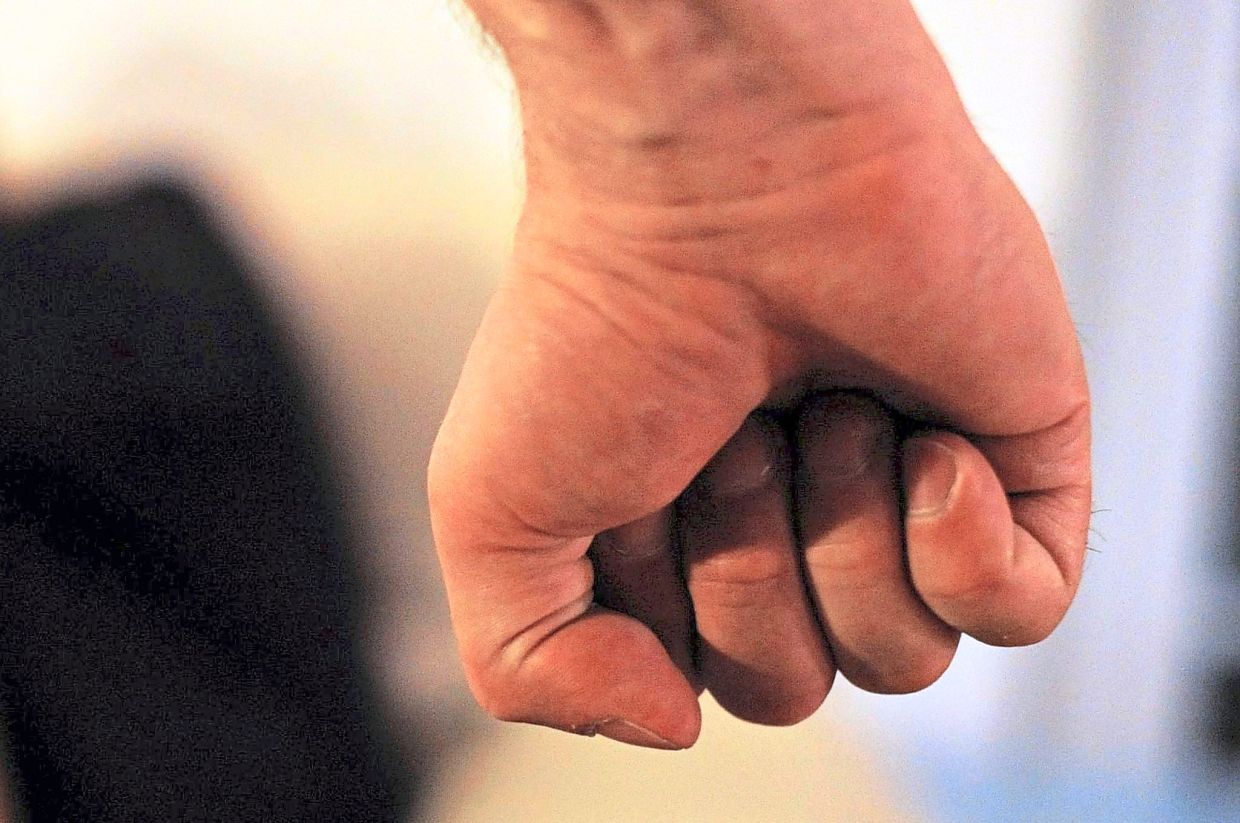
Weaponised love
"These relationships start with enchantment," says lead author Mags Lesiak. "The coercion and abuse that follows is so disorientating, it leaves victims desperate to preserve the earlier image of their abuser."
Lesiak describes this pattern as love being used as a tool of control: affection is created, withdrawn and restored in ways that can leave victims psychologically trapped.
"As with the victims in this study, it can tether women to abusers even without physical or financial coercion," says the criminologist. "Victim attachment to an abuser is not a passive trauma response, but the result of deliberate brainwashing by a perpetrator."
Published in the journal Violence Against Women, the study was based on in-depth interviews with 18 women who had experienced repeated domestic abuse.
The researchers specifically examined why some victims remain emotionally attached even when traditional forms of dependency – such as shared housing, financial reliance or children – are not present.
All participants had left their relationships safely, yet many described a strong and often confusing desire to return.
The participants, who included professionals such as doctors, a dentist, a science teacher and a chef, also reported experiences of childhood trauma, including emotional neglect and sexual abuse.
According to Lesiak, some perpetrators exploited these vulnerabilities – as well as their own traumatic experiences – to undermine their partners' confidence and shame them.
The study argues that understanding why abusive relationships persist requires focusing on the strategies used by perpetrators rather than framing victims as unable to leave.

A new perspective on abuse
Paola Delgado Klamroth from the Federal Association of German Psychologists says the study offers an important perspective for research by examining domestic violence through the experiences of survivors.
"It highlights the complex psychological manipulation used by perpetrators, which is valuable for understanding, preventing and treating the consequences of domestic violence," she says. However, she adds that findings from studies of this kind cannot always be generalided.
The patterns identified in the research are familiar to Wittel.
In her professional experience, one early warning sign of a toxic relationship is when one partner is no longer allowed to have an independent opinion.
"That would highlight the difference between two people, and that is simply not tolerated at all." Instead, one person learns to gradually submit to the other, she explains.
For survivors trying to leave, outside support can be crucial, Wittel says. Someone who encourages them, who says: "I see you."
She says it is rare for women to seek help at a shelter entirely on their own. "Having someone outside the system can sometimes be a lifesaver." Many victims have already been isolated from friends and family by their partners, she adds.
In Ella's case, meeting Wittel at Pro Familia led to continued counselling afterwards, with Wittel supporting her in leaving the relationship and finding a safe place. Ella now lives with her child in a women's shelter. – dpa
