
As we age, maintaining self-reliance becomes one of the most vital factors in preserving mental health, community engagement, and overall quality of life. For many older adults like, being able to drive is not merely a matter of convenience – it is an essential framework that allows them to age in place with confidence and self-respect. Losing the ability to drive can often trigger social isolation, while staying mobile ensures seniors remain active, empowered, and independent.
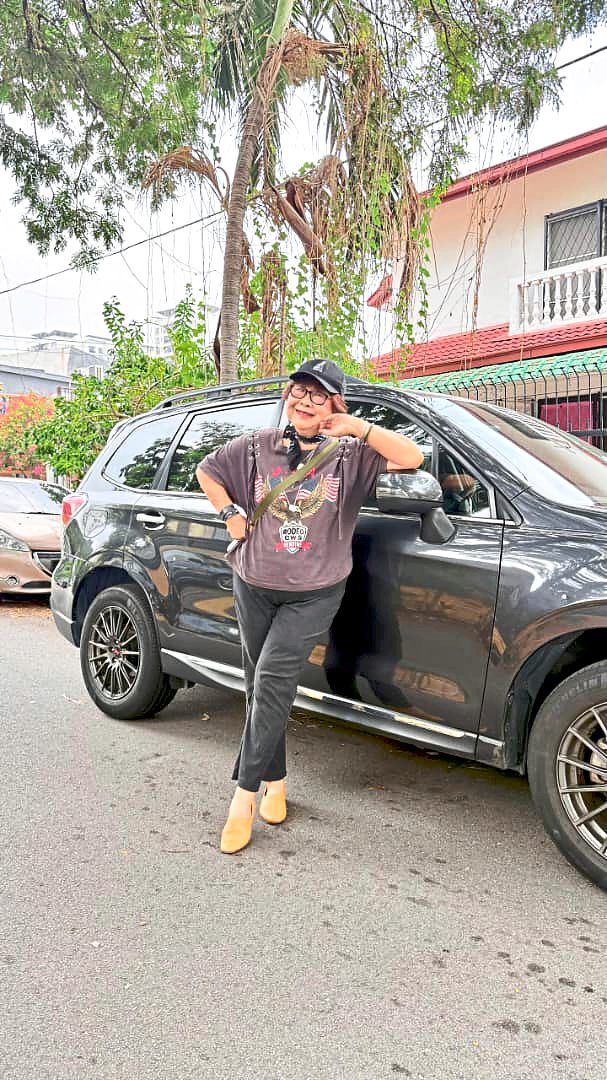
This certainly is true for June Chan. Having taken the wheel at age 18, she has logged an incredible 63 years on the road. Now, at 81, the grandmother of three still relies on her car to navigate her personal and social commitments.
“Driving is important as I need to be independent to attend to all my social activities and errands,” says Chan.
Though she admits that she drives more slowly these days – and only around Petaling Jaya and Kuala Lumpur – Chan asserts that her confidence behind the wheel remains steadfast.
She uses Waze to help her navigate unfamiliar routes, while her three children use the Life360 app to keep track of her whereabouts.
For seniors like Chan, driving – whether to run daily errands or to get her to appointments with friends – allows her to live a full and connected life.
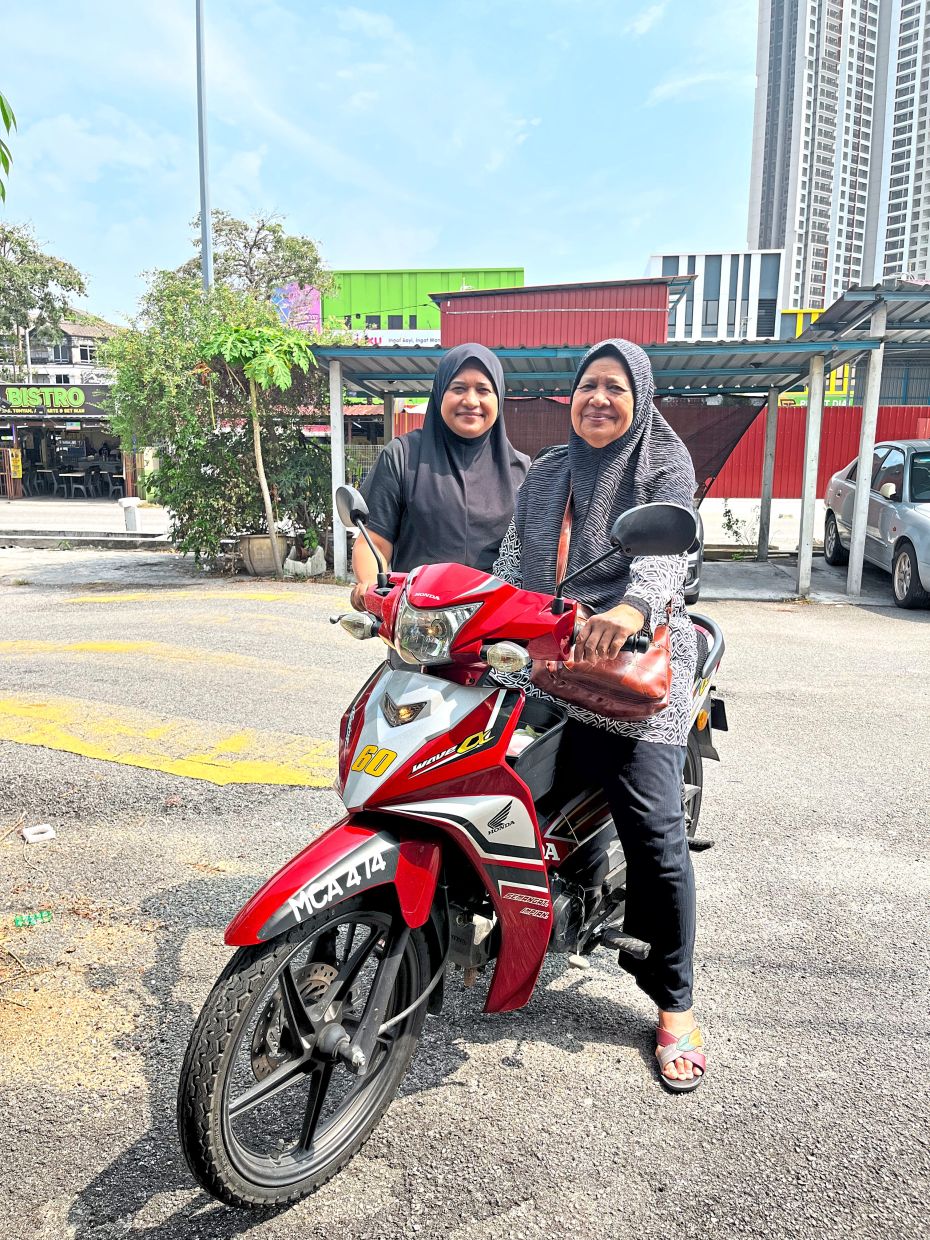
The same goes for 77-year-old Noridah Ibrahim, though for her this independence comes on two wheels rather than four.
For years, the motorcycle has allowed Noridah to manage her own errands, visit relatives and remain independent of her four children and 12 grandchildren.
Today, the retired production operator, who has been riding for more than 50 years, only rides around her neighbourhood in Petaling Jaya, where she lives with her daughter, Marzaina Mansor, 54. She occasionally goes as far as her brother’s home in Puchong when traffic is light.
“I am happy that I still can ride at this age and do not need to disturb my children for my errands and personal matters,” she adds.
However, she acknowledges that her trips have become more restricted.
She knows her “limits” and “sticks mainly to familiar roads” in Taman Medan, avoiding highways and areas with busy traffic. When she needs to buy heavy or bulky items, she asks for help.
Noridah is realistic about the changes that come with age, and her family monitors her health through regular check-ups at the local health clinic, including routine eye exams.
So far, Marzaina says there aren’t any health issues and she isn’t planning on asking Noridah to stop riding her motorbike. Not yet.
“At the moment she is only riding her motorcycle around Taman Medan, I have no intention to stop her from riding,” says the former human resource manager.
While her family doesn’t track her location via smartphone apps, they do ask that she keep them posted whenever she heads out. It’s a practical compromise –one that reflects a family gently adapting to the natural shifts in ageing and mobility.
And for Noridah, the thought of eventually giving up her motorcycle is not easy.
“It is sad as I will lose my independence to ride, however I understand this is for my safety,” she says.
Chan’s daughter, Maybel, 53, sees no reason for her mother to stop yet.
“Mum drove almost every day of her life from when we were kids. She’s always been an active driver and a very good, confident and steady one,” says the group head of marketing.
As long as her mother remains alert and capable, Maybel believes there is no need to take away something that has been such an important part of her life.
“We will take it as it comes,” she says. “If we ever see her starting to be less confident or struggle with driving, then we will be sure to do the right thing.”
More than a safety issue
Concerns over senior road safety reached a flashpoint last year after police data linked nearly 7,000 fatalities between 2019 and 2024 to drivers aged 61 and above. However, the authorities maintain that any policy shift involving seniors must be grounded in evidence, not assumptions.
In a news report earlier this year, Bukit Aman Traffic Investigation and Enforcement Department director Comm Datuk Seri Muhammed Hasbullah Ali said that no decision has been made to mandate health or cognitive screenings for elderly drivers.
“Such proposals should be comprehensively assessed based on accident statistics, scientific evidence, international best practices, and feedback from relevant stakeholders,” he emphasised, noting that any eventual approach must remain fair and non-discriminatory by focusing on individual driving capability rather than age alone.
When it comes to senior motorists, expert opinion points to a delicate balancing act: Mobility versus safety. Road safety and public health specialists stress that while maintaining independent mobility is essential for an older adult’s well-being and active lifestyle, age-related physical frailty and cognitive decline can inevitably pose risks on the road.
According to guidance on its website, the United States National Institute on Ageing notes that because everyone ages at their own pace, there is no single age to stop driving. However, it advises older drivers and their families to ask themselves key self-assessment questions:
These questions include:
* Do other drivers often honk at me?
* Have I had some accidents even if just “fender benders”?
* Am I having trouble seeing road signs, exits, or lane lines?
* Am I still flexible enough to turn my head to check mirrors and blind spots comfortably?
* Has my reaction time slowed down considerably?
* Do I get lost frequently, even on familiar roads?
* Do cars or pedestrians seem to appear out of nowhere?
* Am I often distracted while driving?
* Am I driving less these days because I’m not as sure about my driving as I used to be?
* Do I have trouble staying in my lane?
While road safety is a critical consideration, public health specialist Datuk Dr Teoh Siang Chin offers another vital perspective.
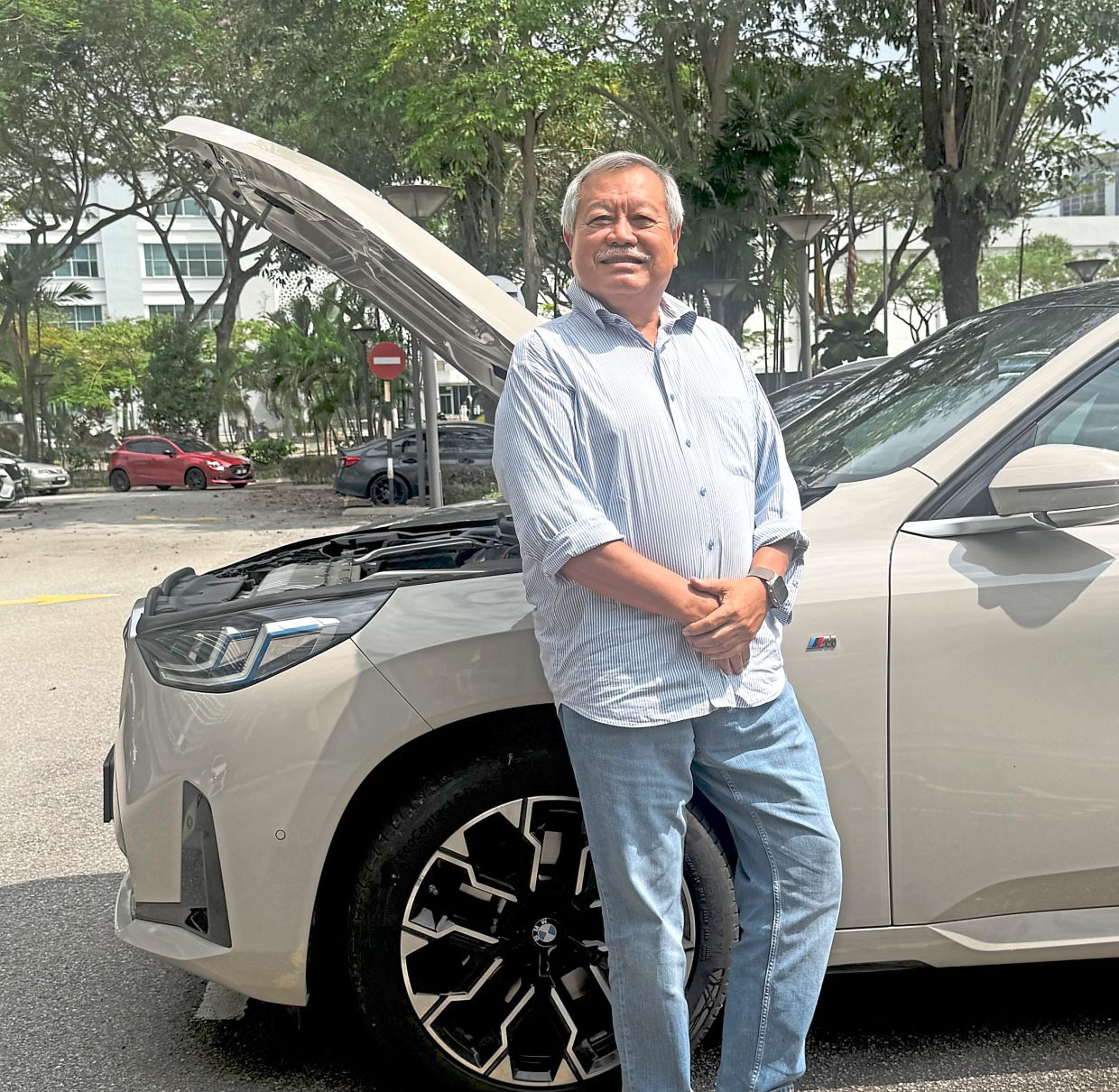
For the long-time automotive evaluator – who spent almost two decades as a juror for the Malaysia Car of the Year awards – age is the wrong starting point.
“The question isn’t how old a driver is. The question is whether they’re still fit to drive safely,” says Teoh, 72.
Teoh’s career bridges public health and automotive engineering, combining expertise in injury prevention with extensive experience evaluating vehicle safety, ergonomics, and driver-assistance technology.
Yet beyond physical capability and car design, he points to a dimension that is too often overlooked: Dignity.
“The greatest fear isn’t losing the steering wheel – it’s losing independence,” says Teoh, who has been driving since 1970 and remains an active driver today.
For older adults who have spent decades behind the wheel, being told to stop can feel like a sudden loss of control over their lives.
That is why Teoh believes safety and dignity should never be treated as opposing forces.
“We should protect both dignity and road safety – they are not competing goals,” he says. Ultimately, he believes society needs to normalise what he calls “driving retirement.”
“We prepare people for retirement from work,” he reflects. “We rarely prepare them for retirement from driving.”
Start the conversation early
So how should seniors, and their families, approach the subject?
Teoh believes the conversation should begin before there is a crisis.
“Don’t wait until after a crash. The conversation should begin while driving is still going well.”
Instead of telling an ageing parent, “You shouldn’t drive anymore,” he suggests asking, “How can we help you keep driving safely?”
That small change, he says, shifts the conversation from taking something away to preserving independence.
He suggests that family members take a four-step approach: Drive together occasionally, start with small adjustments, frame it as teamwork, such as going for an eye check-up together, and plan the transition early by identifying other alternatives before they are urgently needed.
That is already happening in Marzaina’s family.
“We did discuss this and my mother understands that one day her eyesight or strength will not allow her to continue riding,” she says. “And she is accepting it well.”
Marzaina says an attending staff at the post office casually mentioned to her mum, when she last renewed her motorcycle road tax and insurance, that she may not be able to do so in the future due to her age.
“That actually made it easier for my mother to understand the limitation and the safety concern for her to continue riding.”
When that happens, Marzaina says, the family will work around everyone’s schedules, including for trips back to their hometown in Negeri Sembilan.
Chan, on the other hand, believes she will know “when the time comes”.
“I will know when the time comes that I need to stop driving. I will inform my children.”
And, like Teoh, she too does not believe age alone should determine that decision.
“If anyone of any age has slow reflexes or any illnesses that prevents them from driving safely, they should stop driving.”
Maybel adds, “If we ever see her starting to be less confident or struggle with driving, then we will make sure to do the right thing.”
Fit to drive
So, what makes a senior still fit to drive?
“Ageing does not mean every older driver is suddenly unsafe,” says Teoh. “There are techniques seniors can apply to minimise risk.”
He adds that today’s driving environment, including road conditions, require drivers to process more information in a shorter time.
Teoh remembers a very different road environment when he was younger.
“In the 60s, I could cycle from home in Federal Hill to Victoria Institution. There were fewer vehicles, fewer motorcycles weaving through traffic, fewer distractions and generally lower traffic density,” he shares.
Experienced drivers, he says, may already have developed ways to compensate, such as leaving a larger following distance, avoiding rush-hour traffic or practising more defensive driving.
“Experience is a valuable safety asset but the road environment itself has undoubtedly become more complex,” Teoh says.
“The challenge isn’t just speed or technology – it’s decision density.”
He also stresses the importance of regular health checks, particularly when there are changes in vision, alertness or physical ability.
His own experience is a reminder that such changes can happen without a person necessarily realising it.
“A couple of years ago a fellow physician remarked that my night driving was getting dangerous and I subsequently had cataract surgery and vision improved to almost 6/6,” he says.
The lesson, he says, is not that older people should automatically give up driving, but that fitness to drive needs to be reassessed when circumstances change.
When it comes to formally reassessing an older driver’s ability, Teoh believes evaluation should rely on objective medical assessments rather than arbitrary age limits.
Instead of relying on assumptions, he argues, the government must establish a fair, transparent framework for determining actual fitness to drive.
Clear standards, he says, can also reduce some of the emotional burden on families.
Sometimes, he adds, advice from a doctor can feel less personal than hearing the same concern from a son or daughter.
But he does not believe doctors or the state should automatically become the “bad cop”.
“The best outcome is when families, doctors, and the driver work together,” he says.
When decisions are based on clear medical and functional standards, Teoh says, families do not have to carry the emotional burden alone.
“We have to make the process objective, not emotional.”
Nevertheless, he believes the older driver has a role to play too.
Self-awareness, Teoh says, is one of the seven things older drivers should constantly practise. The 7Ss are adapted from his training in advanced off-road and adventure driving.
These are:
1. Scan: Keep your eyes moving every few seconds. Look far ahead, check mirrors regularly, watch for motorcycles in blind spots, and anticipate pedestrians and cyclists.
2. Space: Leave yourself room to react. Keep at least a three-second following distance in good weather, increase it in rain or at night, and avoid being boxed in by other vehicles.
3. Speed: Drive at a speed that gives you time to think. Match road conditions rather than just the speed limit, slow earlier for junctions and roundabouts, and remember that arriving safely matters more than arriving sooner.
4. Signal: Communicate early. Signal before changing lanes, make eye contact where possible, and don’t assume other drivers have seen you.
5. Smooth: Make gentle inputs. Brake progressively, steer calmly and accelerate smoothly, especially in high-torque EVs where sudden acceleration can catch drivers by surprise.
6. Self: Check yourself before the car. Ask: Am I seeing clearly? Am I alert? Am I affected by medication? Am I confident driving today?
7. Stop: Know when to pause. Take breaks every one or two hours, stop if you’re tired or overwhelmed, and there’s no shame in letting someone else drive.
Help from technology
For those who continue driving, the car itself can also play a role.Modern vehicles increasingly come with advanced driver-assistance systems that can help compensate for certain human limitations.
Teoh highlights automatic emergency braking, blind-spot monitoring, rear cross-traffic alert, 360-degree cameras, adaptive headlights and parking sensors as useful safety features.
But technology is a double-edged sword, he stresses.
“Good safety technology can extend safe driving by compensating for certain human limitations,” he says. “Poorly designed technology can create unnecessary distraction.”
Other features can make a difference too. Large, readable displays, physical controls for essential functions, supportive seats, easy entry and exit, light steering and predictable braking can all make a vehicle easier for an older driver to use.
“Sometimes the safest car for a senior isn’t the fastest or most luxurious one – it’s the one that’s easiest to understand.”
But even the safest car cannot compensate for a driver who is no longer capable of operating it safely.
“The safest journey begins with a healthy driver, not just a safer car,” he concludes.