
More than a century ago, Irish poet W.B. Yeats wrote: “Things fall apart; the centre cannot hold.”
At that time, he was referring to a world descending into turmoil; the poem was written after WWI and during the Irish War of Independence.
Yet the line has also endured and captured a more personal truth for some today: sometimes, the very thing meant to keep us grounded can begin to fray and come undone.
For many, that centre is family. But for some, it does not hold in the way it is expected to.
In Malaysia, where family is often seen as something to be preserved at all costs and deeply intertwined with identity and duty, the idea of stepping away remains a difficult topic to navigate.
From a psychological perspective, family estrangement is rarely an impulsive decision.
Universiti Kebangsaan Malaysia (UKM) social science and humanities lecturer Dr Mohd Haikal Anuar Adnan explains that when an individual chooses to distance themselves from family, it is often slow and deliberate.
“The decision to sever family ties – also known as family estrangement – is when an individual chooses to distance themselves from family either physically, socially or emotionally due to conflict, prolonged tension or emotional wounds,” he says.
“In many cases, this decision does not happen suddenly. It is usually a gradual process that develops over time when conflicts within the relationship remain unresolved.”
Family therapist Vicky Hooi adds that what appears from the outside as a single, conclusive decision is often years in the making.
“It’s not an impulsive action where someone just wakes up one day and decides to cut off their family. Most people have tried, in their own ways, to make the relationship work,” she explains.
“But when someone repeatedly experiences hurt or betrayal, it comes to a point where they realise their relational needs are not being met. That’s when they start to consider stepping away.”
A growing distance
Growing up with his stepfather and mother, Jason, who requested anonymity, thought his family was normal. However, he began to feel a shift as he grew older.
“As the years went by and I started growing up, home felt a little suffocating and I could feel my stepfather getting more and more controlling,” the 36-year-old says.
He is the only child from his mother’s first marriage, and with his two stepsiblings, the treatment he received from his stepfather slowly turned into something hard to ignore.
“He was very protective of his own kids and kept seeing me as an outsider to the point where I felt a little isolated from my own family.
“When I got into university and started living on my own, that’s when I knew just how restrictive home felt to me. When I came back every other weekend or during celebrations, I felt like I wasn’t invited,” he recalls.
That feeling of being present, yet not fully seen can deeply affect someone, especially within a space that is meant to offer unconditional belonging.

Mohd Haikal Anuar notes that early family dynamics often play a role in shaping these experiences and decisions in adulthood.
“A parenting style that is less involved such as neglectful parenting, laissez-faire (passive and hands-off) or an overly- controlling style can stunt emotional bonding, affecting not only the relationship between parents and children, but also between siblings.
“When emotional bonding between family members is weak, the relationship becomes more fragile and vulnerable when conflict occurs.”
For Kristen (not her real name), those patterns were present and difficult to escape from.
“My childhood was quite rough. My parents were emotionally unavailable as they fought often. It was just me and my younger sister, we had to survive on our own most of the time,” she says.
“I started talking to counsellors during college because my home life kept me from focusing on my studies.”
But watching her sibling bearing the emotional impact of the constant conflict at home was the hardest part.
“My younger sister was in secondary school at that time and she kept telling me how worried she was about our parents and how she always wanted to stay somewhere else. Seeing her feel the same way, maybe even worse than me, was what really pushed me to act.”
Breaking point
Despite the gradual buildup, the decision to step away solidifies in a moment of clarity for these family members.
For Jason, the decision was cemented in his mind when he realised he no longer needed to endure a family that didn’t even want him there.
“It was when I finished my studies and found a stable job for myself that I made the hard decision to go no-contact with my family. My mindset was if they don’t see me as family anymore then why should I?”
The decision to cut ties and protect their peace was shared between Kristen and her sister.
“When my sister completed secondary school, I sat down with her and told her we should probably find somewhere else to stay. She was completely fine with that idea. In fact, she was also happy to be away from them and the toxic home environment,” she shares.
“We’re lucky to have supportive relatives who helped us with this decision and supported us as much as they could financially until I was able to get a job.”
Meanwhile, the turning point for Nurdiana (not her real name) came after years of sacrifice for her family.
“Since my university years, I had devoted my life to taking care of my mother and younger siblings. I used my own money to pay for our house maintenance, bills, groceries ... whatever she asked for, I would make it happen.”
But her devotion and love were neither reciprocated nor appreciated.
“After more than 20 years, I discovered that apparently all this time my mother had been badmouthing and spreading lies about me to our family, her friends and neighbours,” she says.
“When confronted about it, she would vehemently deny despite the proof I had. She refused to take accountability over anything.”
One day, when Nurdiana fell seriously ill and was hospitalised, her mother just ignored her. It was during this time that she pondered about the situation and her relationship.
“I understood then that her love for me was conditional and transactional – she would only show love to me when I was performing the role of a provider to her. When I couldn’t serve her, I didn’t matter to her anymore.
“So I decided all the sacrifices I made to her was enough. I was done.”
The weight lifts
When someone makes the decision to break the family bubble and step out of it, it’s easy to assume there’s a sense of finality, that they are free from the emotions tied to it and can move on easily.
But that is not always the case.
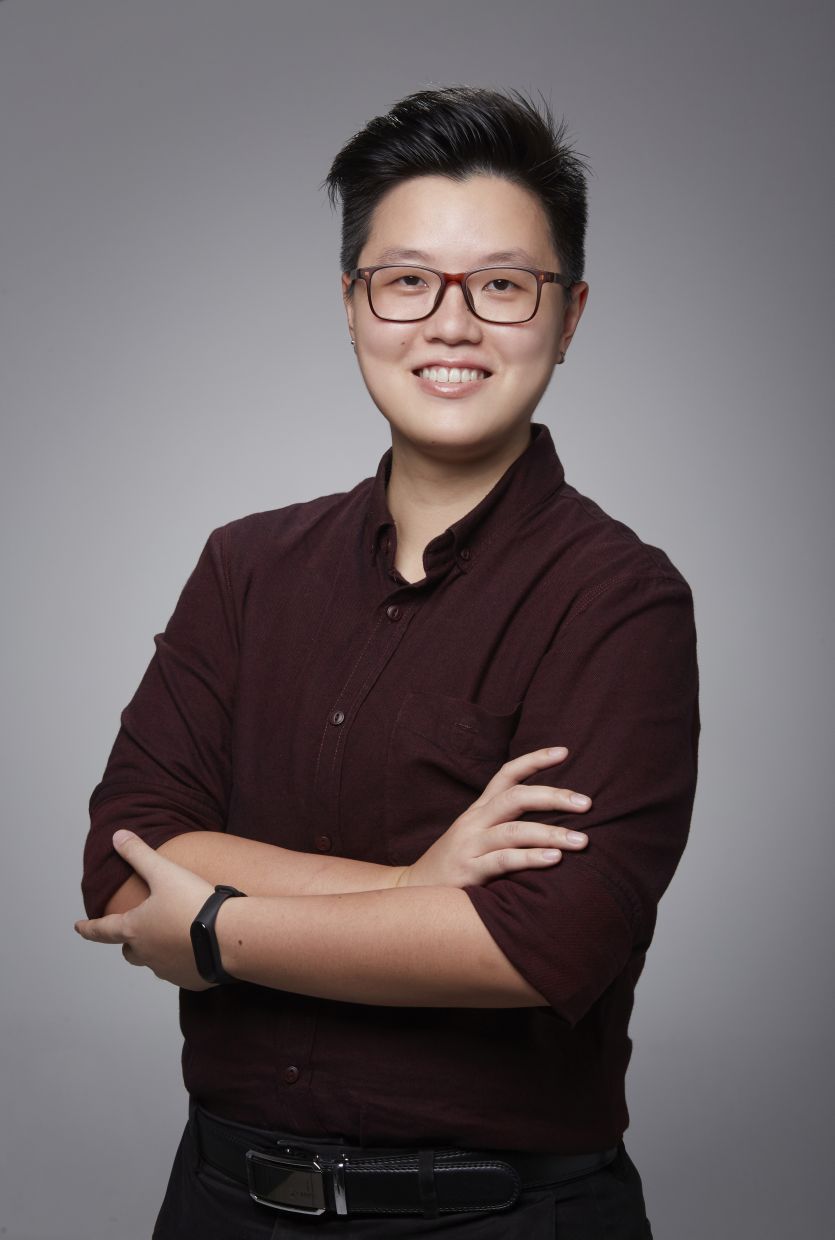
“There can be a lot of mixed feelings. They can still go through a state of disbelief after the decision and still feel guilty. They might think this is all still their fault,” says Hooi.
“Their sense of worth and self-esteem is at stake because it’s so tied to the family. They might feel ashamed at the decision to put themselves first by doing something unconventional.”
Grief is also a normal emotion someone can experience as they go through this, especially through the loss of common rituals and traditions done with family members during festive seasons.
Jason remembers questioning himself early on when he saw his decision through.
“There was a lot of guilt and overthinking. I kept asking myself if this was really what I wanted to do. At the end of the day, they are still my family and I still have love for them deep down.”
Kristen also shares the same guilt felt by Jason in the aftermath.
“It was only difficult for me at the beginning because part of me was worried if we stepped away from my parents, they’re just going to fall into a deeper mess. There’s that fear of what would happen and a sense of responsibility over them,” she notes.
But she quickly understood that she shouldn’t be liable for her parents. Her only responsibility was to focus on creating a safer environment for herself and her sister.
Mohd Haikal Anuar notes that this internal conflict is also shaped by cultural expectations, especially in Malaysia’s collectivistic society.
“In our culture, loyalty and responsibility to parents and other family members are considered important. Because of this, they may experience guilt, social pressure and stigma,” he says.
“In this situation, they are often stuck in a dilemma between fulfilling cultural expectations by maintaining family relationships and protecting their emotional well-being.”
Redefining home
Looking back at their decisions, the one missing thing they have finally found in the aftermath is contentment.
“My life has been happier ever since, I don’t have to go through the constant overthinking anymore,” Jason reflects.
“I have my own family now and they love me so much more so I just focus on that to get me through the days when I do feel that guilt creeping up.”
‘Sharing the same happiness is Kristen and her sister as they support each other emotionally throughout the journey.
“We’re happier now. My sister and I live together, there’s no more fighting and no more anxiety at home. It’s calm, that’s the only thing we want,” she says.
“We are trying to learn again what being family means, even if it’s just the two of us.”
For Nurdiana, the shift she felt was profound and liberating.
“It was like a heavy weight off my shoulders. I am happier, more cheerful and less moody. I could even support myself better financially.”
Still, estrangement does not always close the door on reuniting back with family.
“I wouldn’t say I’m not open to reconciling, but it really depends on how I would feel at the time and how my family decides to handle it,” he says.
“At this moment, I don’t think about this question because I have made my decision and it’s best to just move on and focus on the people I have and love now.”
Kristen is also not entirely averse to reconciliation, but she sets clear terms.
“The only thing that will change our minds is if both of our parents sit down together with us and go over everything from the very beginning, admitting what they have done and where they went wrong,” she explains.
Similarly for Nurdiana, until accountability is taken, getting back together may not be on the table.
“I still love my mother as any daughter would. I still yearn for a mother’s hugs and kisses. But until she admits her lies and takes accountability of her actions, reconciliation may not be feasible.”
Hooi emphasises that reconciliation, when it does happen, is not about returning to the past.
“It’s not about going back to what you once were or had; it’s more of an opportunity to create another version of this relationship because the first one didn’t work out,” she explains.
Beyond judgment
For those looking from the outside, family estrangement is reduced to a single question: Why would anyone walk away from their own family?
But the answers are never simple, and they can never be explained the same way for two individuals.
“Our culture sees family as something sacred. If you abandon them then you are a bad person,” Jason states.
“They don’t understand how different everyone is and what they are going through.”
For Kristen, that misunderstanding can feel frustrating and she wished people could respect someone’s decision without reprimanding them for it.
“I wish more people would stop looking at family as the ultimate everything because that’s not always the case for everyone. Sometimes, they can be the very thing causing a person so much harm and unhappiness.”
Mohd Haikal Anuar believes empathy is key to establishing mutual respect.
“Every family relationship has its own dynamics and history, and a person’s decision to cut ties is not made lightly or hastily. It is important for society to have more empathy and not be quick to judge individuals in this situation,” he advises.
“A more understanding and non-judgmental approach will help reduce stigma and give them the support they need.”
Nurdiana would like those dealing with something similar to put themselves first.
“Find it in you to love yourself first and find the courage to remove yourself from toxic environments for the sake of your own mental health and overall well-being. Never bottle it up and don’t shy away from seeking assistance, support and strength from others.”
Kristen shares a similar sentiment, adding: “Never feel afraid and think you’re in the wrong. You are responsible for finding your own happiness in the people who truly love and care for you, no matter what.”