Roslina Azizan, 28, has had her share of hurtful casual comments during Hari Raya Aidilfitri's family gathering.
"My aunt once said that when she was younger, my mum was taking care of the three of us. Then she continued: 'You can’t take care of one baby?'"
"Eventually, my six-month-old, night feedings, diaper changes, full-time work, and housework somehow became punchlines," she says.
Roslina, who uses a pseudonym, says she felt so hurt that she didn’t go back to her hometown for more than eight months after that.
While Hari Raya is built around reunions – balik kampung journeys, open houses from morning to evening, families in matching outfits and elders at the centre of it all – certain questions may hamper the mood to celebrate.
“So, when are you getting married? Your cousin already has two children.”
“How’s work? Still at the same place?”
“Berapa gaji sekarang?”
Often, these comments are made lightly, as festive small talk. Yet these seemingly casual remarks can carry more weight than we realise, especially in crowded living rooms and emotionally heightened seasons like Hari Raya.
An amplified environment
Festive gatherings compress multiple family dynamics into a short span of time. Relatives who haven’t seen one another for months or years exchange updates in a single afternoon.
Hari Raya is an emotionally amplified environment. There is nostalgia, expectation and a sense of wanting to present well in front of family. And people can become more sensitive to how they are perceived.
In collectivist cultures like Malaysia, family identity is closely tied to individual progress. Career achievements, marriage, home ownership, cars, and children become visible markers of success. The intention behind questions may be curiosity or care, but the impact can still feel like an evaluation.
For someone navigating job uncertainty, fertility issues, financial strain, divorce, grief, or simply a different life choice, these questions can land heavily, even when delivered with a smile.
Between curiosity and scrutiny
Not all questions, however, are harmful. Families are naturally interested in one another’s lives. The difference lies in tone, timing, and context.
A quiet, private “How have you been doing lately?” feels very different from a public remark across the table: “Still at the same job?” In front of others, questions can shift into unwanted scrutiny. The person responding may feel exposed, compelled to justify decisions or explain circumstances they aren’t ready to share.
Psychologists agree that public comparison can activate shame quickly. Instead of thinking, “I should improve,” a person may internalise, “I am not good enough.”
Even humour can unintentionally reinforce this. Teasing about weight, relationship status or salary progression may be brushed off in the moment. Repeated year after year, it can quietly erode confidence.
Questions worth reconsidering
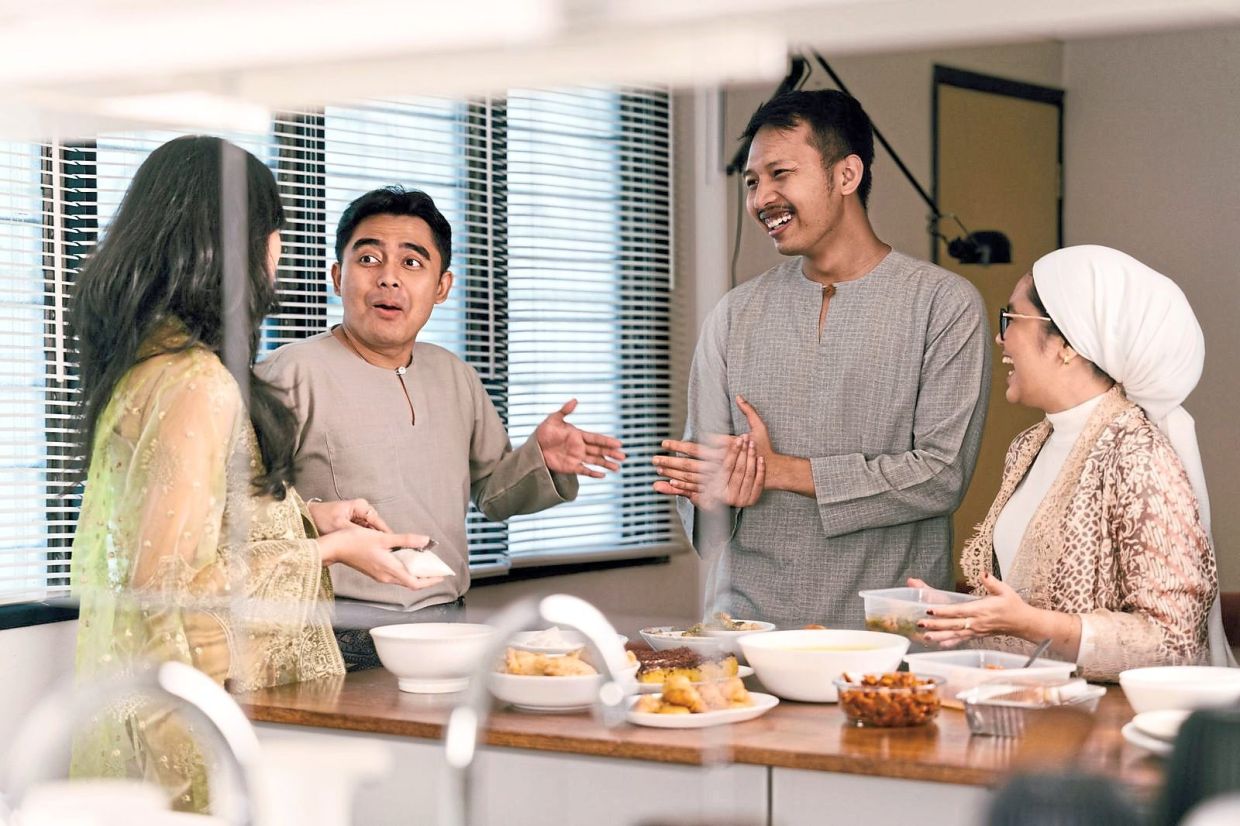
Certain topics surface repeatedly during open houses and balik kampung visits. While not inherently inappropriate, they deserve sensitivity: marriage and relationships, career and income, home ownership, body and appearance.
Before raising these topics, individuals should consider if the information is necessary, and whether the person has chosen to share it.
Before asking a personal question, consider:
> Would I be comfortable answering this in front of the whole room?
> Am I asking out of care, or out of habit?
> Could this person be going through something I don’t know about?
Reframing helps too. Instead of: “Why haven’t you bought a house yet?”, go for “How have you been managing lately?” And instead of: “Still single?”, try “What’s new in your life these days?”
Redefining connection
At its heart, Hari Raya is about forgiveness, gratitude and strengthening bonds. Globally, social and economic landscape has changed. Career trajectories are less predictable. Financial milestones take longer. Many are settling down later.
It helps to remember that people rarely share their full story during Raya visits. What looks like delay or stagnation may actually be a period of rebuilding, healing orrecovery from trying circumstances.”
Offering reassurance and support instead of advice can shift the tone. “I’m glad you’re here” or “Take your time, you’ll figure it out” communicates trust more powerfully than comparison.
Hari Raya Aidilfitri is a time of gratitude, forgiveness and togetherness, but it can also bring stress, grief or emotional strain for some individuals.
It is important to approach the festivities with realistic expectations and self-compassion, recognising that not every gathering needs to be perfect.
Setting healthy boundaries, practising respectful communication and checking in on loved ones can make a meaningful difference.”
If there is genuine concern, save it for a private conversation.
If comparison is creeping in, reflect on whether it stems from care or habit. If pride exists, voice it clearly and sincerely.
The celebration is precious because it brings everyone home. This year, perhaps the most thoughtful gesture is a moment of restraint: a conscious choice to replace evaluation with empathy.
Sometimes, what we choose not to say protects the very bonds we are trying to celebrate.
Dr Azhar Salleh is a consultant psychiatrist while Dr Norharlina Bahar is a child and adolescent psychiatrist at The Kuaya. The views expressed here are the writers' own.