
The email from Marathon Tours and Travel was simple and matter-of-fact: “You are the first Seven Continents Club member from Malaysia to have completed both milestones – the seven-continent marathon and the Polar Challenge.”
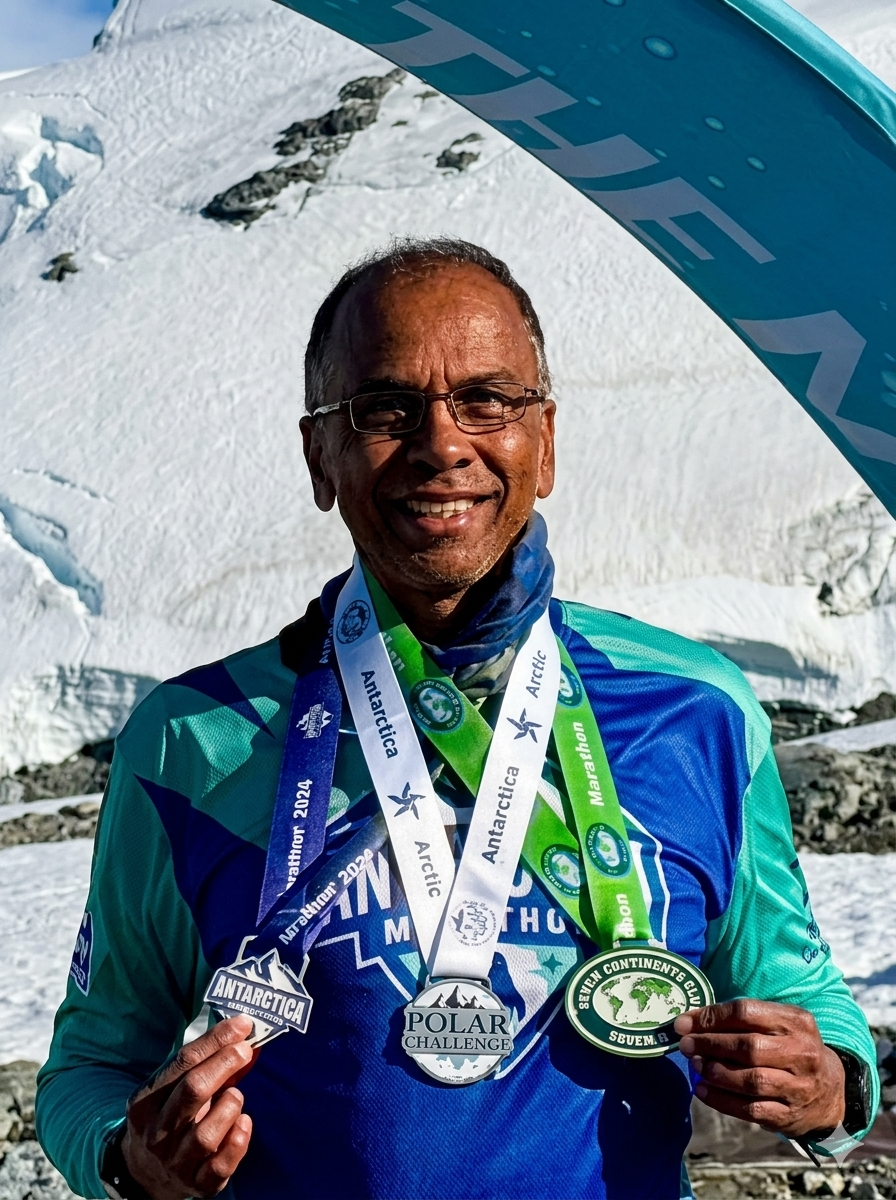
In fact, when 64-year-old Dr Appasamy Velu crossed the finish line of the Antarctica Marathon on King George Island last March, the moment was as understated as the email that he received: There was none of the usual fanfare he had grown accustomed to in city races. No cheering crowds. No music. No festivities. Only a simple turquoise tension-fabric arch, a few wind flags, and barren, windswept ground of mud and gravel stretching into the mist.
The orthopaedic and spine surgeon from Subang Jaya, Selangor, marked the moment quietly, immortalising it with a victory pose holding a banner from the Old Paulian’s Association, the official alumni body of St Paul’s Institution.
“This run was especially dedicated to the association’s 100th anniversary,” he says. “It was a very emotional moment for me – relief, joy, satisfaction and gratitude all mixed together.”
But, truth be told, the moment meant a great deal to Appasamy.
“At that point, I realised that I had finally completed marathons on all seven continents.”
And, a month later, when that official email arrived, the scale of the achievement sank in.
“It’s been a 10-year journey,” he says.
The ends of the Earth
Antarctica was never going to be easy, he knew.
Getting there alone took nearly 30 hours by air, followed by a two-and-a-half-day journey across the Drake Passage – often described as one of the roughest seas in the world.
On race day, the morning was misty, with conditions relatively kind, hovering between -5°C and 5°C.
But as runners took on the 42.2km route, they were met with unforgiving terrain.
There were no paved roads – only rocky paths, patches of ice and snow, and uneven ground that demanded constant focus.
“Once I started running, I was actually very calm. My mindset changed and I lived in the moment, immersing myself in the surroundings,” recalls the father of three children, aged between 21 and 28.
“I used my senses and stayed present throughout, smelling the fresh, clean air, feeling the cold wind on my face, and hearing my heartbeat, my breath and my footsteps against the majestic Antarctic backdrop.”
It wasn’t the running that took his breath away; it was the otherworldly landscape – the vast expanse of land, sea and glaciers.
“We had penguins running alongside us for a short distance, some swimming gracefully near the coast, and sea lions observing us from afar,” he shares.
Still, Appasamy admits that there were real challenges in the strong, biting winds, the significant elevation gain, and the uneven, rocky terrain.
“I was confident that my 10 years of running, including my Arctic Circle marathon experience, would help me through,” he says, adding that he slipped into an almost bliss-like state with every step he took towards the finish line.
When it all began
It is a journey that began far from the icy extremes of Antarctica.
“I was never athletic,” he says candidly. His entry into running began not with ambition, but with a moment of uncomfortable realisation.
One morning in April 2016, Appasamy noticed something he could not ignore.
“I woke up one day and noticed my tummy was so big I couldn’t see my toes,” he recalls.
After four months of procrastination, he decided to do something about it. He signed up with a personal trainer and began working out three times a week.
Progress, however, was slow.
“After a few months, I realised my tummy was only marginally reducing,” he says with a laugh. “When I asked my trainer what to do, he told me, ‘Ini kena lari, boss!’”
Around the same time, at the annual reunion of his alma mater, St Paul’s Institution a chance remark nudged him further in that direction.
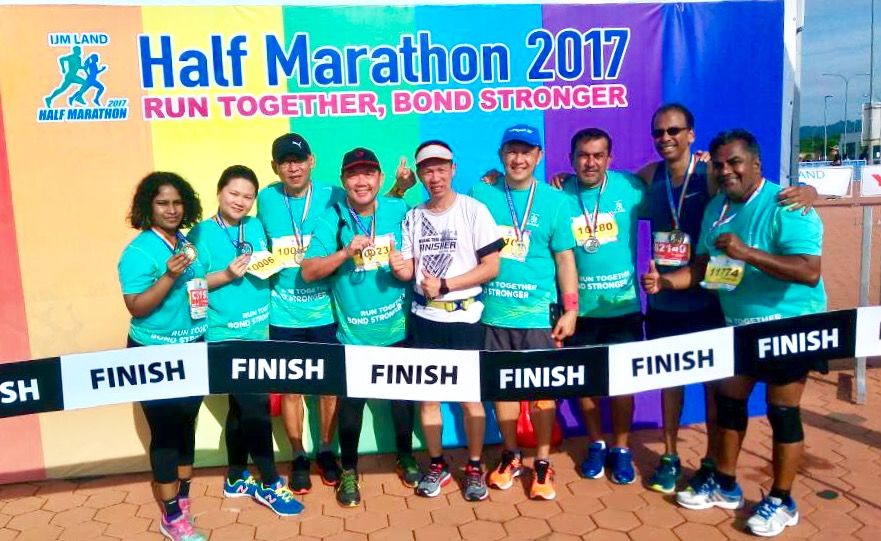
A friend suggested that instead of simply gathering each year, they should sign up for a run together. Their target: The IJM Land Half Marathon which was scheduled for August the following year.
Taking the challenge seriously, Appasamy began 2017 with a resolution to start running, beginning with short 20- to 30-minute run-walk sessions.
As fate would have it, the 10km category was already full, so he signed up for the 21km half marathon instead.
“When you’re passionate about something, you go all in,” he says.
Within months, what began as tentative baby steps turned into a running routine.
He joined a small running group made up of colleagues and friends, gradually building up his distance week by week.
His first race came in May 2017 – a 13km run in Kuala Selangor – after a friend passed him a spare race bib.
Just weeks later, while attending a medical conference in the United States, he signed up (on a whim) for the San Diego Beach & Bay Half Marathon – and completed his first 21km race.
He went on to complete several more half marathons, including the one that sparked his running journey, as well as races in Penang, Kota Kinabalu and Kuching.
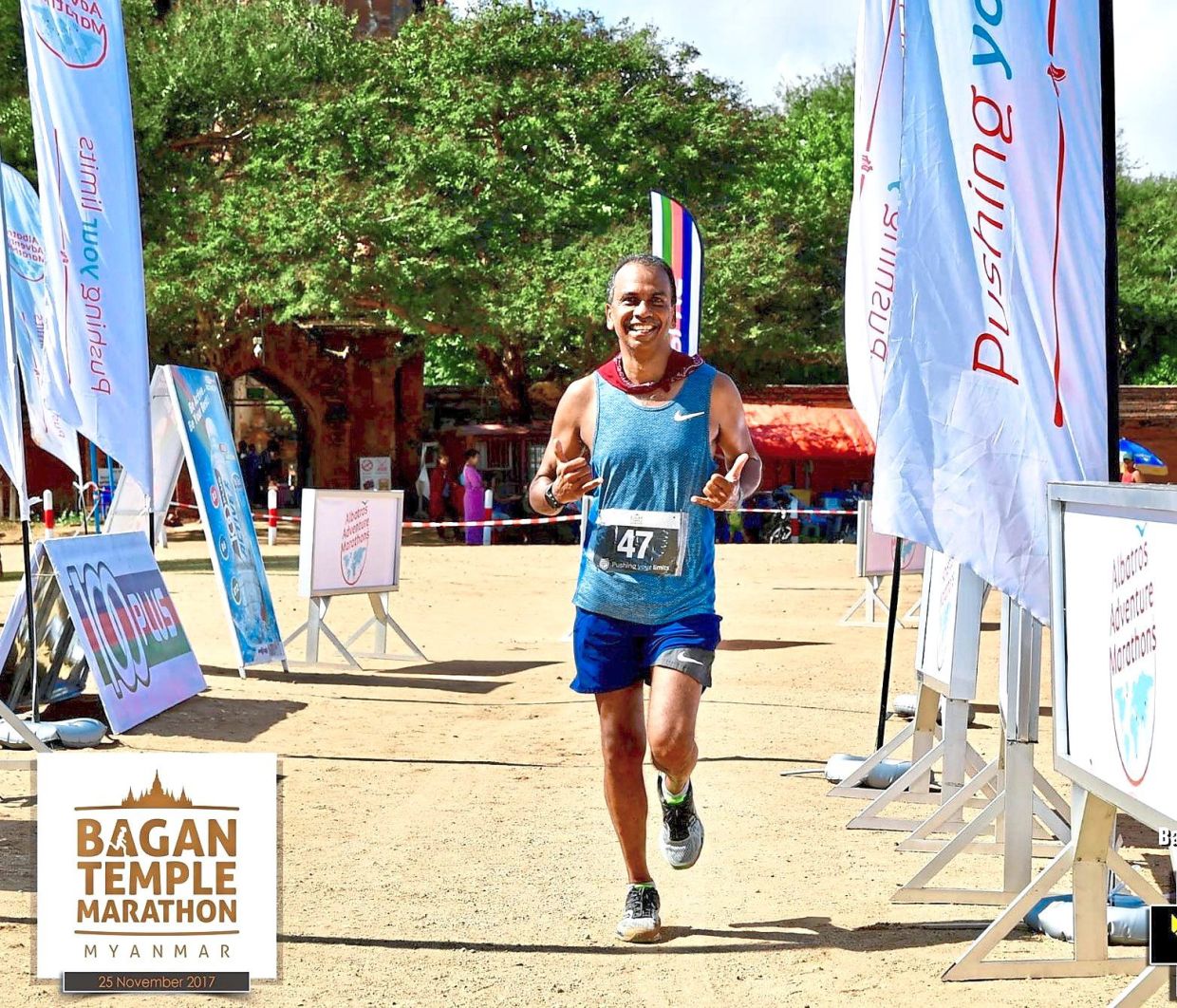
By November that year, less than 12 months after he first started running, Appasamy had completed his first full marathon in Myanmar.
“My confidence just soared after that,” he says.
Chasing the world stage
From his first year of hitting the tarmac and collecting finisher medals, Appasamy’s journey in running grew more ambitious.
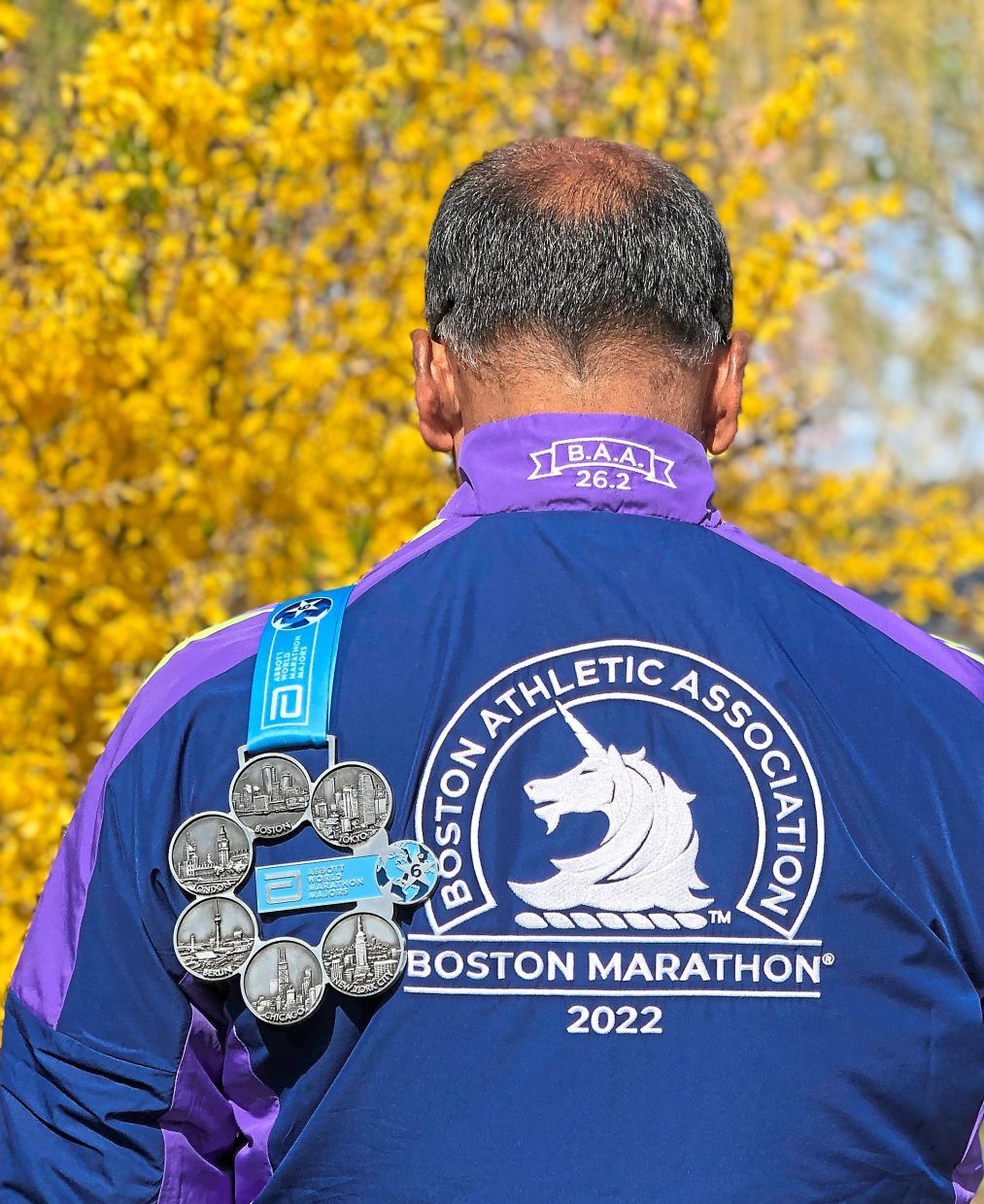
Like many serious runners, he soon discovered the Abbott World Marathon Majors (AWMM) – a series of six prestigious races held in cities such as Tokyo, London, Berlin and New York. Completing all six earns runners the coveted Six Star medal.
Naturally, it became an obsession for the runner.
“I had sleepless nights thinking about it,” he admits, laughing.
Between 2018 and 2019, he ticked off five of the six races.
The final one – in Boston – had to wait due to the Covid-19 pandemic.
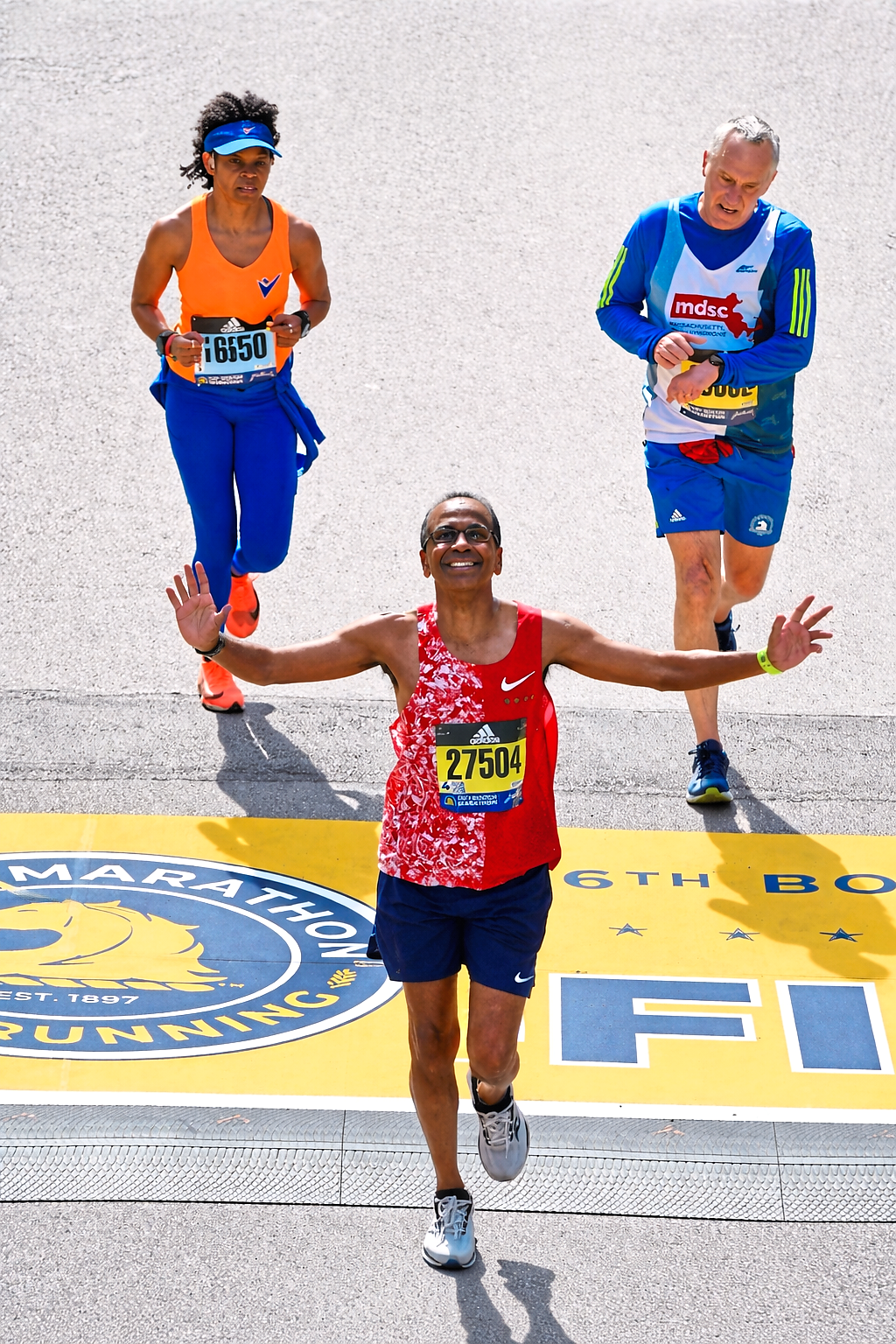
When he finally completed it in 2022, he became one of only a handful of Malaysians to earn the Six Star medal.
For many runners, that would have been the pinnacle. But for Appasamy, it was just the beginning.
After a short break, he began searching for his next challenge.
That was when he discovered the Seven Continents Club (SCC), founded by Marathon Tours & Travel, which recognises runners who complete a full marathon on all seven continents, including Antarctica.
“This was when my soul got restless,” Appasamy says. “I had already completed three continents with the AWMM, and had four more left.”
What followed was a carefully planned, years-long journey.
He ticked off South America with the Rio de Janeiro run; Africa with Cape Town; and Australia with Perth.
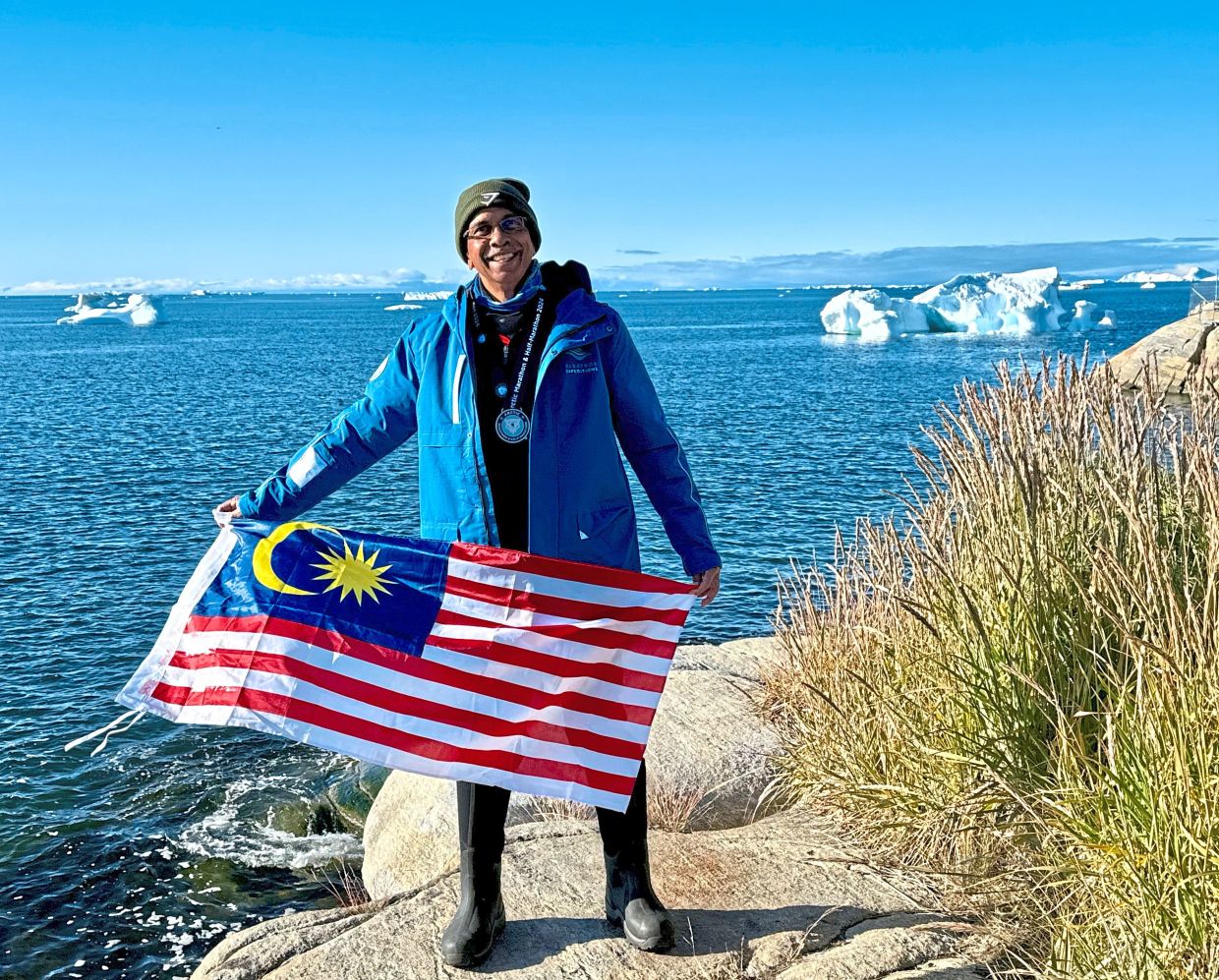
After registering for the Antarctica Marathon in early 2024, he was offered a place in the inaugural Arctic Circle Marathon, with priority given to SCC members.
Appasamy seized the opportunity. In September, he boarded the Albatros Expeditions ship, where participants learned about the Polar Challenge – awarded to runners who complete both the Arctic Circle and Antarctica marathons, in addition to the Seven Continents Club medal.
He completed the Arctic Circle Marathon in 2024 – a gruelling race through snow, rocks and freezing conditions – and saved Antarctica for last.
“I wanted it to be meaningful,” he says.
From Seremban to the world
Long before race bibs and running shoes came into the picture, Appasamy’s story began in a very different setting: Seremban, where he grew up in a modest family of four siblings.
His weekends as a boy were often spent tagging along with his father, a plumber with the Public Works Department, on repair jobs around the neighbourhood.
Those early years, he says, quietly shaped his character.
A student of St Paul’s Institution, he describes himself as a “late bloomer”: Average in his early years, but gradually finding his stride academically.
He believes the school’s strict discipline and strong sense of identity, known as the Paulian Spirit, left a lasting impression.
“I think that was where my character was shaped,” he says.
After completing his A-Levels, he was accepted into medical school at Universiti Kebangsaan Malaysia, marking the beginning of a lifelong career in medicine.
From there came the demanding years of housemanship in Melaka, followed by specialist training in orthopaedics, and later, exposure abroad in Scotland and Germany.
Today, as a consultant orthopaedic and spine surgeon, he leads a busy and demanding professional life – one that requires precision, focus and constant learning.
“Basically, I am a workaholic. But I regularly take a one-week break every quarter to keep my sanity, recuperate and recharge,” Appasamy says.
“My passions back then were travelling, food and photography, and spending quality time with family. But I was never athletic.”
Discipline over speed
At his age, Appasamy approaches running differently.
“I listen to my body more,” he says. “Consistency is more important than speed.”
His training is flexible, shaped around his work schedule. Some runs, he says, happen early in the morning; others take place late at night, even close to midnight with long runs often done on Sunday evenings.
“If you can train in Malaysia,” he jokes, “you can run anywhere in the world.”
His medical background also plays a role in the way he trains. As a spine surgeon, he understands the importance of injury prevention, proper form and recovery.
“I don’t ignore pain,” he says. “I adjust, I rest.”
For him, running has reshaped not just his body, but his perspective on ageing.
“Getting older doesn’t mean you stop,” he says. “You just have to be smarter.”
He believes many limits are self-imposed.
“Age is just a number. What matters is your mindset, discipline and consistency.”
Running, he adds, has also made him a better doctor – more patient, more empathetic, and better able to relate to those who want to stay active later in life.
A journey of support
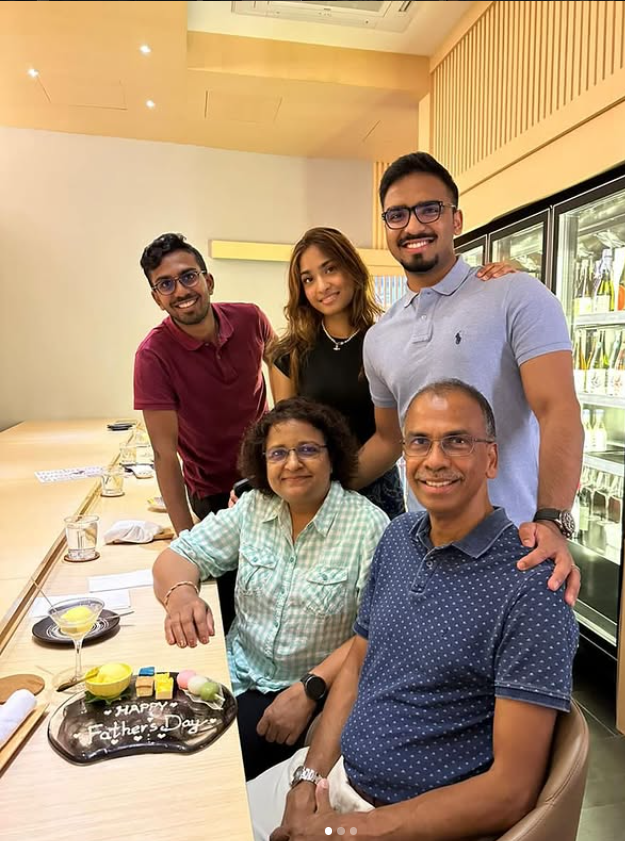
Appasamy says that behind his achievement is a strong support system. His family, he says, has been his biggest pillar, understanding the demands of training and travel.
Colleagues helped accommodate his schedule. Friends, both old and new, provided encouragement and companionship along the way. The Old Paulian community, in particular, holds a special place in his journey.
He carried a commemorative school banner with him to both the Arctic and Antarctic races, dedicating his runs to the institution that shaped him.
Looking back on his 10-year journey, Appasamy says, “It started with small baby steps. I never planned all this.”
What began as a personal effort to get fit had turned into a global journey of endurance, discovery and transformation.
“This is not just about running,” he says. “It’s about self-belief, stepping out of your comfort zone, and enjoying the process.”
Today, his message is simple: “You don’t have to start big. Just start. Be consistent.”
Enjoy the journey. You will be surprised how far you can go.”