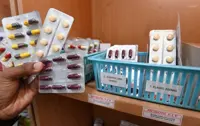
Many of us keep our medication in sight so we won't forget to take it.
But that is not a good idea if you have young children in your household, as accidentally taking medicine poses a health risk to them.
Even a single tablet intended for adults can be life-threatening if swallowed by a child, says the Lower Saxony Chamber of Pharmacists in Germany.
Because children have a lower body weight, medication has a stronger effect on them. Here are three examples of how medication – even in small doses – can affect a child's body:
Beta blockers such as metoprolol can cause dangerous irregular heartbeat in children.
Painkillers that affect the central nervous system can cause slower and shallower breathing, as well as loss of consciousness and seizures.
Medicines for depression and delusions can also cause seizures in children, as well as confusion and disturbances of consciousness.
How parents should respond in an emergency:
Caught red-handed with the blister pack in their hand? Or has the child confessed that they found and swallowed some “sweets”?
Parents, to take a deep breath and stay calm – even if that's difficult. Remove any remaining medication from the child's mouth but don't induce vomiting, partly because of the risk of suffocation.
Instead, call your local emergency services, says Germany's State Chamber of Pharmacists. Or contact your poison emergency centre immediately. Check online to find out what poison emergency numbers to call.
Talking to a specialist can help clarify how dangerous the medication is for your child and what is the best course of action. To do this, provide information about which medication is involved and how much you think your kid has taken and when.
In some places, you may be able to get help in an emergency from an app so check online.
In Germany, for example, there is one for poisoning accidents in children, by the Federal Institute for Risk Assessment. It is designed for parents to look up exactly what to do with which medications.
How parents can prevent poisoning with medicine
Ideally, keep blood pressure medication, thyroid tablets and so on out of the hands of children. Pharmacists advise you keep medicines in a lockable cupboard, including herbal preparations and vitamin tablets as these can also harm youngsters, says Germany's State Chamber of Pharmacists.
Medicines that need to be stored in the refrigerator are best kept in a container that is difficult to open.
Take your medicines out of sight of children to prevent them from imitating the behaviour, says the Federal Institute for Public Health (BIOG). – dpa