
When 75-year-old Madam F’s husband passed away, she inherited the family home, which she occupied with her grown son, his wife, and their two children. Subsequently, her son approached her to sign some documents that would transfer the property to him. She trusted her son and signed over the family home to him. He then put the house up for sale, saying he needed the money for his children’s education, but later bought a new car. Madam F was distraught she had lost the family home, which she and her late husband had built and where many fond memories had been created.
Uncle S, a widower in his 80s, lived alone with a foreign caregiver. One day, Uncle S’s children were shocked to find out that he had married his caregiver. There were valid marriage registration documents produced and also a will, leaving all his property and money to her as the beneficiary.
These are just two examples of elder financial abuse, an issue that occurs much more than people realise, says advocate and solicitor Datin Ranuga Devy M Packirisamy, 70, who handles cases for elderly clients. She is also treasurer of the Malaysian Healthy Ageing Society (MHAS).
Elder financial abuse is defined by the World Health Organisation (WHO) as “the improper or unauthorised use of an older adult’s money, wealth, belongings, property, or assets for the benefit of another (usually the abuser). It is often committed by ‘trusted’ people close to, or known by the victims, including children, sons/daughters-in-law, spouses, relatives, etc”.
This is a type of elder abuse and neglect (EAN) which WHO defines as “a single/repeated act, or a lack of appropriate action, occurring within any relationship where trust is expected, which causes harm or distress to an older person”.

World Elder Abuse Awareness Day is observed on June 15 every year, globally, to offer communities the opportunity to stand together against the abuse, mistreatment, and neglect of older people.
There are many types of elder abuse, including physical, mental and emotional, sexual, neglect, abandonment, and financial. Such abuse causes serious risks and harm not just physically but also psychologically (mentally/emotionally) to the elderly person.
In the study “Elder Financial Abuse: Protecting and Empowering Our Seniors” (National Credit Counseling and Management Agency/Financial Education Well-Being Research Centre, 2023), it is mentioned that “globally, EAN affects around one in six older adults and in Malaysia, one in every 10 adults is a victim”.
The study also refers to EAN as the “silent pandemic” which makes it very difficult to identify and deal with.
It highlights that in the United States, for every case of elder abuse reported to authorities, as many as 23 cases go undetected, meaning only one in 24 cases is reported (American Psychological Association, 2021).
And, in Malaysia, one in three victims of elder abuse keep the abuse a secret, according to the National Health and Morbidity Survey, 2018.
The study revealed that financial abuse was the highest at 4.8% compared to psychological (3.4%), physical (1.2%), neglect (1.1%) and sexual (0.3%), although financial abuse often occurred with psychological abuse.
59% of EAN victims also suffered from financial abuse, and 81% of EAN victims suffered from both financial and psychological abuse.
Targets: Seniors who live alone
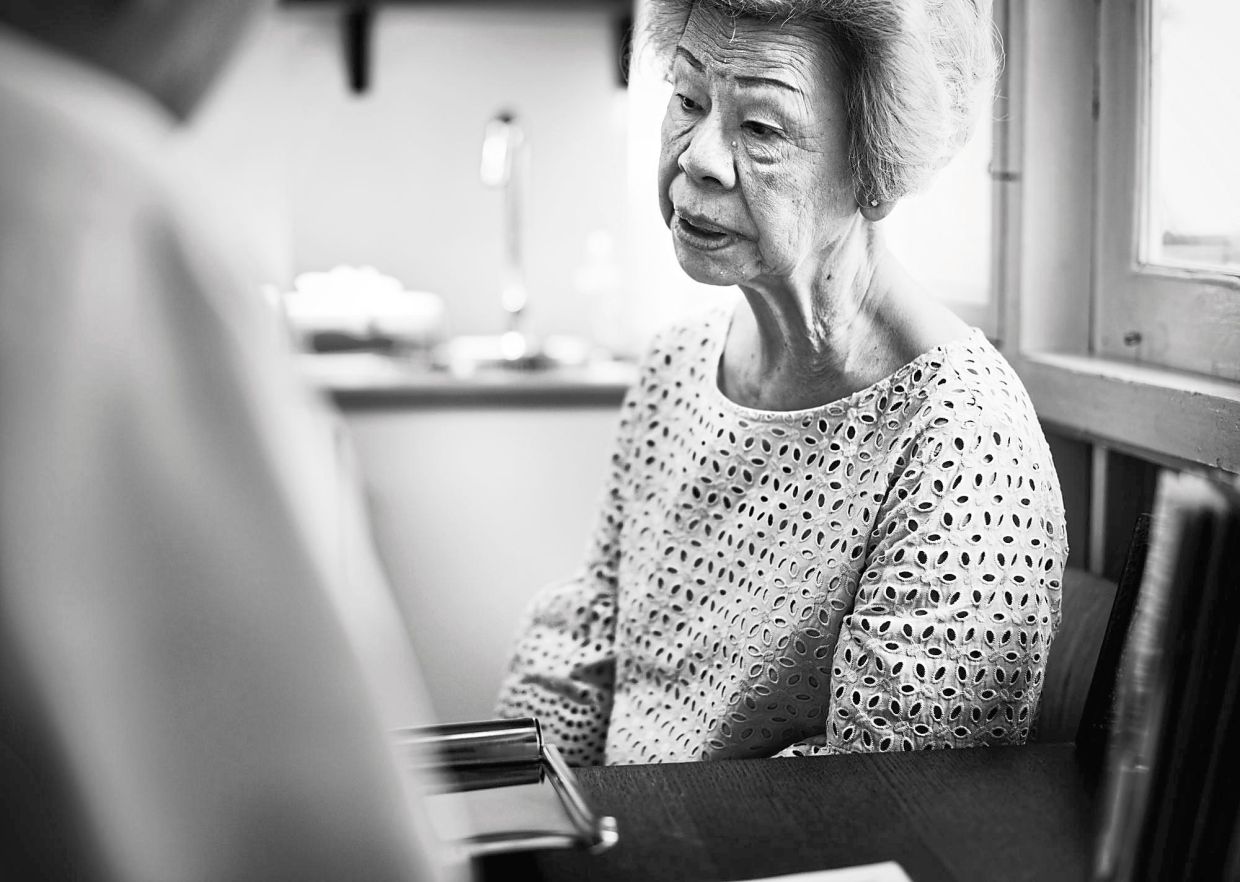
While financial abuse is mostly unrevealed, data from the study which had 1,927 respondents above 60 years old with almost half above 70, reveals that the profile of usual targets were low-income earners who live alone.
According to the study, financial abuse is expected to rise in the future for several reasons: “the silver tsunami, referring to the increasing number of older adults in an ageing society, and longer lifespan where older people live longer and with cognitive impairments such as dementia or physical and functional limitations, needing daily assistance, which lead to a higher risk of abuse".
The study also revealed that the increased usage of digital technology in online banking and e-commerce transactions make deception and exploitation easier.
For example, a family member managing an older adult’s finances might have access to their bankcards and online passwords. While this should help facilitate the older person’s life, it also puts them at higher risk of abuse.
It also said that an integrated approach from an individual, community and institutional level, is needed to address the issue of financial abuse among older adults in Malaysia.
Individually, education such as “raising awareness, empowerment, and a targeted approach driven by best practices, with children as a protective shield” are key.
Community-wise, “it takes a village to protect our elders” where community leaders, religious leaders, advocacy groups, etc need to educate the public on financial abuse and influence families on such matters.
From an institution perspective, a “multi-sector approach” is required where government, semi-government, private institutions and NGOs need to all play their roles.
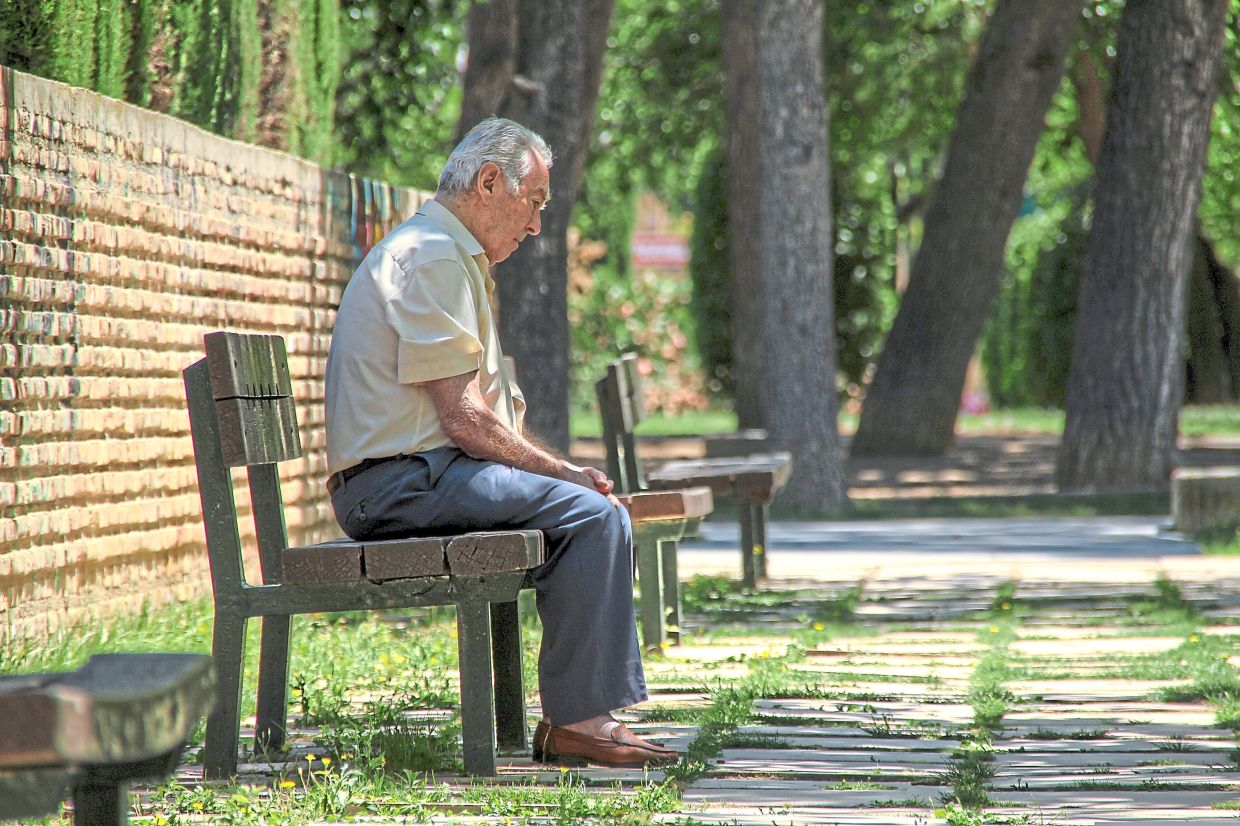
According to Ranuga, there is a need for a specific law to protect the elderly.
“While there are specific laws to protect the rights of women, children, the disabled, indigenous peoples, and even animals, there is no specific law to protect the rights of the elderly,” she highlights.
“The closest would be the Domestic Violence Act but that is a blanket law that protects families, especially women and children, and isn’t specifically for the elderly,” she says, adding that MHAS has been advocating for such a law to be passed.
“In addition, we’ve been advocating for the Maintenance Act like what they have in Singapore where parents can sue their children for maintenance.
“The Maintenance of Parents Act (Cap. 167B) states that Singapore residents, 60 years old and above, who are unable to maintain themselves adequately, are entitled to claim maintenance from their children,” says Ranuga.
She adds that MHAS has also been advocating to have daycare centres where adult children can drop their elderly parents off and take them back at the end of the day so that they won’t be home alone, feeling lonely or fearful of mishaps occurring.
“But most children have complained that it’s tiring to send their old parents to the daycare centre and fetch them back, even though they’ve no issues sending and fetching their kids to and from the childcare centre.
“The elderly are left at home alone, sometimes with a maid who isn’t qualified in caregiving for the elderly, and abuse could happen,” she says.
Something needs to be done
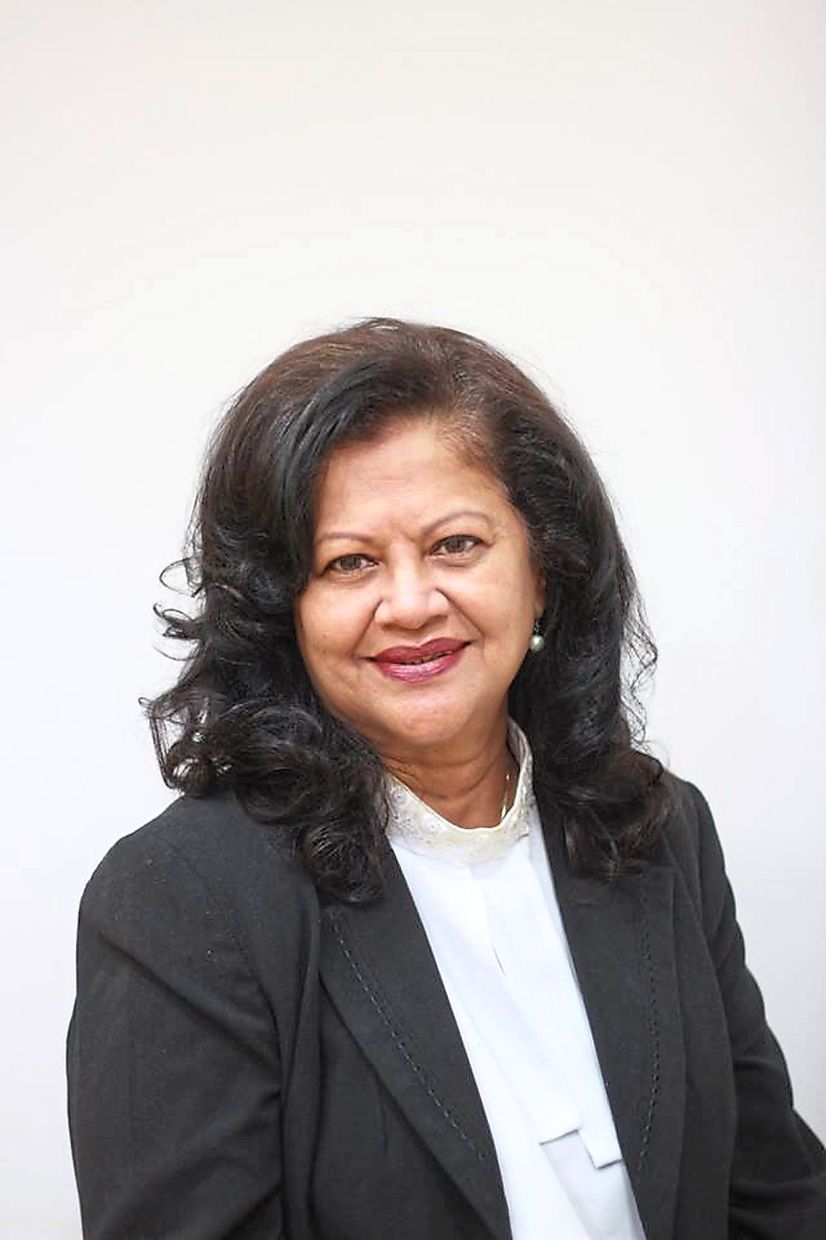
“Observers should be given the right to report. If someone sees the abuse but isn’t personally involved in it, they should be allowed to report it so that something can be done to protect the elderly person.
“Currently, for action to be taken against elder abuse, the victim needs to make the police report personally. Even if they are able to do so, they’ll still have to return home after that and possibly face retaliation,” she says.
To circumvent elder abuse, we need to help them to remain healthy and independent, as far as possible. To do this, raising the retirement age is recommended.
“In Japan, it’s 65, in Singapore, it’s 63 but they intend to raise it to 64 in two years’ time. But in Malaysia, it’s 60.”
Instead of retiring the elderly, Ranuga encourages utilising their wealth of knowledge and experience in mentor-mentee interactions.
“Elderly people should be allowed and encouraged to lead independent lives. If they are, then there’s less likelihood of them getting abused, whether financially or otherwise,” says Ranuga, adding that Penang has approached MHAS to help make it an age-friendly city and a three-year plan has been implemented.
“It’s the first city in Malaysia to become age-friendly where WHO’s standards of being age-friendly are followed. Things such as lighting, greenery, wet toilets, stairs, wheelchair access, etc. are being looked into,” she says.
“Elderly persons need to be educated on how to take care of themselves from a legal and financial perspective.
“For example, don’t transfer your property or assets while you’re still alive. Instead, write a will or create a trust (if you’re afraid a will will be changed later).
“Also, don’t give your bank cards or passwords to anyone,” she adds.
The law to protect the elderly must be in place. Punishment must be higher for those who harm elderly people because they’re a vulnerable group and can’t run or fight as easily, says Ranuga.
Just as there are dedicated helplines for children and women, there needs to be a specific helpline for the elderly, she says.
“The government should also give incentives to companies who are hiring the elderly, and also, for the elderly to return to graduate or post-graduate studies. They can also learn how to use technology to prevent themselves from being scammed.
"Childcare centres can employ seniors because they have so much love to give. Many are grandparents and have experience in taking care of young ones. This way, they can earn and also contribute to society, she suggests.
Ranuga says that councils to take care of the interests/needs of the elderly need to be set up to create awareness and educate families on caring for the elderly. Also, there need to be community centres for the elderly to interact and share their ideas.
If elderly persons are back in the community, interacting with younger people, staying lucid (learning and retaining information), and contributing back to society, this will also minimise the risk of elder financial abuse, concludes Ranuga.