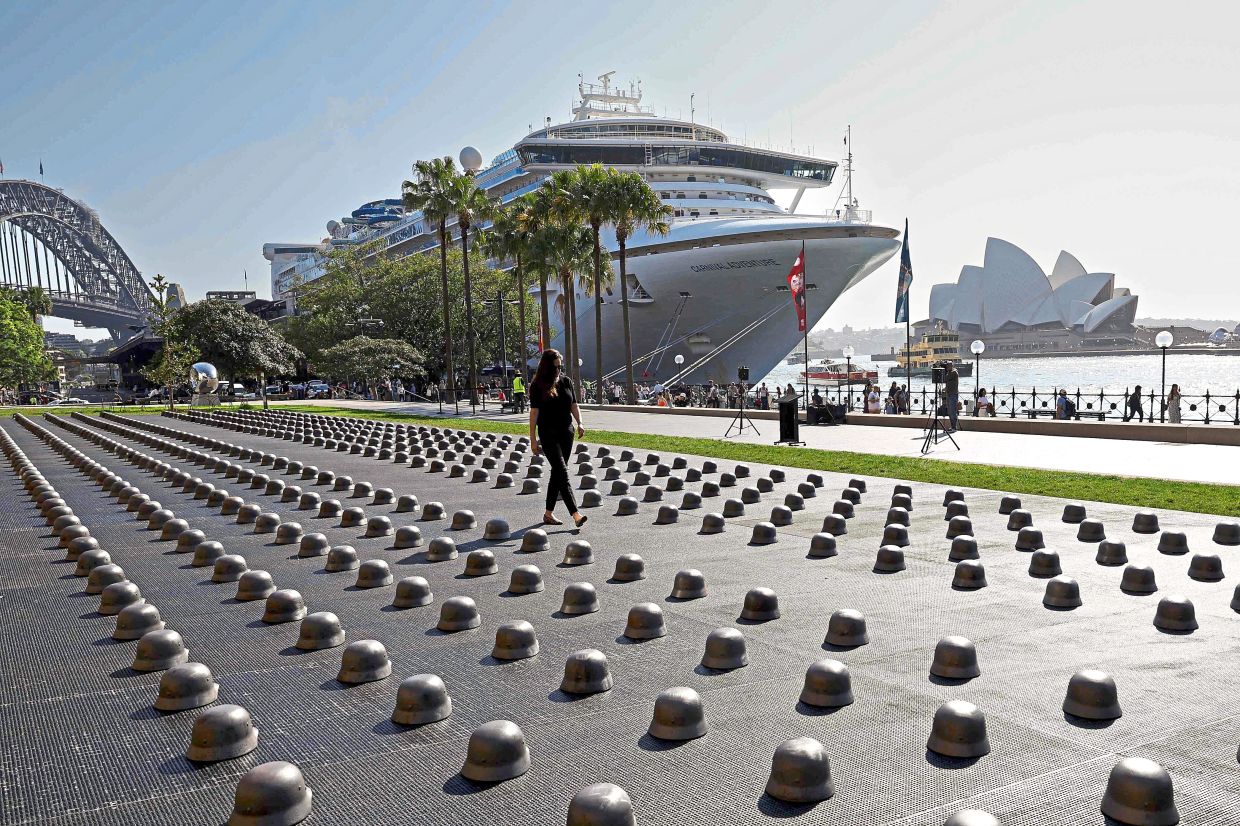
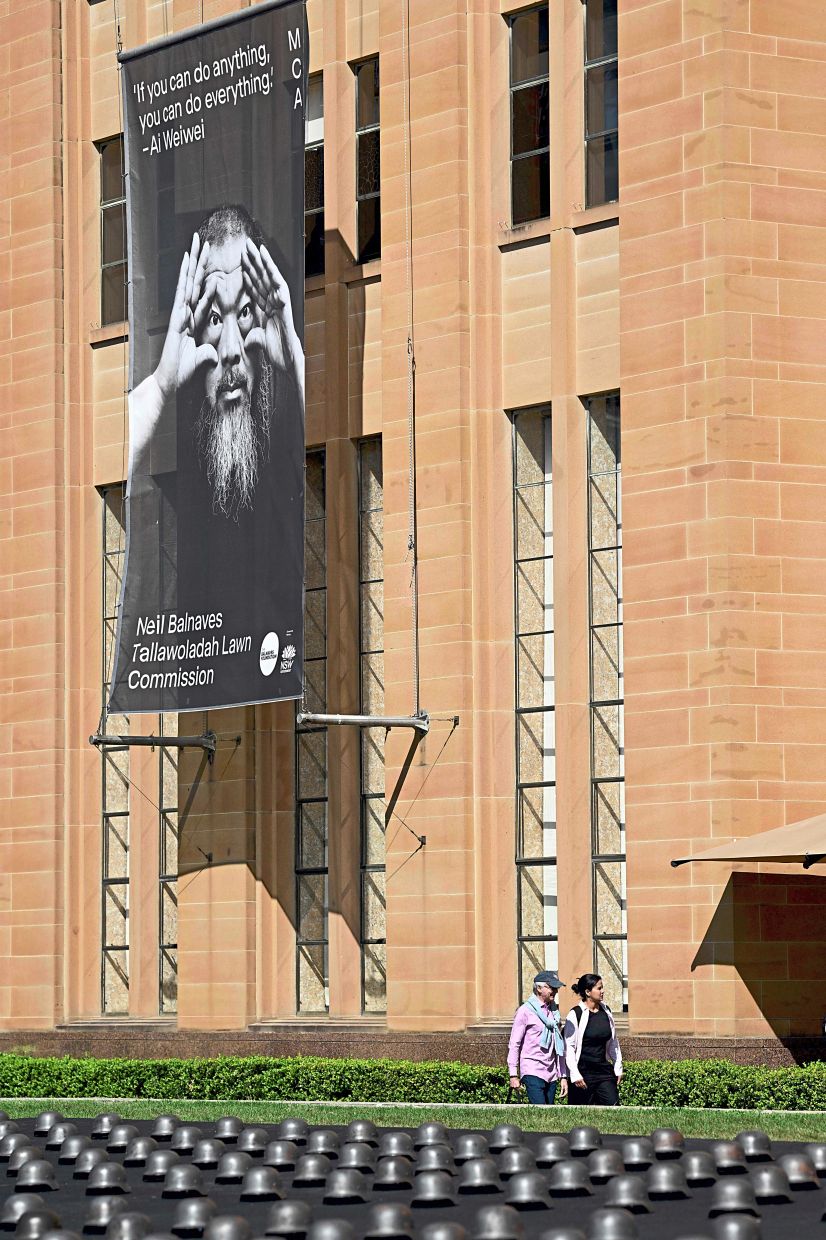
Visitors to Sydney, Australia can see the latest work by Chinese artist Ai Weiwei, who has unveiled an installation of 500 cast-iron combat helmets outside the Museum of Contemporary Art Australia.
The 40m installation is inspired by Germany’s controversial decision to send helmets rather than weapons to Ukraine in early 2022.
Called Mushrooms, the work can be found on the public green space Tallawoladah Lawn, overlooking the city’s famous harbour.
You can visit the installation free of charge until 2028.
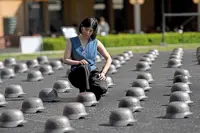
Visitors can find the helmets arranged in 10 even rows on a raised platform, with a central walkway allowing people to pass through the middle of the work.
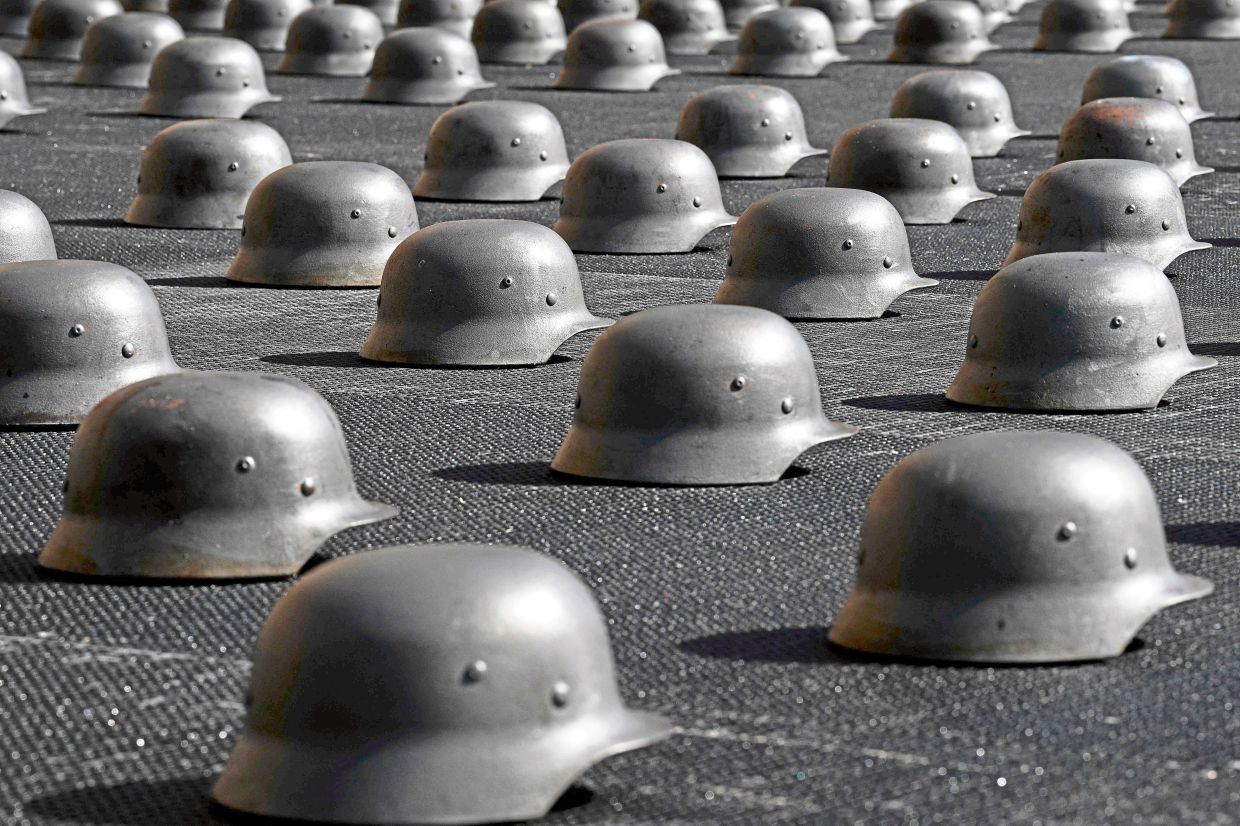
The individual helmets are replicas of various 20th-century combat helmets, complete with their inner padding, and represent both the protection and the vulnerability of human life.
In a statement published by the museum, the artist says, “In the era we live in, the 21st century, wars have not ceased.”
“We continue to exist in a time where war and peace interchangeably assume each other’s roles, shaping the identity of our age. I hope this work prompts people to reflect on war and peace,” he says.
The work is closely linked to a controversial episode in German policy on Ukraine. According to the museum, the starting point for Mushrooms was the government’s decision to supply Ukraine with around 5,000 protective helmets in early 2022.
The delivery drew fierce criticism and became a symbol of what critics saw as Germany’s hesitant support for Ukraine.
Kyiv’s mayor and former world boxing champion, Vitali Klitschko, said at the time: “Five thousand helmets are an absolute joke. What does Germany want to send next as support? Pillows?”
Ai says the title Mushrooms refers to the appearance of the helmets, but also to the properties of fungi: They transform decaying material into new life and represent growth in darkness.
The word evokes mushroom clouds from nuclear explosions, he says. And in Chinese, “the term also suggests endless delays”, he notes.
To create the installation, he employed artisans in a Chinese foundry to produce hundreds of iron sculptures based on various 20th-century combat helmets.
Each sculpture was made from a single mould and is a meticulous one-to-one replica, featuring the interior cushioning of the original design.
The work invites viewers to advocate for peace, suggesting that even imperfect efforts can become the seeds of understanding, healing and meaningful change, the artist says.
“I believe every human being has to exercise their rights and skills to protect humanity. We all have a responsibility to ask for peace and to stop wars,” says Ai.
He has focused on conflict, displacement and the human condition for decades.
Ai began thinking about Mushrooms while creating the documentary film Human Flow (2017), which focused on the greatest mass displacement of people since World War II, a number which has since doubled due to escalating international conflicts.
“Through that journey of making a film, I started to realise war is the most crucial factor in creating all those injustices and casualties in the world, not just in the past, but also now,” says Ai.
From Francisco Goya’s The Disasters Of War to Pablo Picasso’s Guernica, artists have long responded to the realities of conflict through art.
Australian artists Nora Heysen and Ben Quilty have also grappled with the human consequences of war and its aftermath.
With Mushrooms, Ai adds a timely voice to the tradition of artists creating works that call for peace.
It is not Ai’s first large-scale artwork. He created Remembering (2009), an installation of 9,000 backpacks which commemorates the children killed in the 2008 Sichuan earthquake.
His Sunflower Seeds (2010) was a creation of millions of handcrafted porcelain seeds in Tate Modern’s Turbine Hall to evoke the power of collective effort.
Law Of The Journey (2017) is a 60m inflatable artwork depicting hundreds of refugees crowded into a vessel, first presented at the Biennale of Sydney in 2018. – dpa