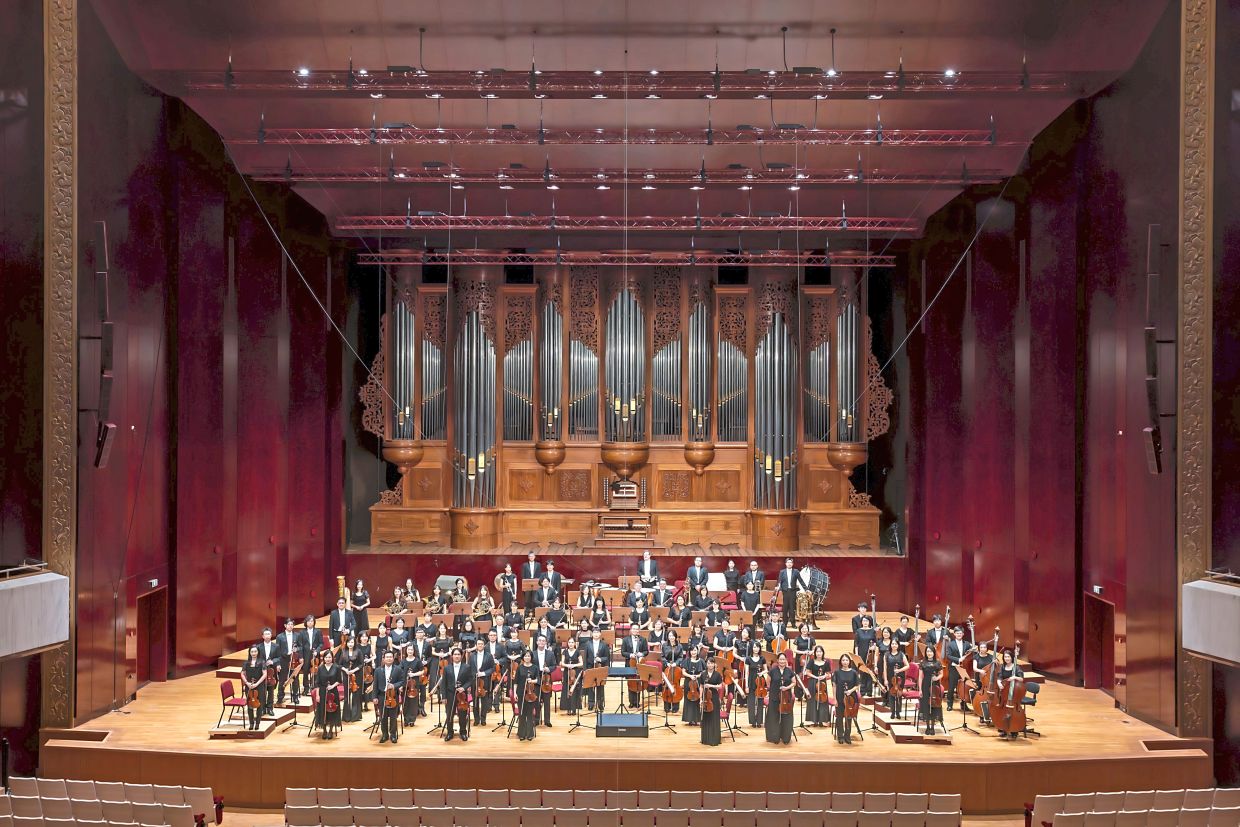
Taiwan's oldest orchestra, the National Taiwan Symphony Orchestra (NTSO), makes its long-awaited Malaysian debut at Dewan Filharmonik PETRONAS (DFP), KLCC on Oct 12, with a concert programme that brings Taiwan’s musical heritage to a wider audience, exploring how music can evoke memory, identity and a sense of home.
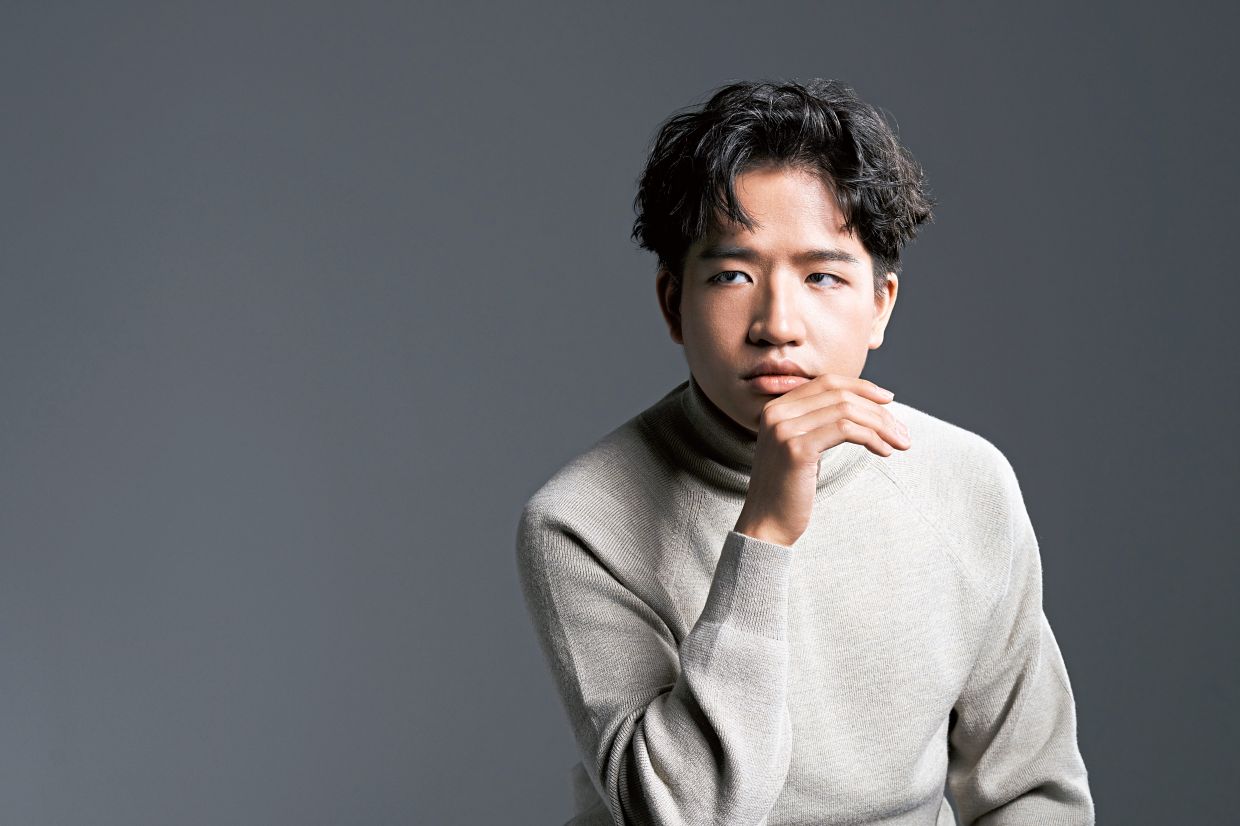
At the podium is Tung-Chieh Chuang, the acclaimed Taiwanese conductor who won the Malko International Conducting Competition in 2015 and has since led orchestras across Europe and Asia.
He has a ready answer when asked what classical music means to him.
"It means to listen to each other," says Chuang in a recent video call ahead of the Listening To Taiwan – NTSO 2026 Asia Tour Concert. "And that is really what we need so much nowadays from everybody."
People often say music is a bridge between people, Chuang notes, but what does it mean to connect with another human being? "For me, it is to listen." Listening, he adds, is "much more powerful" than expressing yourself, and hearing another person is "also looking into a mirror."
It is a curious thing for a conductor to say. From the audience's perspective, the role can look entirely visual, making it fascinating to ponder how much deeper that communication and the relationship between conductor, orchestra, and score really goes.
"I might walk on a podium, and have all these gestures and cues. But essentially, what am I doing?"
"I'm actually listening. Every moment, every second, intensely,” he says, as a way of attending to how the orchestra understands and performs the music.
Listening as a method
Chuang’s discipline of listening is what makes a short rehearsal period workable.
"The same music means different things to different orchestras, because they all have their own history with the music," he says.
The 44-year-old is quick to acknowledge that other conductors may have led the same piece before him, so he arrives to find interpretations that already exist.
"So first, you have to listen before you speak, because if you don't understand them, there is no foundation before you have your first dialogue,” says Chuang, who began as a horn player, and later trained at the Curtis Institute of Music (United States) and Hochschule fur Musik “Franz Liszt” Weimar (Germany).
A decade after the Malko Competition, that instinct has deepened. Leading a traditional German orchestra (Bochum Symphony Orchestra), Chuang says, made him value the tradition of interpretation more than the innovation he once prized. Now he is drawn to the conductors who came before him, who "left kind of like ghosts in music interpretation."
He hears them in rehearsal "between the lines, between the notes": a tempo that stretches, a note that is leaned on. "Why do they demand more emphasis on this note?" he asks.
He loves finding these "crumbs" left behind.In this account, the orchestra becomes a kind of archive. Rehearsal is "(an) exchange between conductors through [the] orchestra," with players "passing the stories from conductor to conductor." He adds, "It's a really romantic thing."
Chuang, of course, is no pure romantic, or not only. Before he committed to the podium he studied statistics, and he is unsentimental about its value. "There is nothing more practical than statistics," he says, describing a discipline that asks you to "put all the emotions aside, please."
It shaped his approach to deep score analysis and to examining "what would work and what would not work."But Chuang is a musician at heart, who had trained in music for at least 12 years before that. His father, Szu-yuan Chuang, is one of Taiwan's most influential French horn figures, and his mother, Mei-Ling Chang, is an accomplished cellist and music professor.
"I definitely have these romantic genes in my heart," he says. "Music has always been this huge thing in my family."
It was in the final years of his degree in statistics at Purdue University that he knew he could not put music aside. It became his "life’s mission," because music asks something no other art form quite does, “it forces us to connect with each other through listening, without words. So we are driven to listen at an even deeper level.”
A word that Chuang returns to the most is balance, which appears to be a negotiation between the practical and the philosophical. "A conductor can never be too philosophical," he says.
"If you are too idealistic, then the orchestra gets frustrated with you because all you have is a dream."
“Musicians will try your ideas a few times,” he continues. "If all the things you want to try do not work, then in the end, they just give up on you." Being practical, he explains, is also a way of showing that "you respect that they are the ones who have to make this happen."
Or, as he puts it, "They are the ones who make sound, not you."That balance extends to time. Each performance carries the orchestra's history with a piece, Chuang's own history with it, and the moment in front of them, and no performance will repeat.
"We will play differently in Malaysia and in Singapore," he says. Listening is what holds these together. "By listening, you actually live in the moment."
To carry a place with you
If the programme sounds like a philosophy, Chuang describes its making as a series of practical decisions.
"If you are bringing the oldest Taiwanese orchestra out to the world, then you should play something Taiwanese that represents your home." There also had to be something new. "We felt it was also important to include contemporary music as one of the topics," he says.
The upcoming Listening To Taiwan concert at DFP opens with Taiwanese composer Ching-Shan Chang's Echoes Of Eight Decades, commissioned for NTSO's 80th anniversary. Chuang says it holds "many lines from her homeland,” and that listening closely is a way of receiving it.
Chopin's Piano Concerto No. 1 follows and features Berlin-based Malaysian pianist Vincent Ong, who this year made history as the country's first-ever finalist and fifth-prize winner at the International Fryderyk Chopin Piano Competition (in Warsaw, Poland).
“It was clear to us that we had to play Chopin with him,” says Chuang.
A Penang-born pianist playing a work about leaving home, to a Malaysian audience, is a coincidence the programme doesn't have to spell out.
After the interval comes Tyzen Hsiao's The Angel From Formosa, written when Hsiao was in the United States, as an expression of Taiwan’s land and its people. The evening ends with Rachmaninoff's Symphonic Dances, with its honey-like, long, melodic, never-ending, beautiful lines offering a sense of peace and surrender.
The four pieces beckon audiences to think about what the homeland might mean, and what it costs to be away.
Each piece in the programme carries a different relation to the ideas of the homeland as something inherited, something left, something missed and something reconciled. Nothing in the programme asks for a verdict, only that we listen.
Chuang hopes that listeners might think about “how sweet it is to live our everyday life in our home country and to consider how blessed we are to be home," as he speaks about living in Germany and missing Taiwan.
For those away from their homelands, Listening To Taiwan may offer a reflection of what it means to belong and to carry a place with you.
Listening To Taiwan – NTSO 2026 Asia Tour Concert takes place at Dewan Filharmonik PETRONAS, KLCC in Kuala Lumpur on Oct 12.