Regional art collective exhibitions are relatively uncommon in Kuala Lumpur. The group exhibition Tolong Menolong seeks to address this gap by bringing together three South-East Asian community art collectives – Pangrok Sulap (Malaysia), Taring Padi (Indonesia) and Patani Artspace (Thailand) – in a cross-border collaboration grounded in the principle of mutual help.
Running at Sareng Gallery (Level 8, Menara Chan) in Kuala Lumpur, through Nov 28, the exhibition explores how art connects communities and expresses shared concerns across geographical and cultural boundaries.
While the collectives already had an established working relationship, Sareng Gallery founder and director Syukur Ali saw an opportunity to bring their collaboration to Kuala Lumpur and introduce their practices to new audiences.
“The three art collectives came together for the Tolong Menolong project, first presented at Patani Artspace in Pattani, Thailand in June last year. After seeing the project there, we saw the potential to extend the collaboration to Kuala Lumpur. Many interesting artistic practices are emerging across South-East Asia, but not all receive the recognition and exposure they deserve,” says Syukur.
“What makes this collaboration interesting is that each collective comes from a different social, cultural and political background, yet shares the belief that art should extend beyond galleries and institutions. They see it as a means of connecting with people, expressing concerns and contributing to society,” he adds.
For newcomers, it is worth noting that Indonesian activist art collective Taring Padi, founded in 1998, has an established international presence, including participation in documenta fifteen in Kassel, Germany, in 2022, curated by fellow Indonesian collective ruangrupa. Taring Padi's multidisciplinary practice spans woodcut prints, posters and life-sized recycled cardboard puppets (wayang kardus).
Based in Yogyakarta, the collective is also a familiar name in Kuala Lumpur's regional group shows, having exhibited at Ilham Gallery's Afterwork (2017), Democracy In Action (2019) and Carving Reality: Contemporary Woodcut Exchange Exhibition From East Asia at The Back Room (2020).
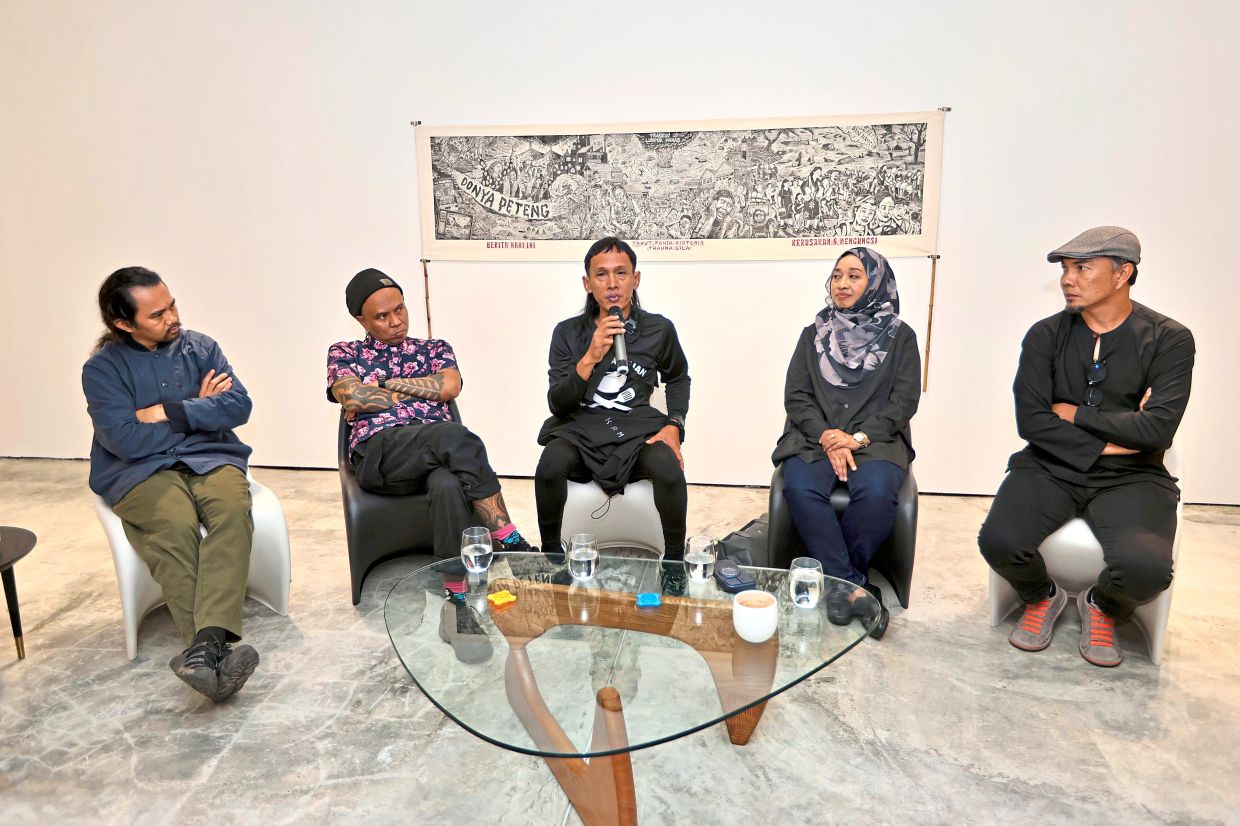
The Tolong Menolong exhibition opened recently with an artist-sharing session featuring Ipoh-based curator Nur Hanim Mohamed Khairuddin and representatives from the three collectives: Sulaeman Akbar (Taring Padi) and Bayu Widodo (Taring Padi), Adi Helmi Jaini (Pangrok Sulap) and Jehabdulloh Jehsorhoh (Patani Artspace).
“Taring Padi uses art as a platform for political expression and collective resistance. Pangrok Sulap places strong emphasis on community participation, local narratives and empowerment," says Syukur.
"Patani Artspace creates a space for artistic expression, cultural exchange and dialogue, particularly in a Thai region with its own complex social realities. Their methods may differ, but their underlying values are very similar: solidarity, mutual support, freedom of expression and the belief that art can bring people together,” he adds.
The exhibition at Sareng Gallery features 17 artworks, including several series of large-scale woodcut prints on fabric using various inks.
Some of the works also draw on the visual vocabulary of protest banners.
Grassroots art connects
Taring Padi’s The Wayang Beber Matahari Rakyat series (linocut print on fabric) draws on the collective’s history of solidarity work and network of allies to explore the idea of mutual aid.
Presented as a scroll-based storytelling installation, or wayang beber, the work unfolds across seven acts and seven scrolls.
“The work draws on pitu, the Javanese word for seven, which resonates linguistically with pitulungan which means assistance or mutual aid,” reads the artistic statement from Taring Padi.
Matahari Rakyat follows the “Sun family” as they are forced from their home and become refugees after a series of natural and human-made disasters. Based on real-world events, the fictional story shows how people can help and support one another in times of crisis.
For those new to the work of art collectives, Taring Padi offers a good introduction. Drawing on Indonesian storytelling traditions, the collective weaves personal experiences with wider political concerns, connecting local histories to struggles taking place across the region.
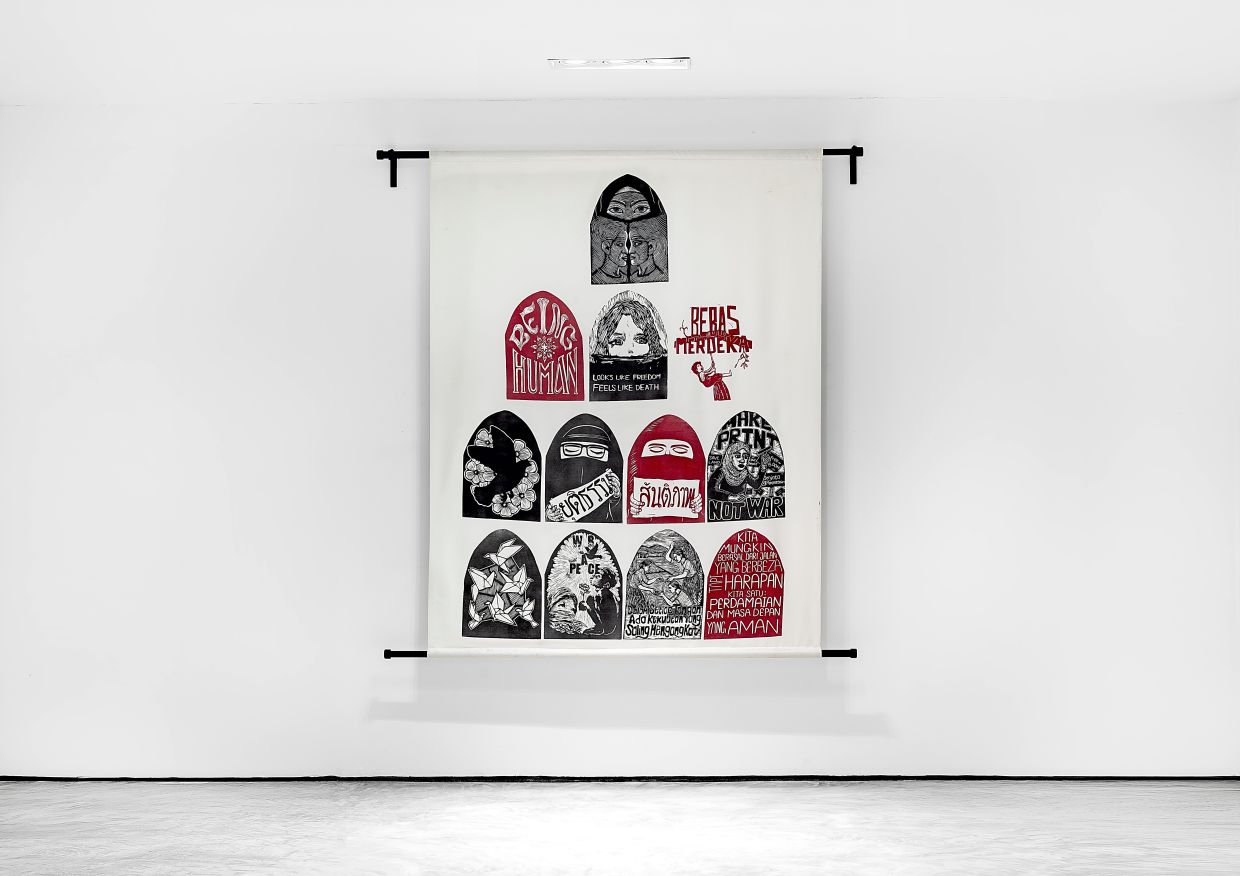
Sabah-based Pangrok Sulap, formed in Ranau in 2010, about 100km from Kota Kinabalu, presents Every Voice Is A Bullet, a series of woodcut prints using offset ink on satin fabric. The work gives the bullet, usually associated with violence, a different meaning: one of solidarity and collective strength.
“For the Tolong Menolong exhibition, we crafted A3-sized woodcut blocks in the shape of bullets. Each block features images and narratives about solidarity, cooperation, and relationships between people, including our connection with nature. While bullets are often associated with violence, we aimed to give them a different meaning. Instead of representing destruction, they become symbols of strength and togetherness,” outlines a statement from Pangrok Sulap.
Having exhibited internationally and entered the collections of various art institutions, the collective places community participation at the heart of its practice. People are not simply subjects of its work but active contributors to the creative process.
“One simple belief we hold is this: if you are running out of salt, I will share mine with you. If I am short of something, perhaps you can help me in return. Assistance doesn’t always have to be financial or material; it can also be in the form of our energy, time, experiences, and ideas. This encapsulates our understanding of the spirit of tolong-menolong, or helping one another,” the statement continues.
Formed in 2012, Patani Artspace engages with the ongoing unrest in Thailand’s southern border region, comprising Patani, Yala and Narathiwat. The area has a strong Malay-Muslim cultural identity.
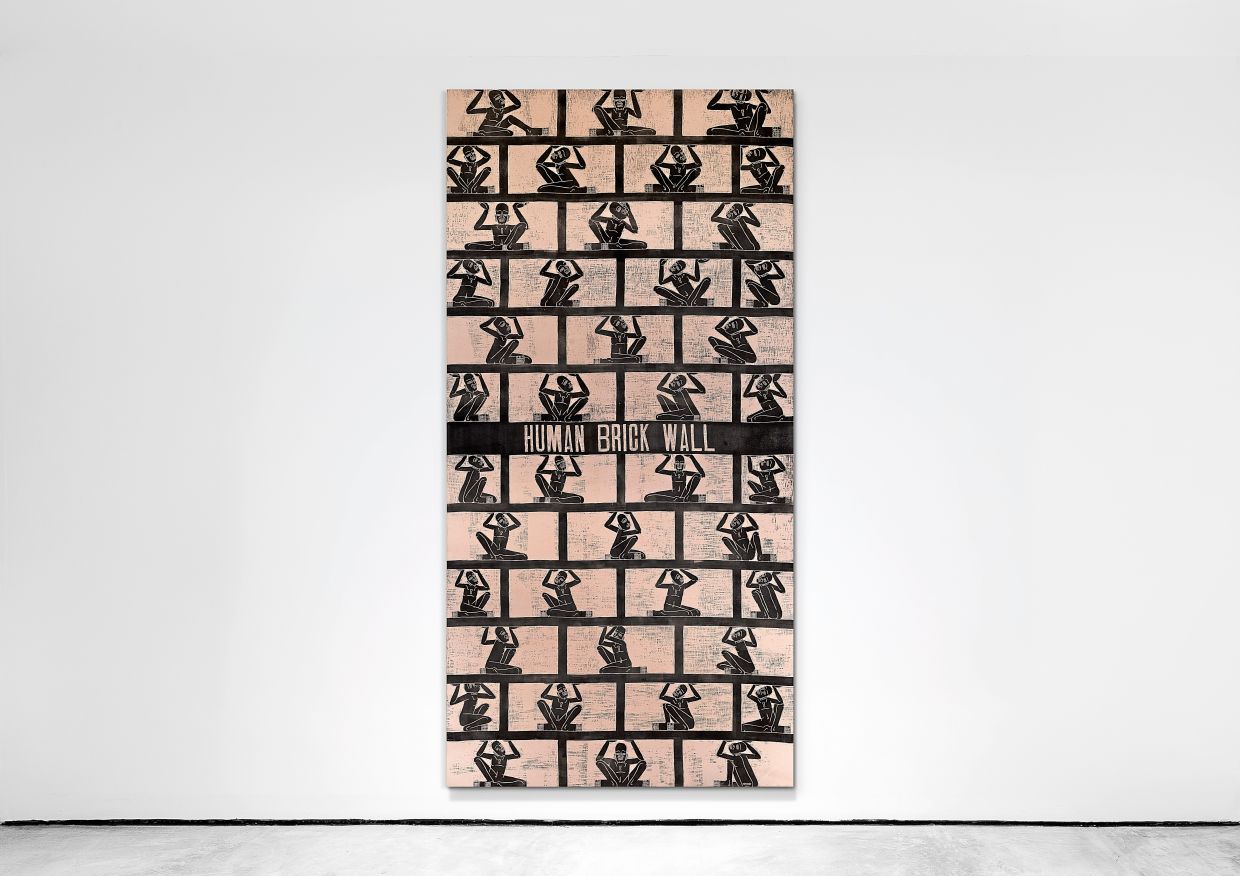
For its Kuala Lumpur presentation, the collective contributes Human Wall, a woodcut print on fabric, by Korakot Sangnoy that examines the social impact of prolonged conflict.
In 2018, Korakot and Jehabdulloh were among the southern Thai artists featured in Patani Semasa at Ilham Gallery, an eye-opening exhibition that introduced Malaysians to the region’s history.
In Human Brick Wall, Korakot looks at the invisible barriers people build in their minds. These walls can offer safety and protection, but also become prisons that keep people apart. They reflect the mix of trust, hatred and love that shapes human relationships.
“The work reflects the conflicts arising from recurring acts of violence. These events have left deep scars and losses, fostering fear, hatred, and mistrust among people living in the same communities, despite their diversity in ethnicity, culture, religion, and beliefs,” reads the artist statement.
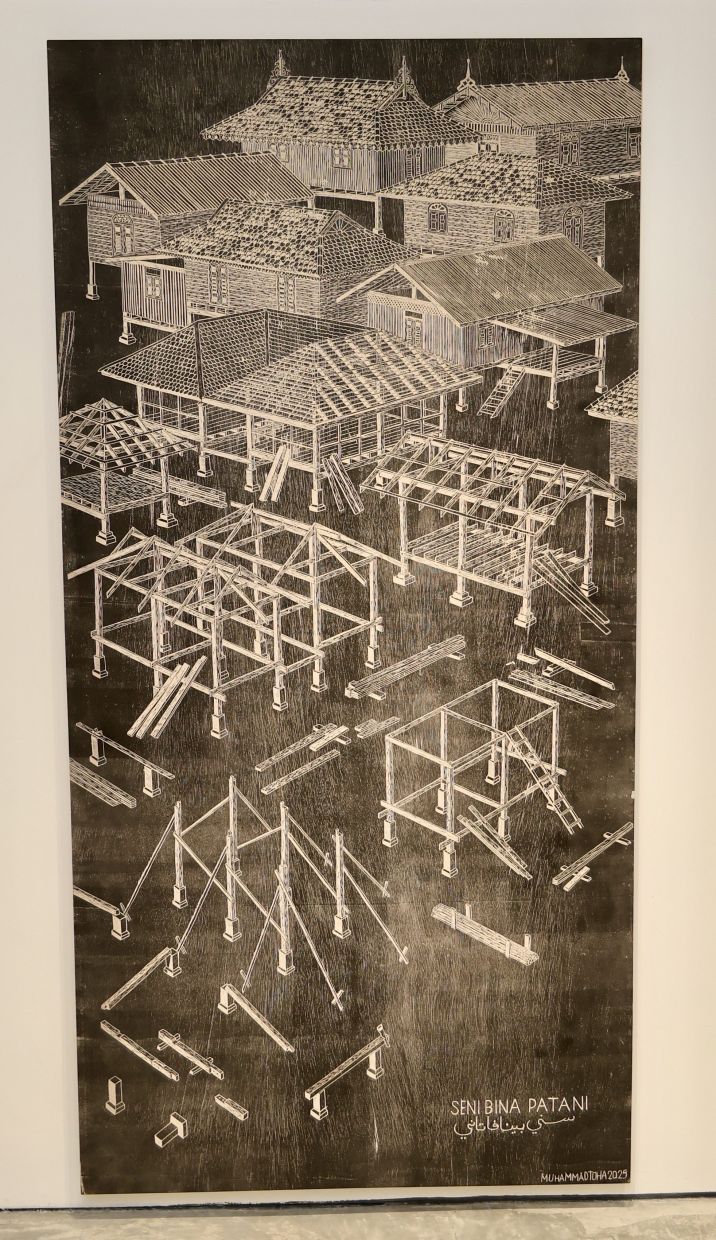
Elsewhere, Muhammadtoha Hajiyusof, better known as Toha, offers another take on the idea of common tradition and belonging through his woodcut work, Seni Bina Patani.
Based on the shared knowledge of building a traditional Malay house, the work reflects on the skills and traditions passed down through generations.
It also speaks to the simple idea of living under one roof, where people of different backgrounds and beliefs can find a place together.