In Malaysia, there are currently some 140 individuals on death row, awaiting their ultimate fate with fear and uncertainty.
Their real-life stories are behind the upcoming theatre show Tali Tukang Gantung (Hangman’s Rope), which questions the fragile connection between justice and humanity in our criminal justice system.
The 60-minute play – presented by the Malaysian Centre for Constitutionalism and Human Rights (MCCHR), Anti-Death Penalty Asia Network (ADPAN) and Amnesty International Malaysia – will be staged at Five Arts Centre, GMBB in Kuala Lumpur on Jan 17 and 18.
Written and directed by Effa Qamariani – who also serves as MCCHR’s communications and outreach strategist – it draws on interviews with those linked to Malaysia’s death penalty system, from inmates and families to lawyers and the prison community. The production is also supported by EJKLS Seni.
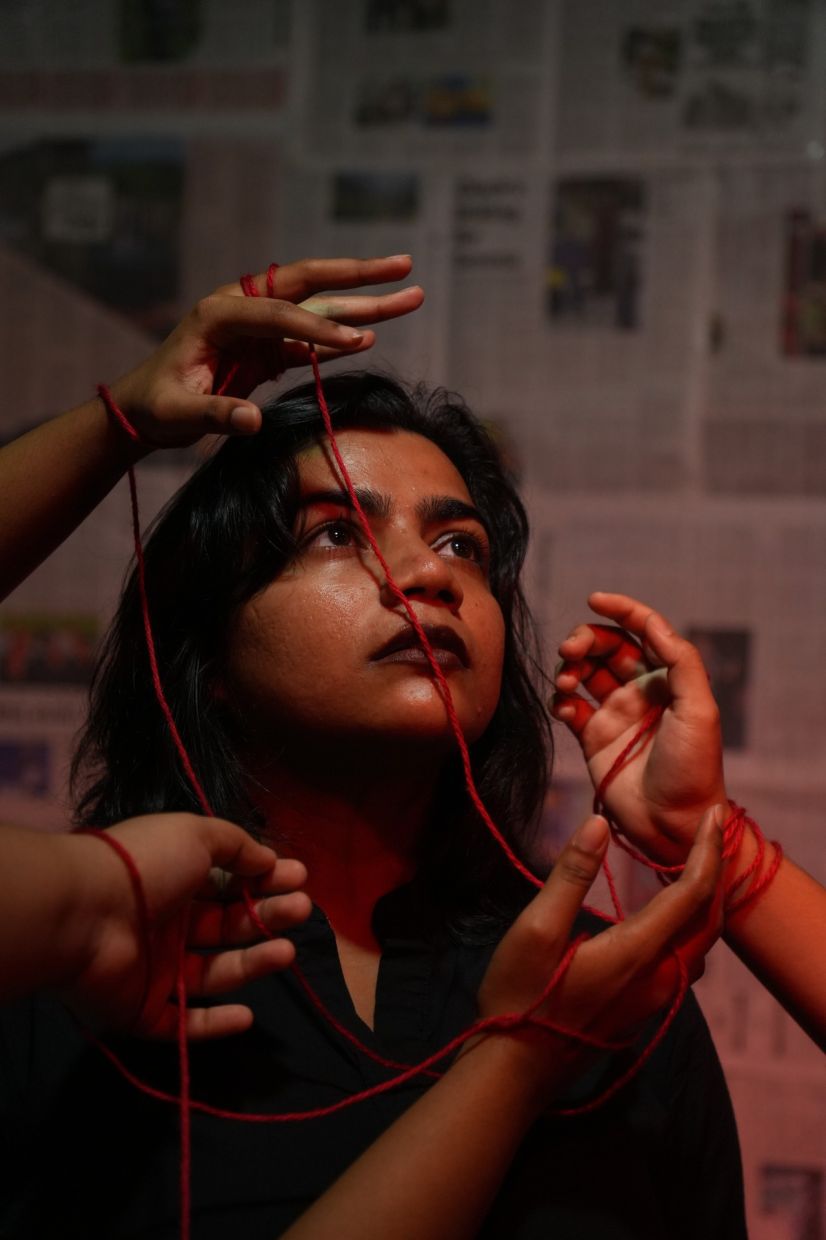
Told through “The Narrator”, portrayed by Deena Dakshini, it offers an intimate look at these lived realities, exposing how flawed trials, weak legal defence and political whims determine who lives and who dies.
The play, which sold out within days of its ticket release, won’t be adding extra shows. “That’s not in the plans for now,” says Effa.
“But the good news is the performance will be professionally recorded, and our organisations hope to share it through future screenings,” she adds.
Stage of reckoning
The death penalty is typically imposed for crimes such as drug trafficking, murder and firearms offences.
Although Malaysia abolished the mandatory death penalty in 2023 and has observed a moratorium on executions since 2017, the sentence itself remains at the court’s discretion, says Janice Ananthan, ADPAN project officer and show producer.
“This is an important issue to talk about because the death penalty is cruel, inhuman, and irreversible once it’s carried out – there’s no way to undo a mistake. But beyond that, many people only ever see one side of the death penalty, usually through news headlines that focus on the crime or the charge, without showing the full picture of how someone ended up there in the first place,” she says.
“What often gets left out are the circumstances people live with: poverty, lack of education, language barriers, poor legal representation and the vulnerabilities that shape people’s lives long before they enter a courtroom.”
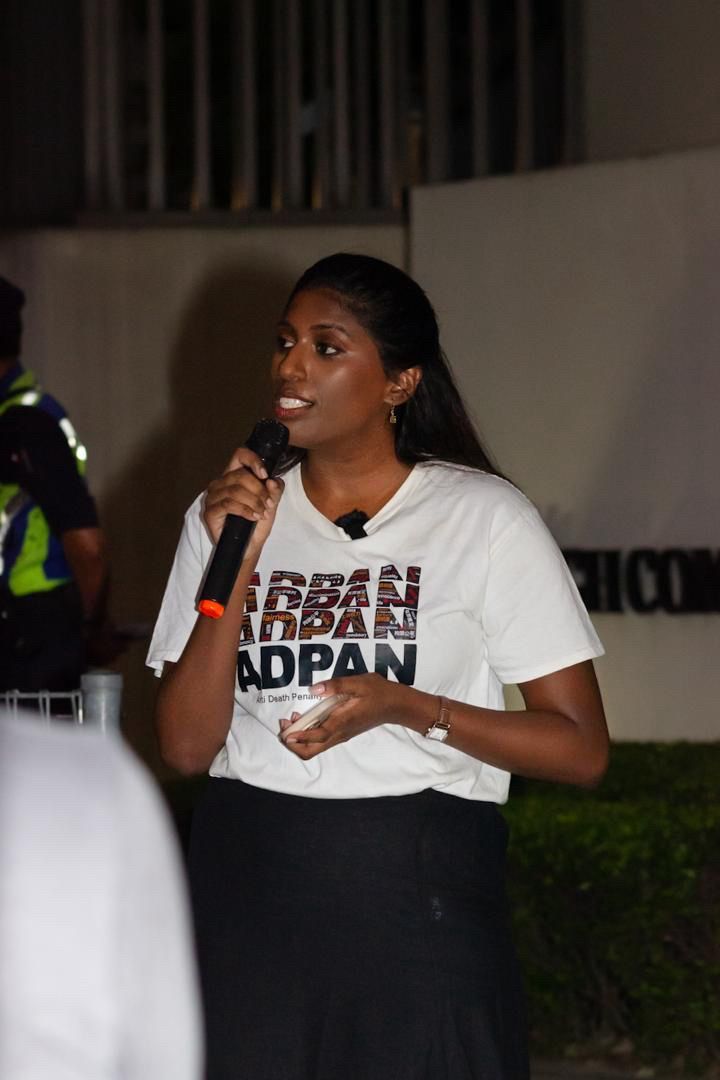
Having these conversations – and using theatre like Tali Tukang Gantung to tell these stories – is a powerful way to bring real-life realities to light.
“It allows us to move beyond statistics and judgments and really sit with the human reality of the system, and to question whether this is the kind of justice we want to stand for,” she adds.
On the opening night, Janice will also moderate a panel featuring the people behind the play’s research and development: Effa Qamariani, criminal lawyer and former Malaysian Bar president Salim Bashir Bhaskaran, Monash University Malaysia Global Studies senior lecturer Thaatchaayini Kananatu and Qistina Johari, Amnesty International Malaysia campaigner and producer.
“The discussion will explore some of the themes of the play, including the human cost of the death penalty, structural inequalities that leave certain communities more vulnerable, and the challenges of fair trial and legal representation in serious criminal cases,” says Janice.
“Effa will also share insights into the creative process, how the team approached telling real-life stories on stage, and why art can convey these experiences in ways that statistics alone cannot, while Qistina will reflect on the advocacy impact of theatre and how storytelling can bring attention to the realities of the death penalty and inspire change,” she adds.
A space for reflection
Drawing on documentary and verbatim theatre, Tali Tukang Gantung uses testimony, movement, voice and stillness to shift perspectives. Instead of costume changes or elaborate staging, Deena’s posture, rhythm, and voice carry the story.
The stripped-back format keeps the interviewees’ experiences central, inviting the audience into close listening and shared witnessing.
With the performance resting entirely on her, Deena says her biggest challenge is carrying multiple real stories with care.
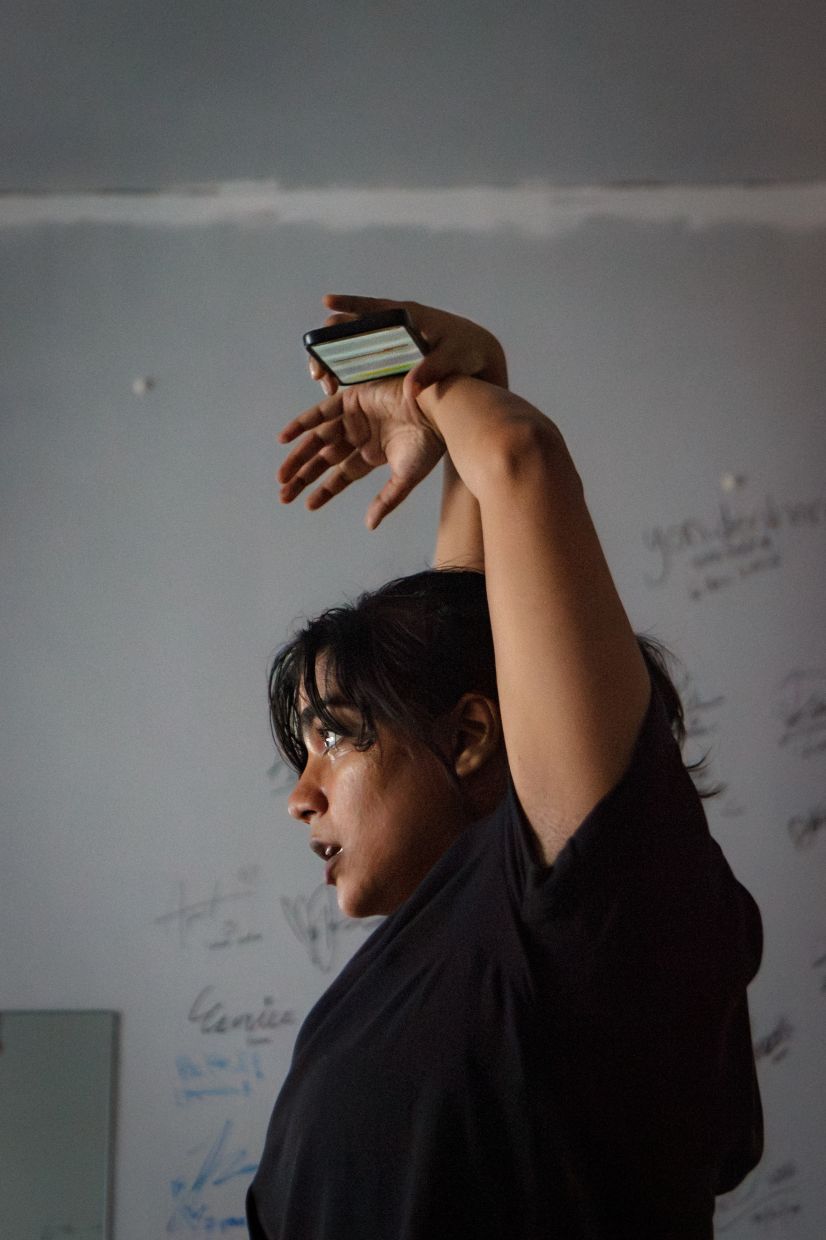
“I was drawn to this role because it foregrounds humanity within a system that is often discussed in abstract or punitive terms. The script refuses simplification and instead holds space for contradiction, grief, and moral complexity,” says Deena.
“As an actor interested in justice-centred documentary storytelling, this felt like a necessary and responsible form of theatre-making,” she adds.
Through her performance, she hopes to create space for reflection rather than persuasion.
“If audiences leave feeling more attuned to the human cost of the death penalty and more aware of their own relationship to justice, punishment, and accountability, then I feel our work has succeeded,” says Deena.
A polarising issue
According to Effa, the death penalty is a deeply polarising topic not just in Malaysia, but everywhere in the world.
“In Malaysia, though, there is a growing sense that this is no longer an urgent issue because we have a moratorium on executions, we have not carried out a hanging in almost 10 years, and the mandatory death penalty has been repealed.
“But the truth is, a moratorium is just a matter of policy. Until we reach full abolition, this is not a problem we can relax about. We cannot wait for the moratorium to end and only then panic. By then, it will be too late for the people whose lives are on the line.
By sharing these real stories on stage, says Effa, the play helps connect the public to the advocacy being done.
“It shows why these efforts are crucial and why society as a whole has a responsibility to pay attention, care, and push for meaningful change.”
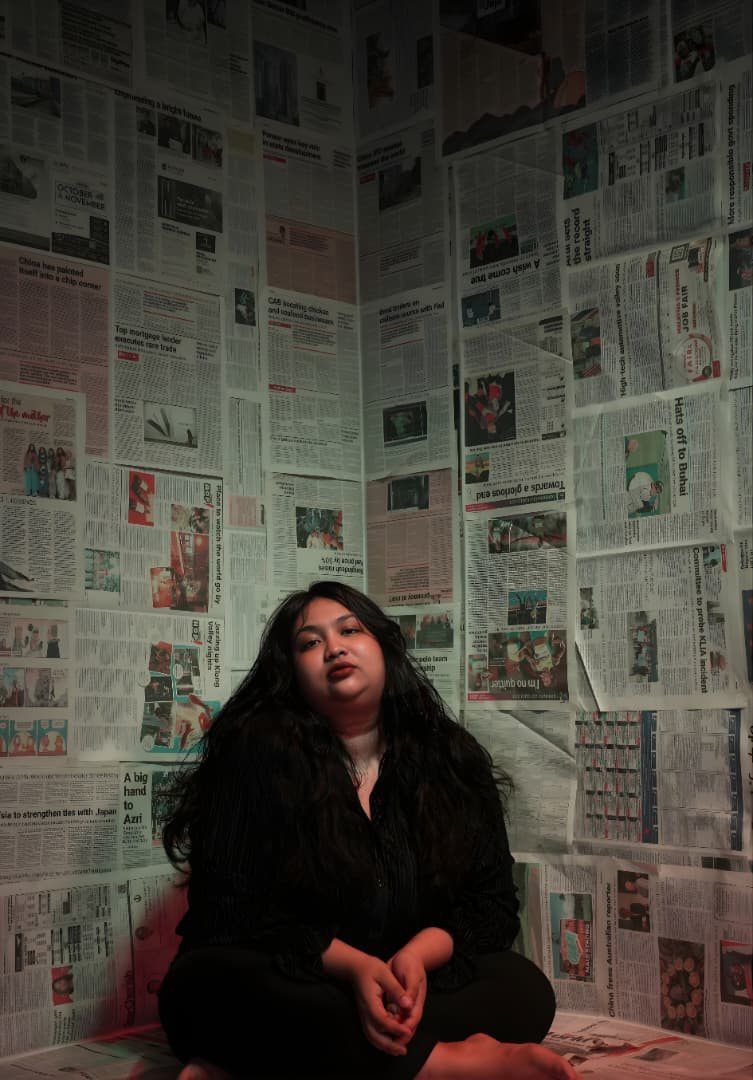
Reflecting on the play’s stories, Effa recalls one that stayed with her: a woman who couldn’t understand the language used during her arrest and trial.
“She signed documents she could not read, and the court assumed she must have understood the proceedings because she could navigate an airport and sign her name in English letters. There were injustices at every layer, and you see this clearly in the play.”
This is not isolated; many foreigners and Malaysians with limited Bahasa Malaysia or English face the same issue.
Another story highlights a case where a poor defence led to a death sentence.
“It was only on appeal, with a different lawyer, that the appeal court ordered a retrial. That person escaped the gallows not because the system worked, but because they were lucky enough to get a second chance and a better lawyer.
“But what if he didn’t get a better lawyer? The play keeps coming back to this uncomfortable idea of luck, how life and death can depend on language, timing, resources and who is standing next to you in court,” says Effa.
Many stories didn’t make the play, but they all share one thread: they affect the marginalised and underprivileged.
Effa admits that she doesn’t believe one play is going to completely change someone’s mind, especially if they are firmly pro-death penalty.
“What I do hope for those who come to see the play is that even if you still believe the death penalty should exist, you will now see that the system is deeply flawed.
“I want people to understand that the death penalty doesn’t work. It’s neither a deterrent nor justice. True accountability and safety require moving beyond punishment and taking restorative and transformative justice seriously. Justice must work, not mask systemic failure with irreversible punishment,” she concludes.
Instagram: @talitukanggantung_theatre.