Japanese favourite combines crisp edges, tender cabbage and layers of umami
OKONOMIYAKI is a mouthful to pronounce with its many syllables, but unlike its name, it delivers pure joy on the plate.
With cabbage and egg at its core, okonomiyaki is an approachable dish that can charm even cautious newcomers to Japanese cuisine.
When translated, it roughly means “grilled as you like it”.
Broken down, okonomi means “to one’s liking” or “what you like”, while yaki means “grilled”, “cooked” or “pan-fried”.
The first time I tasted it was at a Japanese supermarket in Kuala Lumpur, where salespeople were promoting bottles of okonomiyaki sauce that gives this Japanese favourite its distinctive flavour.
If you plan to make this savoury Japanese pancake at home, there are a few sauces and ingredients you will need to get your hands on.
Other must-haves include Japanese mayonnaise and Dashi powder, while for the garnish, bonito flakes and dried seaweed add colour, texture and another layer of umami.
There are two well-known versions of okonomiyaki – one from Osaka and the other from Hiroshima.
The Osaka style mixes the ingredients in a bowl before the mixture is poured onto a hot pan and shaped into the familiar pancake form.
The Hiroshima style, by contrast, layers the components rather than combining them and is typically served with fried egg and yakisoba (stir-fried noodles).
I have yet to try the Hiroshima version, sticking instead to the Osaka style, which I find much easier to prepare.
The first time I made okonomiyaki, I opted for a larger, pizza-style version.
For a daintier presentation, you can make four mini okonomiyaki instead of the two suggested in this recipe.
It is advisable not to mix all the batter with the cabbage and egg at once, as this can draw excess moisture from the cabbage, leaving the mixture too runny and difficult to shape.
Therefore, portion out the ingredients accordingly if you plan to make more than two pancakes.
Okonomiyaki
Ingredients
300g cabbage
3 stalks spring onion
200g beef bacon slices
2 large eggs
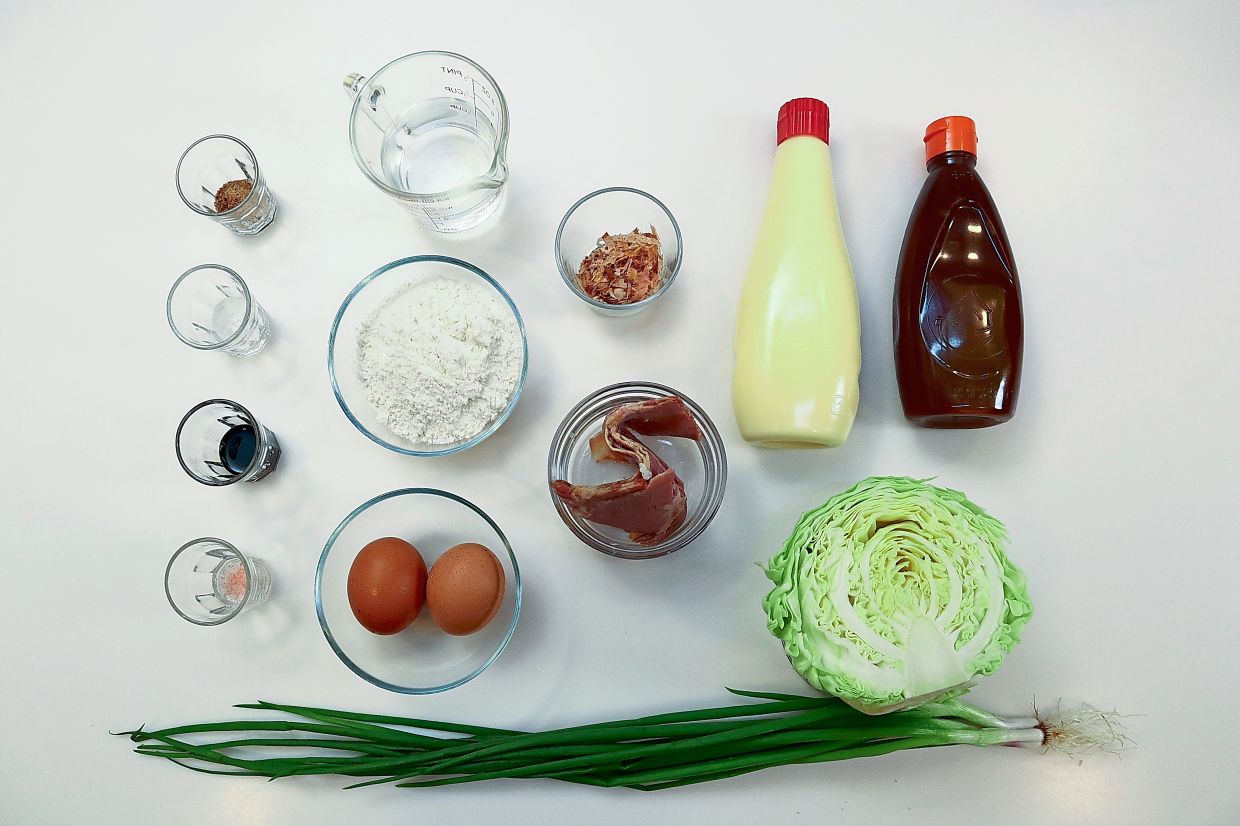
Batter
100g all-purpose flour
1 tsp baking powder
2 tsp dashi powder
1 tsp Japanese soy sauce
½ tsp salt
150ml water
Garnish
Bonito flakes
Spring onions
Dried seaweed
Okonomiyaki sauce
Japanese mayonnaise
Directions
Divide the cabbage into two 150g portions to make two okonomiyaki.
Dice the cabbage into roughly 2cm squares.
Line up the spring onion stalks, and using both the white and green parts, slice into small rounds and divide into three portions.
Reserve one portion for garnish, while the other two will be used for the pancakes.
Place one portion of cabbage in a bowl and sprinkle with one portion of spring onions. Add one egg and mix lightly.
Prepare the beef bacon slices, using them whole or cutting them into smaller pieces, then set aside.
In a separate bowl, combine the flour, baking powder and salt.
In another bowl or cup, dissolve the Dashi powder in 150ml water, then add it to the dry ingredients.
Stir one teaspoon soy sauce into the batter.
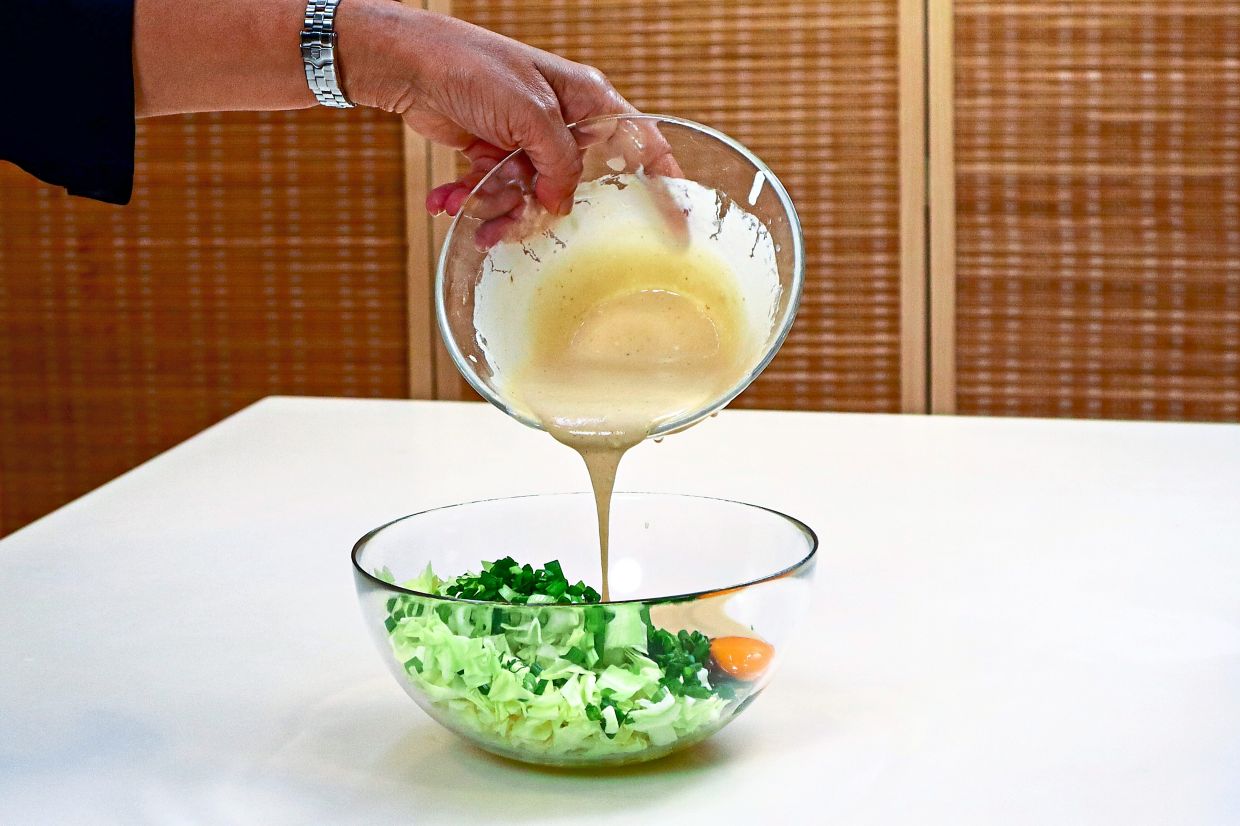
Divide the batter into two portions.
Pour one portion over the cabbage and egg mixture and stir until well combined.
The mixture should be thick enough to coat the cabbage, with little to no liquid left in the bowl.
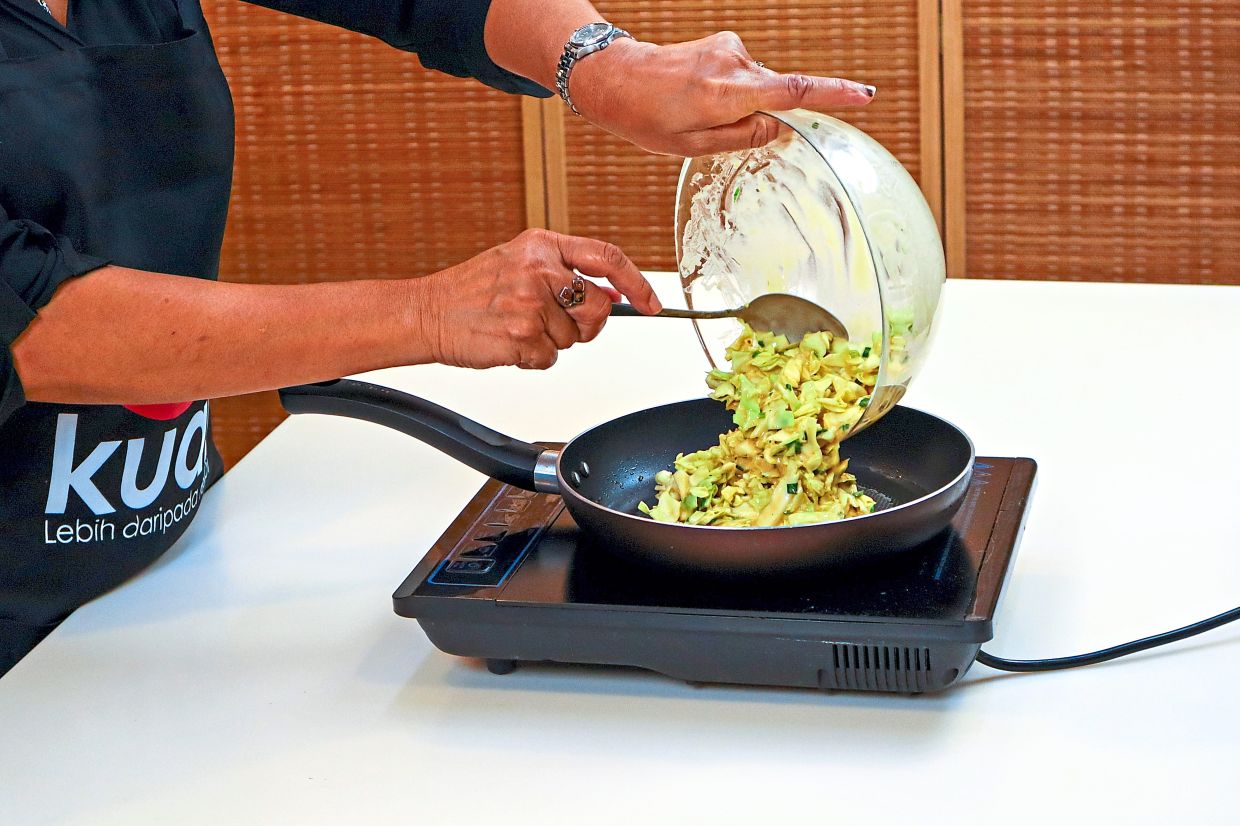
Heat two tbsp oil in a skillet over medium heat. Once hot, add the cabbage mixture.
Using a spoon and flat spatula, shape it into a compact, thick pancake, pressing the cabbage together as you go.
Arrange the beef bacon slices over the top.
Other proteins such as chicken or seafood can also be used.
Cook for about eight minutes, turning the skillet a quarter turn every two minutes to ensure even cooking.
Carefully flip the okonomiyaki and cook the other side.
Cover the skillet and steam for five minutes, again turning it a quarter turn every two minutes.
Remove the lid and sear for another minute.
Turn off the heat and transfer the okonomiyaki to a plate.
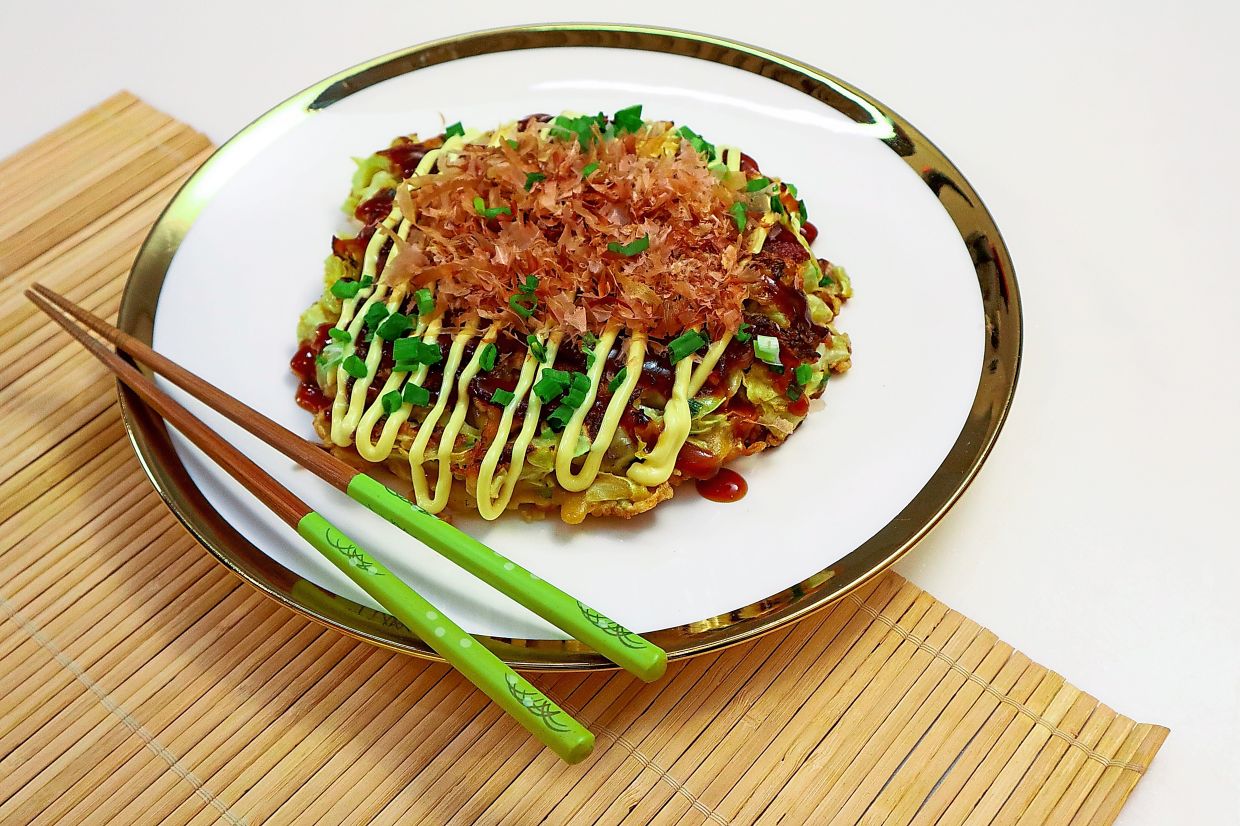
While it is still hot, squeeze okonomiyaki sauce over the top in horizontal zigzag lines.
For contrast, squeeze Japanese mayonnaise in the opposite direction to create another zigzag pattern.
Finish with a scattering of bonito flakes, which will dance over the hot okonomiyaki, followed by dried seaweed and the reserved spring onions for a pop of colour.
Serve the okonomiyaki hot and enjoy.