
THAI cuisine is all about bold, vibrant flavours that awaken the palate.
Renowned for its curries, salads, soups, stir-fries, hawker favourites and irresistible desserts, it continues to captivate the taste buds of food lovers around the world.
Rooted in fresh herbs such as lemongrass, basil and coriander, along with aromatics like garlic and galangal, Thai cuisine is celebrated for its harmonious balance of sweet, sour, salty, spicy and savoury flavours in every dish.
Malaysia’s close ties with Thailand are reflected in the popularity of Thai cuisine among local diners.
Its popularity is evident in the abundance of Thai eateries, from roadside stalls serving classic favourites to restaurants in shopping centres and commercial districts.
We are also fortunate to have easy access to many of the fresh herbs and spices that define Thai cooking, making it surprisingly simple to recreate authentic flavours at home.
During a trip to Chiang Mai in northern Thailand a decade ago, my mother, sisters, cousin and I decided to make our all-women holiday a culinary adventure as well.
Besides shopping, spa visits and sampling the local food, we enrolled in a Thai cooking class with several other tourists.
It was there that we discovered how a basic understanding of the ingredients and techniques could go a long way in creating appetising Thai dishes.
With so many recipes to choose from, it was impossible to master everything in a single four-hour session, so each of us prepared a different dish.
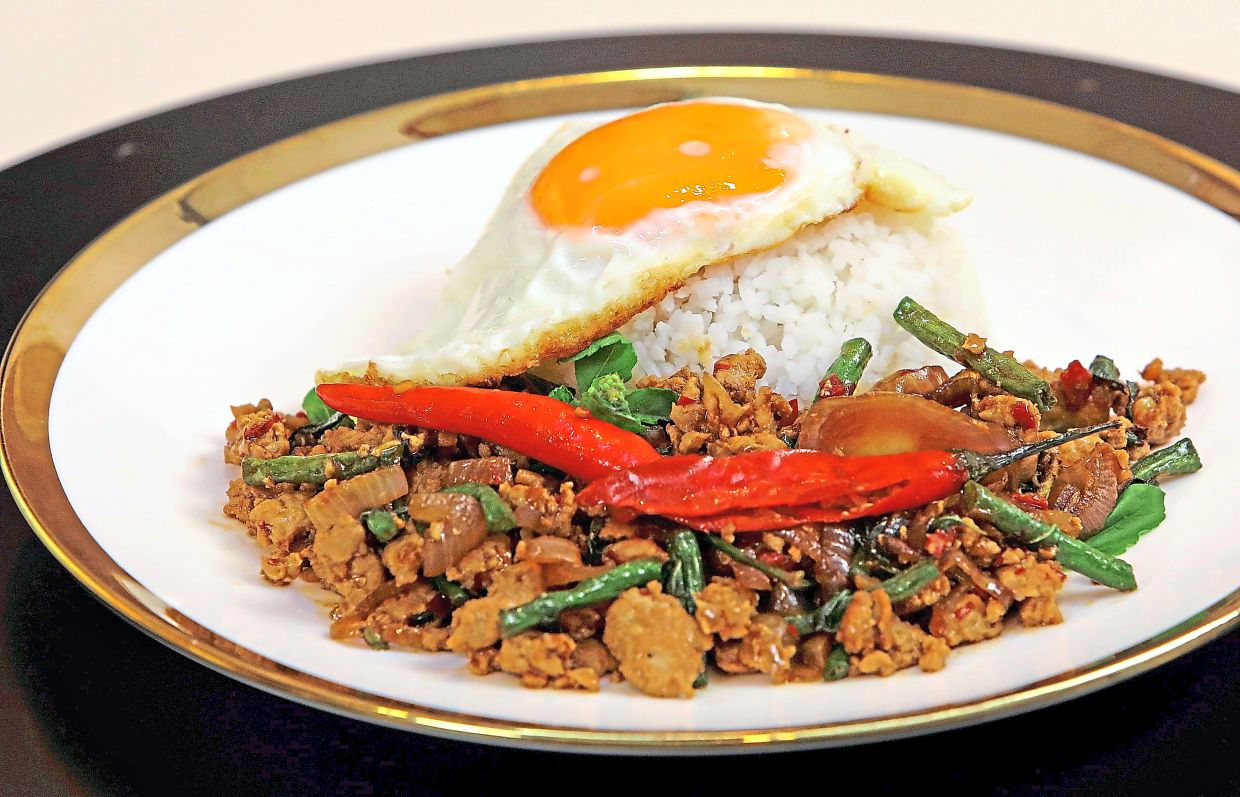
Among my favourites was pad kaprao – minced chicken with holy basil.
It was quick, flavourful and surprisingly easy to prepare.
Before that trip, I had often ordered the dish at local restaurants and noticed cooks making it with Thai basil instead.
It was only during the cooking class that I learnt the authentic recipe calls for holy basil.
Holy basil grows abundantly in my garden and thrives in Malaysia’s tropical climate, so I was delighted to discover I had one of the dish’s key ingredients at home.
Revisiting my Thai recipe collection has given me the confidence to cook more Thai dishes, knowing many of the essential herbs are growing just outside my door.
Once you understand the basics, preparing pad kaprao is rather straightforward.
Simply gather the ingredients, follow the steps and you will have a fragrant, flavour-packed meal that is sure to impress family and friends.
Serve it with steamed rice, a crispy fried egg and a side of tom yum, stir-fried kangkung or kailan for a satisfying Thai-inspired feast.
Pad kaprao
Ingredients
500g minced chicken
1 bulb (100g) red onion
70g long beans
5 cloves fresh garlic
2 tbsp fresh chilli, deseeded, minced
10g holy basil
4 or 5 fresh Thai chillies
3 tbsp cooking oil
4 tbsp oyster sauce
3 tbsp fish sauce
1 tbsp soy sauce
2 tsp black soy sauce
1 ½ tbsp caster sugar
4 tbsp water
Directions
Slice the red onion and mince the garlic.
Deseed and finely mince the fresh red chillies, then cut the long beans into 3cm batons.
Heat oil in a wok over medium heat. Add the minced chillies and garlic, then saute until fragrant.
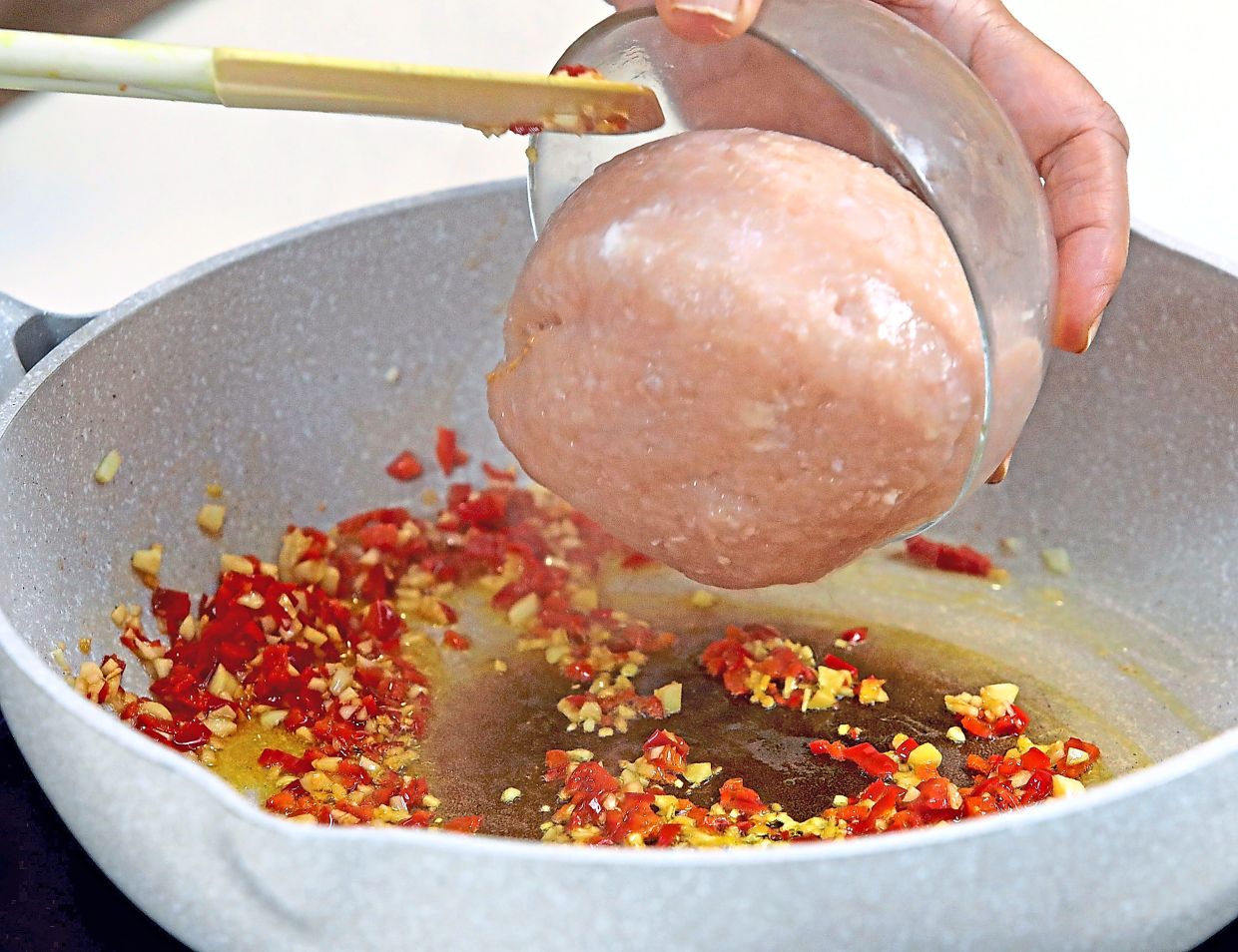
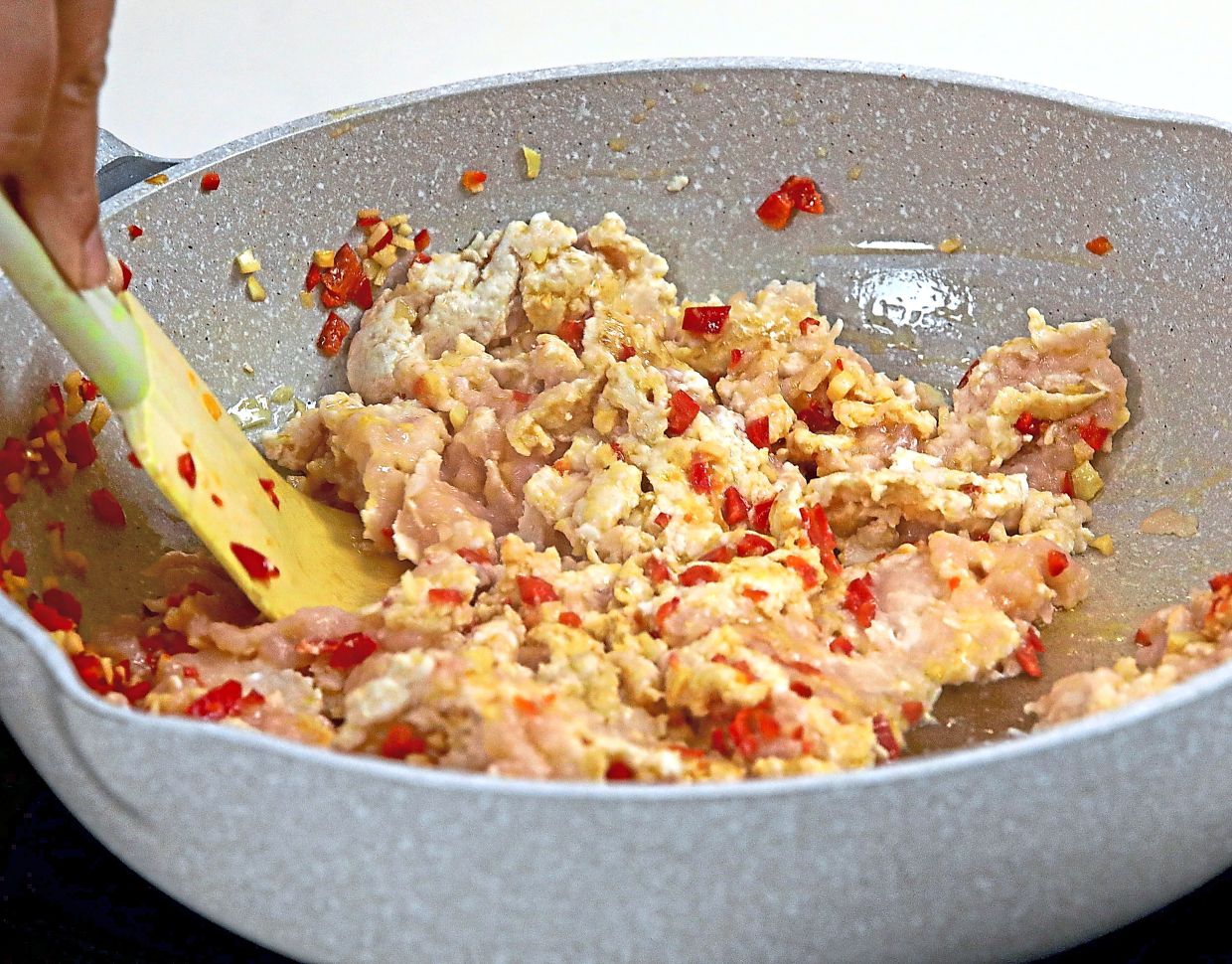
The minced chicken goes in next. Stir continuously to break up any clumps and sear for about two minutes.
Then on high heat, continue cooking the chicken for about seven minutes or until the meat is cooked through.
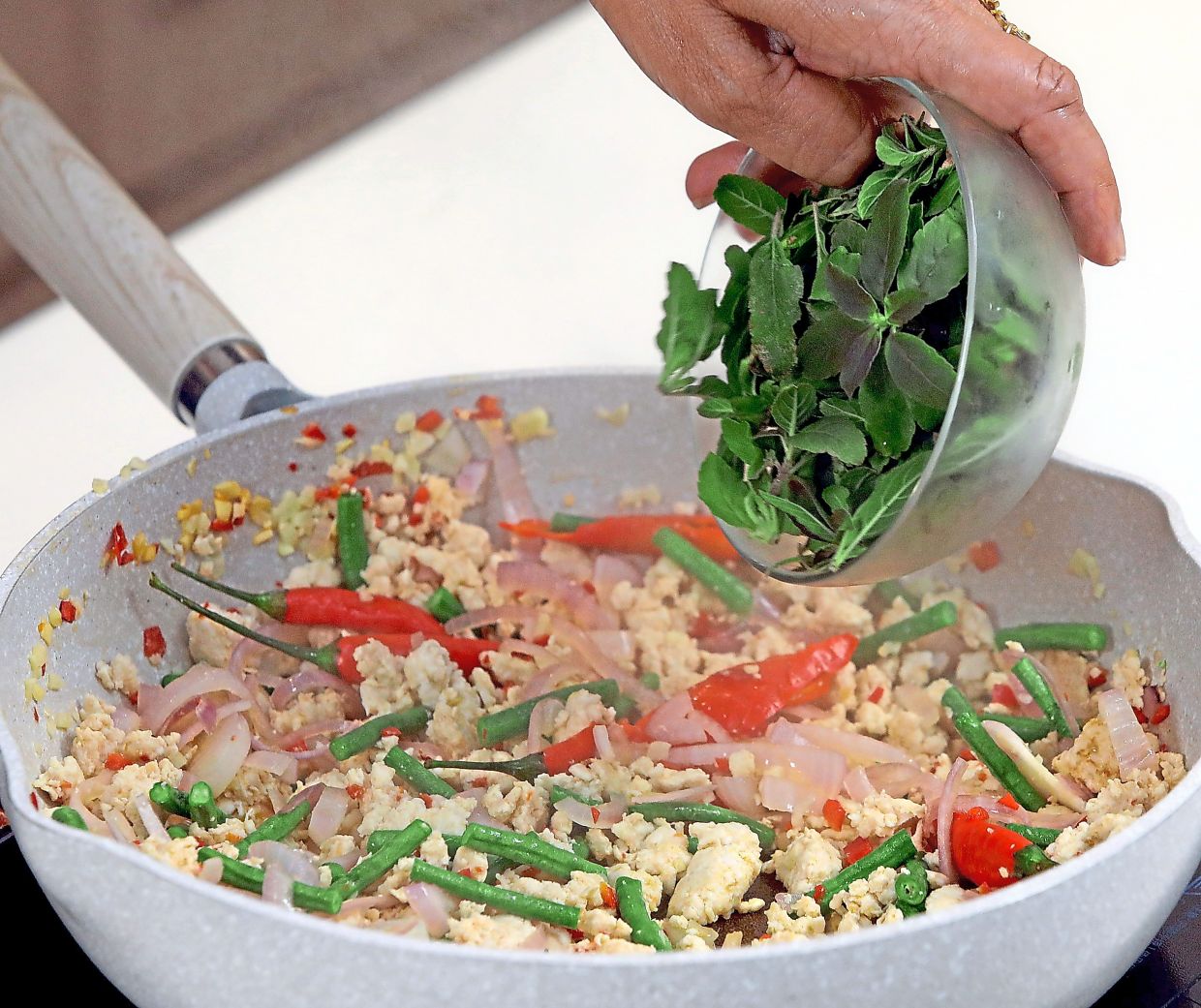
Add the sliced onion, long beans and holy basil, then stir well to combine.
Saute for about five minutes until the beans are cooked through.
Using a mortar and pestle, lightly bruise the Thai red chillies to release their aroma.
Alternatively, use the side of a chopping knife to gently crush them.
Add the bruised Thai red chillies and sliced red chillies for extra colour and a final kick of heat.
Pour in four tablespoons of water to prevent the chicken from drying.
Into the wok, introduce freshly plucked holy basil for flavour and aroma.
Season with fish sauce (adjust according to taste), oyster sauce, soy sauce and dark soy sauce.
Mix well to coat the ingredients evenly.
Finally, to balance out the taste, add caster sugar.
Serve hot with steamed rice and a fried egg.