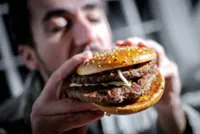
Just five years ago, there were just a handful of vegan (foods derived entirely of plant-based products) restaurants in the Klang Valley. Old-school Chinese and Indian vegetarian restaurants were relatively common, but beyond that, there was nothing beyond a token few vegan options on the menus of cafes and restaurants – a cursory nod to what was viewed as a small, oft-ignored demographic.
And then the Covid-19 pandemic hit and with it, a flood of new entrants to the vegan market. The reasons for the rise in people embracing veganism or turning to a flexitarian diet (a diet where a person might choose to be vegan on certain days of the week or month) are manifold but boil down to a number of things: health concerns, environmental awareness, animal rights and sometimes just plain curiosity driven by the increase in information.
Chia Siow Ching, the founder of vegan food truck Veco Burger says she has noticed an immediate trickle-down effect from the pandemic.
“Since Covid, people are more interested in healthy food and automatically think vegan or vegetarian food is healthiest, so it has really shored up the number of vegans and people interested in vegan food,” says Chia.

Mohd Fauzi Hussein, the founder of Sala KL Vegan Restaurant, a Klang Valley Tex-Mex inspired vegan restaurant that has been in operation for six years, says that he has seen a huge increase in vegans or people interested in vegan food since he himself became vegan 10 years ago.
“There are more and more people that are interested to know more about plant-based food or try it compared to when I started. Like a month ago, I was at a new vegan restaurant and it was so busy! There were families, couples and people of all ages there and I could see that not all of them were vegan.
“When I first started Sala, the people that came in were concerned about their health. But now people are just coming in because it’s another food option. Like they now say, ‘Should we have Chinese, Indian or vegan today?’” says Fauzi.
Fauzi’s views are resoundingly echoed by Aisya Jabaruddin, the vegan founder of Mushroom Lah, a home business that makes and supplies mushroom-based vegan rendang to consumers and restaurants.

“Last time, the vegan community was so small that I knew everyone. Now some of the people buying our rendang will tell me, ‘Oh, I am vegan,’ and I am like ‘Who are you?’. It is growing so quickly!
“And now, I see a lot of people in the Malay community going vegan, because quite a lot of our customers are now Malay. Previously, we used to have mostly Chinese and Indian vegan customers, but now a lot of Malays are vegan or want to try vegan rendang, so yes, I am pretty sure there is a lot of growth in the community,” says Aisya.
To feed this growth, vegan restaurants, bakeries, burger kiosks and fast food joints have sprung up in the past year or so, to nourish the growing demand and market for plant-based options among the populace.
“Oh, there are a lot of new vegan restaurants now. Before this, I would say it was very niche, but now so many new restaurants have popped up,” says Chia.
Sita Lakshmi Purusothman, the head baker of vegan bakery Vicked Good Vegan Bakery meanwhile says that when she first opened for business two years ago, she supplied her baked goods to one restaurant. Now two years later, she supplies to six restaurants and believes there will be more demand to come as the number of vegan eateries continues to grow.
“Even for our bakery, we have so many people asking us to open more outlets, so that we are more accessible to them. So if you ask me, this is definitely the future of F&B,” says Sita.
Why start a vegan eatery?
Starting a restaurant often involves having some degree of interest in a particular kind of cuisine. For example, someone who makes excellent Chinese food might consider opening a Chinese restaurant or an investor with an interest in Italian food might bankroll a chef with extensive experience cooking Italian food.

In the Klang Valley, many of the vegan restaurants dotting the landscape are often initiated by people who are themselves either vegetarian, vegan or have adopted a flexitarian diet.
This is most definitely the case with Fauzi who became vegan a decade ago after a health scare. After getting his health under control after turning vegan, he wanted to introduce more Malaysians to the diet. And what better way to do that than via a restaurant?
“There are two major reasons that I started Sala – one of them is the health reason. When I created change in my own health, I wanted to give other people out there an option to change their lifestyle in order to get better and feel better.
“Another reason is to show people that vegan and plant-based food is not just salads. Because when I told my family and friends that I wanted to open a vegan restaurant, they said ‘You mean you’re opening a salad bar?’” says Fauzi.

For Chia, being vegetarian herself meant a clear pathway to opening a vegetarian restaurant called Link Café as well as Veco Burger.
“I am a vegetarian now, but I am trying to turn into a vegan. So I started Link Café in 2018 – it’s a vegetarian restaurant with vegan options. In 2020, I started Veco Burger, which is a totally vegan brand.
“One of the things I realised after I opened Link is that a café needs a lot of manpower and menu options, so I wanted to try something more specific that covered just one category, like burgers.
“A food truck or kiosk is also an easier business model to duplicate, so eventually I can open more kiosks and be more accessible to more people and offer more affordable prices. Finally, the business is great incentive for me personally because I am trying to be vegan myself!” says Chia, laughing.
Sita on the other hand is a lifelong vegetarian who wanted to open a bakery because she feels strongly about animal rights.
“I opened the bakery for a number of reasons. A lot of vegan values gel with me. My family are staunch vegetarians for religious reasons but as I grew up, religion became less of a reason. The main value became how animals are treated in the farming space – which doesn’t sit right with me,” she says.
What are people looking for in vegan food?
In the past year, the number of vegan restaurants has dramatically shot up, which also means choices have multiplied in tandem with this.

Vegan options now run the gamut from vegan ramen and sushi to vegan cakes, Tex-Mex vegan fare, local vegan variants like nasi lemak as well as fast food choices like burgers and milkshakes.
“When I started Sala, we were the first Tex Mex plant-based restaurant so it was a new thing back then. But now, there are so many options and this is such a good thing, because the more options there are, the more people know that it is not limited. So there is room for more exciting changes in Malaysia for sure,” says Fauzi.
But just what are people looking for in their vegan food? For many people new to the vegan lifestyle, familiarity is often key. People are drawn to what they already know, because there isn’t as much fear in embracing something new when it looks a lot like something old.
“With vegan desserts, people are typically looking for egg-free sweet treats that are visually appealing and taste great. What I have noticed is that if it looks the same as regular cakes or the pastries look like what is in any other bakery – that appeals to customers. Ultimately, I think they are looking for something relatable,” says Sita.

In the savoury space, the rise of vegans and people willing to try food in the plant-based space has also coincided with the soaring growth of alternative proteins, fuelled by brands like Impossible Foods, Beyond Meat and even local variants like Phuture Foods. These analogue meat producers now produce a range of foods that mimic everything from burger patties to chicken nuggets and sausages and often come off seeming fairly similar.
So do vegan restaurants find that many people are looking for these meat replacement options? Or are consumers driven by a need for healthier whole food options?
“This is a tricky question because there are two groups of people who opt for a vegan diet. The first group does this mainly for health reasons and another wants to think they are doing something for the planet but at the same time, they want to enjoy what they like, for example burgers and fried chicken.
“So these two markets are quite separate. So people who are more health-conscious will go for the whole foods and the people who want to eat like satay or chicken nuggets will opt for plant-based alternative proteins. We cater for both – we have whole foods as well as alternative protein-based burgers and nuggets to make the menu more fun and so people know the options are limitless when it comes to vegan food,” says Fauzi.
Although Sala is primarily Tex-Mex-focused with menu items like mushroom asada burritos and a range of tacos, Fauzi has also included Malaysian options for foreigners and locals looking for uniquely homegrown staples like nasi lemak and Nyonya laksa.
Chia meanwhile says she has noticed that for people who are not vegan, interest is higher than it has ever been. She says that 90% of the people who realise that the burgers that she sells are vegan will still opt to try it, while only 10% will walk away when they understand it is not real meat.
But another thing that she has noticed is that price does pay a part in decision-making when it comes to vegan options. For example, her homemade burger patty made out of mushroom and soy is cheaper than the commercial alternative protein variants she buys from manufacturers and she says that it has remained her top-seller.
“I would say there are a few reasons why people opt for our homemade mushroom patty. First, it is something they know, because we tell them we make it out of mushrooms.
“Secondly, the mushroom patty is cheaper than the alternative protein patties we buy, so more people are willing to try it out, because consumers are always looking for value-for-money meals,” she says.
What’s in the future
The market for vegan restaurants has never been better. Knowledge about plant-based options is at an all-time high which means there is a lower barrier of entry even in terms of information dissemination.
And with the number of vegans and flexitarians continuing to grow in the Klang Valley and beyond, many vegan restaurant owners say demand will continue to soar exponentially.
Sita for instance says there is a huge need for vegan bakeries in Penang, and she has been besieged by requests to open an outlet in the state. Chia meanwhile now has two Veco Burger trucks and a full-fledged restaurant in Kota Kemuning to cater to the growth in demand; while Fauzi has got five outlets and is aiming to penetrate the Penang market in the next few years.
Still Chia says while demand has been good and continues to grow, Malaysia is still lagging behind neighbouring countries.
“I would say that demand has grown a lot, but there is still a lot of room for growth. We are still not on par with many other Asian countries,” she says.

Her views are echoed by Fauzi, who says that while there has been tremendous growth on the local front, it hasn’t been as exponential as neighbouring countries like Thailand and Japan, which have embraced veganism and consequently vegan restaurants in a more dramatic fashion.
“I was hoping Malaysians would embrace the vegan diet a little faster because when I became vegan, I knew Japan and Thailand were way behind. At the time, Malaysia had more vegan and vegetarian restaurants but now if you look at both those countries, they have a lot more vegan options than us.
“So we are a little bit behind, but I have to say that it will only get better because the more information is out there, the more people are talking about it. And the more vegan restaurants there are, the better for consumers looking for vegan options in their meals,” says Fauzi.
Already a subscriber? Log in
Get 20% OFF The Star Digital Access
Cancel anytime. Ad-free. Unlimited access with perks.