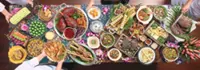
At Grand Hyatt KL’s Sajian Istana Ramadan buffet (halal-certified), a sea of tables are woven dramatically around the hotel’s JP Teres restaurant, which spans a sprawling area that takes diners from the cool confines of an air-conditioned interior to a more rustic covered outdoor space.
At every corner, trays and serving vessels are positioned side-by-side or in strategic spots so that diners can feast their eyes on the assortment of largely traditional Malay fare, accentuated by Chinese dishes like chicken rice as well as Indian naans and curries. Outside, grilled meats like lamb and squid are packed neatly into pans stacked over charcoal fire.
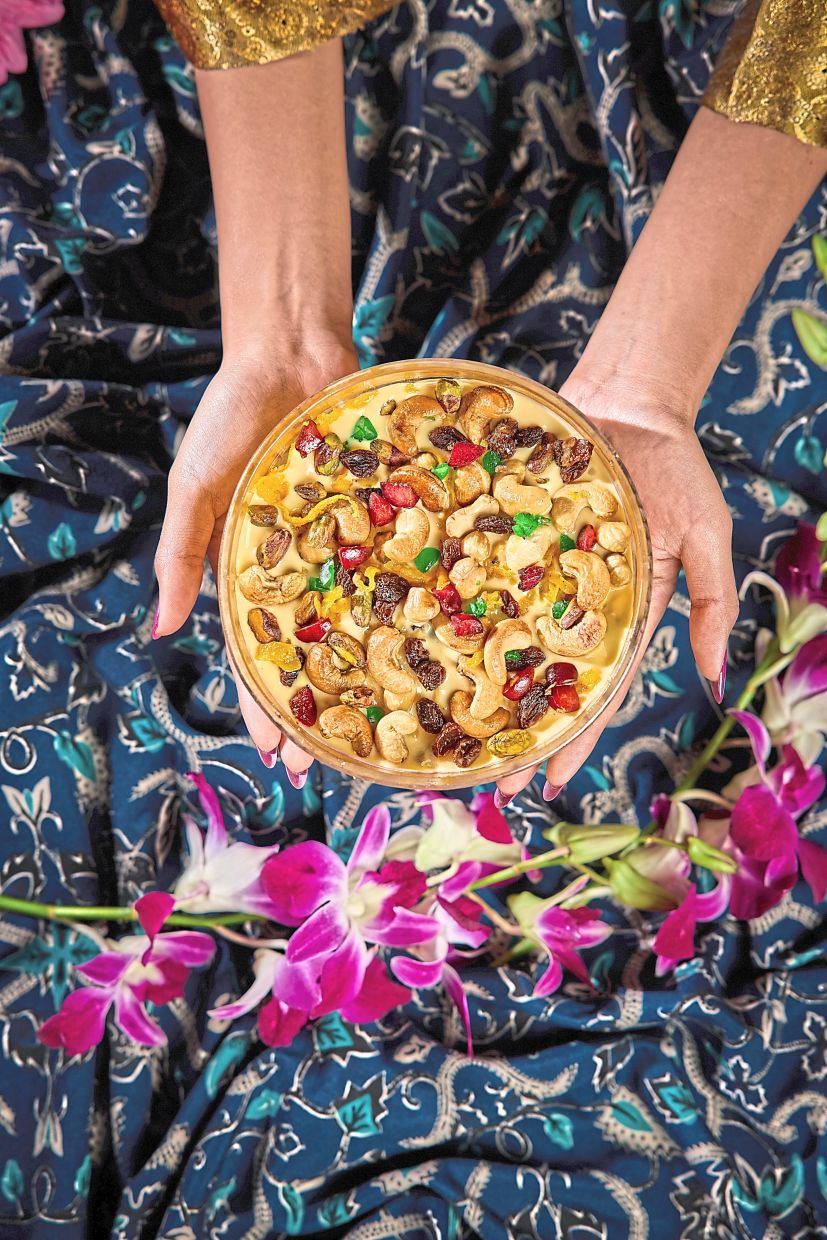
On the dessert front, there is durian Swiss roll, soft serve ice-creams, agar-agar jelly, dodol and a range of nostalgic childhood treats.
The place is packed to the gills and everyone is dressed to the nines – there isn’t a single empty seat to be begged, borrowed or stolen.
Every year, festive spreads unfold across the country during the fasting month, unspooling a range of largely Malay dishes as well as a wider arsenal of other cuisines to complete this picturesque tableau. These spreads tend to be very popular, which means competition is stiff, with each restaurant vying to be diners’ choice for the day.
But just how do chefs come up with these spreads? And what sort of decision-making is involved in trying to stand out from the rest?
Most festive spreads are built around a theme. This forms the structural underpinnings upon which the restaurant is able to first find its roots and then spread its tentacles.
Which is why this is probably also the hardest part of coming up with a festive spread, especially given the number of restaurants in the country in competition for the same traction and crowds.
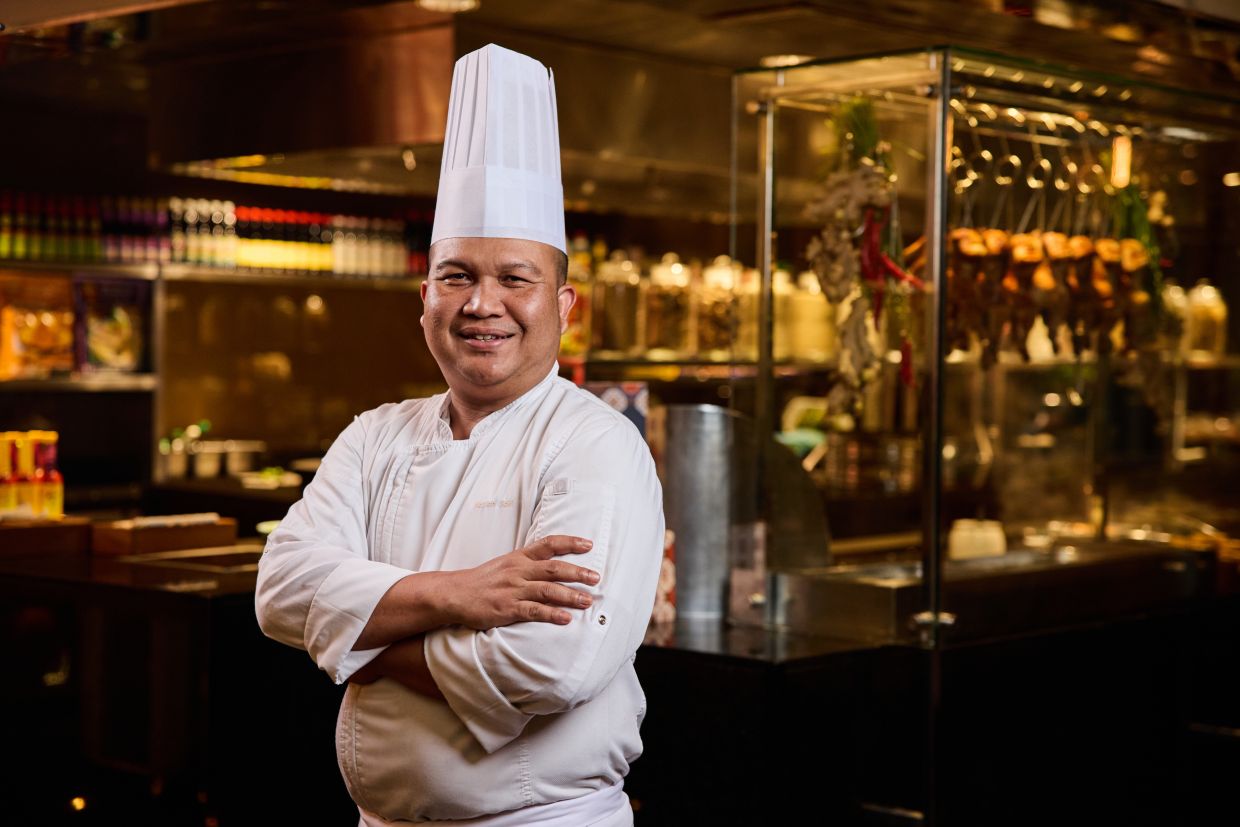
“Actually we did this same theme last year. It was quite successful, so we continued this year with an enhanced menu,” says Mazlan Said, the chef de cuisine at JP Teres at Grand Hyatt KL.
JP Teres’s ‘Sajian Istana’ theme is – as its name implies – built around traditional palace recipes that Mazlan and sous chef Muhammad Nazib Omar spent months researching and collecting, before coming up with a final menu six months before the start of Ramadan.
The resulting spread now consists of over 150 dishes, including kerabu lidah bakar, kerabu ayam jantung pisang, rusuk lembu bakar madu, kambing masak jintan, onde-onde profiterole and so much more.
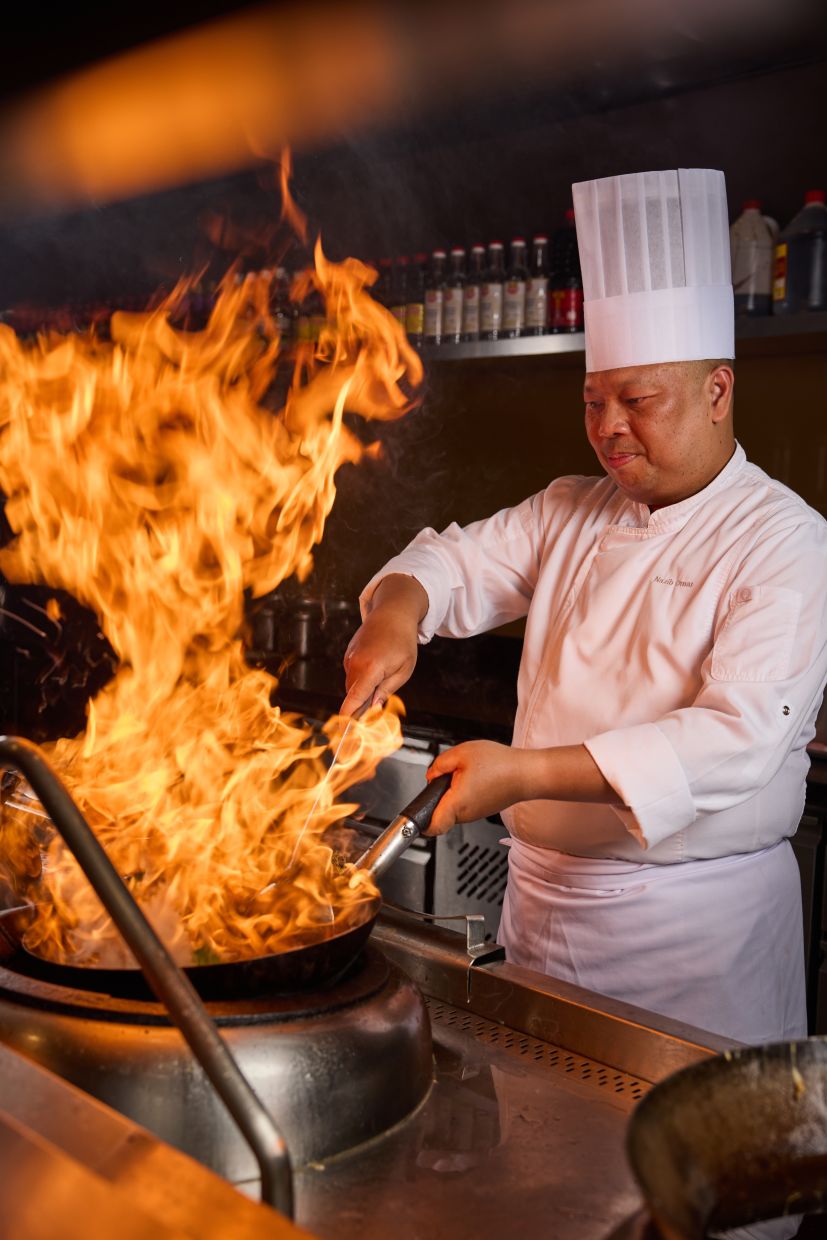
There is also lot of work that goes into cooking in bulk day after day for one whole month, most notably because traditional Malay food isn’t necessarily simple to make. A single beef rendang for instance, can take three hours to slow-cook to perfection while sambals often have to be stirred relentlessly until the oil has separated (pecah minyak).
Multiply this by the number of diners targeted each night and then add between 50 to 100 extra dishes that also need to be cooked and the end is total chaos if the team doesn’t operate like a well-oiled machine. So how do chefs make it work?
Mazlan and Nazib have a much higher number of diners to tend to every night, as JP Teres typically serves 250 people a night during Ramadan.
To cook in bulk while ensuring consistency every night, some elements are prepared in advance but the chefs are focused on quality, so they say most of the dishes are cooked hot on the spot.
“For some dishes, like for example we make a kalio udang using large freshwater prawns and for that dish, we normally make the paste first. And then on the actual day, we just finish it off.
“And we do the same for the dishes that cannot be made on the spot, like rendang. We will make it mostly in advance.
“Then there will be dishes we cook a la minute, like the kambing bakar and sotong bakar dishes,” says Nazib.
Nazib believes festive spreads during Ramadan will continue to be evergreen, because they offer a wider arsenal of heritage Malay dishes – and Malaysian fare in general.
“Spreads during Ramadan tend to be more extensive. We normally add new menu items and there are things that are on the menu that only come out this time of year. So for most people, this is the best time to indulge in a wider range of local dishes,” says Nazib.