HOW can trust fluctuate the carbon market in Asia? Many people, myself included, would initially think the carbon market is simply an international system for carbon emissions trading, where companies purchase and sell carbon credits to meet their specific climate goals.
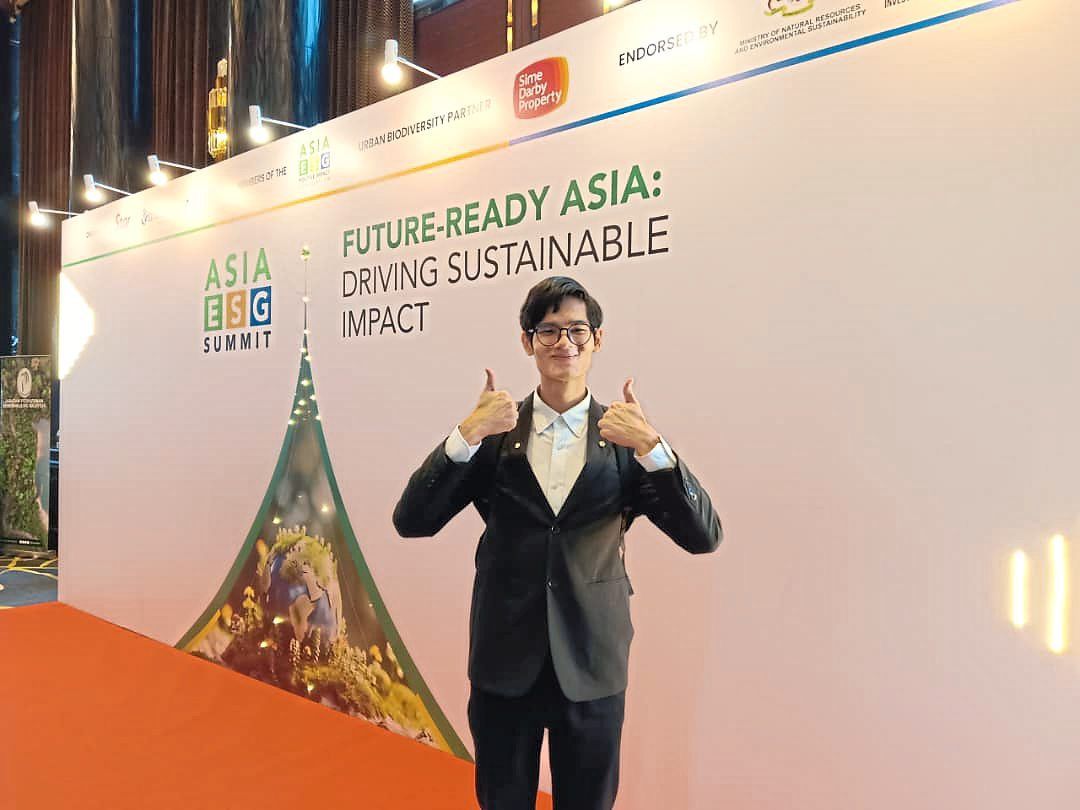
Never would I have imagined that simple trust and integrity could be the “make or break” factors for a global market. However, my outlook changed after attending a talk by CarbonEthics co-founder Bimo Soewadji at the Asia ESG Summit 2025.
His company is a Jakarta-based restoration pioneer specialising in blue carbon ecosystems, and his session on “Restoring Trust in Asia’s Carbon Markets: Why Integrity Matters Now More Than Ever” offered a transformative look at why ethics are the backbone of environmental finance.
To my surprise, I learnt that trust and integrity are essential to combat the key challenges hindering capital flow in the carbon market. Here is why this matters so much for our future.
Asia’s untapped potential
The Asian carbon market is an essential part of financing global decarbonisation. It possesses immense natural and technological potential, both in emission reduction and renewable carbon projects.
By the end of 2024, Asia had become the core supplier for global carbon credit markets, accounting for 56.19% of the global cumulative issuance. Before the talk, I did not realise just how much of the world’s emissions come from this region.
Soewadji noted that Asia produces 50% of global emissions and 55% of global gross domestic product. While these statistics suggest that most of Asia is already active in the market, the reality is quite different.
To my surprise, only 28% of regional emissions were actually covered, while a staggering 72% remained untapped carbon potential.
This means there are still many opportunities to capitalise on for a better climate impact. With so much potential, why isn’t everyone taking advantage of it?
Four key challenges
Soewadji provided key insights into why the majority of Asia’s market remains untapped. He identified four main challenges that act as a “handbrake” on our regional capital flow.
Systemic fragmentation: Unlike the European Union, our continent is a patchwork of different rules. Because each country has its own national framework, it is incredibly difficult to align projects across borders. This makes it easy for critics to challenge the validity of credits, which scares off long-term investors.
Fossil fuel dependency: We have to be honest about the fact that many Asian economies are still highly dependent on fossil fuels. This natural resource dependency creates a massive hurdle for green transition efforts; when the status quo is profitable, the motivation to switch to carbon-neutral initiatives often lags behind.
Greenwashing and credibility: This was the most disappointing challenge to hear about. Many companies unfortunately use the carbon market to deceive consumers, claiming their credits are helping the planet when, in reality, they aren’t always reliable. This “credibility gap” makes people cynical about the whole system.
Low pricing: Currently, the price of carbon in Asia is far too low, often at or below US$20 (RM78) per tonne. This does not align with the Paris Agreement goals, which suggest we need a price between US$50 (RM195) and US$100 (RM393) by 2030. Without a higher price tag on pollution, there is little incentive for major emitters to change.
Walking the “red line”
All of these challenges made me realise that trust and integrity are truly essential. There are businesses that may “walk on the red line” in order to meet their company’s climate goals and gain major profit for themselves in the carbon market. This should not be the case.
The Asian carbon market needs to foster regional collaboration to ensure better trust so that investment can flow into the system fairly.
Does this mean companies only need to follow enforced rules? Or should they be like the Gold Standard, having continuous reviews and taking real accountability for their credits? The short answer is yes, and more.
Soewadji spoke enthusiastically about Indonesia being an Asian leader in positive regulations. By early 2025, Indonesia had revised presidential regulations and entered mutual recognition agreements with the Gold Standard, Plan Vivo, Global Carbon Council (GCC) and FERA.
CarbonEthics consistently advocates for this openness and policy clarity. These international standards are essential to build trust with consumers and attract the long-term investment needed for future projects.
Lessons from Pulang Pisau
Soewadji shared a project contribution that really stood out: the Pulang Pisau Preservation project. This is a peatland fire prevention and forest protection programme that requires both technical support and on-ground community support.
This project ensured active participation with local communities. It required the younger generation to perform on-ground routing in plantations and use technology to classify land cover to cross-check for any hidden or covered land.
This equal partnership with the locals shows that a bond is needed to create change for both the carbon market and the environment.
Reflection on the future
Trust and integrity are the essential components needed for long-term investment in the carbon market. Before this talk, I often felt that the problems were too big and the solutions were too corporate for a student to influence.
However, seeing how much of the market depends on human values like honesty and community bonding has changed my perspective. It made me realise that even as students, we are not just passive observers.
We are the future workforce that will hold these companies accountable. As the young generations of tomorrow, we should trust and support one another to strive for a better climate.
We must demand high standards today so that we don’t have to pay for the mistakes of greenwashing tomorrow.
By championing transparency now, we can ensure that Asia’s 72% untapped potential is used to build a greener, more honest world.