COLORADO: Global electric grids are entering a new phase, with investment spending by utilities shifting from solar panels and wind farms toward the infrastructure needed to make renewable-heavy power systems work.
Across Europe, Asia, Africa, Oceania and Latin America, demand for batteries and grid equipment is still climbing even as purchases of solar systems retreat from earlier peaks, signalling a shift in focus from building renewable capacity to strengthening the infrastructure needed to support it.
The shift reflects the rising complexity of operating power systems with large volumes of renewable energy.
Many markets now have enough solar capacity to produce substantial electricity surpluses during sunny periods, placing greater value on batteries, transmission assets and grid upgrades that can store, balance and redistribute that power.
As a result, investment is increasingly flowing toward the infrastructure that determines how effectively renewable electricity can be used rather than how much can be generated.
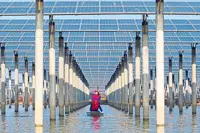
Data on global imports of China-made solar systems show a remarkable slowdown in purchases of what have become one of the defining features of global energy transition efforts: solar panels.
After peaking at over US$5.8bil in March 2023, global imports of China-made photovoltaic solar systems have recently dropped to less than half of that amount, and so far in 2026 have averaged US$2.7bil a month, data from Ember showed.
However, rather than evidence of permanently declining interest, the slower uptake of solar arrays may be a sign that China’s solar panels have been a victim of their own success.
About 40 different countries – from Australia to Pakistan to Nigeria – have spent over US$1bil on imports of Chinese solar systems since the start of 2018, including 12 nations that have spent in excess of US$5bil.
That kind of money buys a lot of panels, and has resulted in a surge in solar generation capacity. The utilities running those power systems now need tools to manage the fluxes in clean power production that come with hefty solar footprints.
To make maximum use of the growing volumes of solar power flowing through their grids, utilities across the world are turning to battery storage systems and real-time grid management components in record numbers.
And as with the renewable energy generation assets, China is the world’s top grid equipment and battery manufacturer and exporter.
This has resulted in the value of China’s exports of batteries and grid equipment surging to record highs in 2026, even as total sales of solar systems hold at roughly half their peak.
During the first seven months of 2026, global importers paid roughly US$75bil for Chinese energy storage batteries and grid equipment, Ember data showed.
That total is roughly US$20bil larger than during the same months in 2025, and compares to around US$19.4bil for solar imports so far in 2026.
Europe was the top region for battery and grid import purchases, with the region coughing up around US$31.1bil on those components, followed by Asia’s US$22bil.
Latin America and Africa also dialled up battery and grid imports to record highs so far this year to around US$3.9bil and US$3.8bil, respectively, while imports by Oceania also hit an all-time high of just over US$3.6bil. Imports by the Middle East declined slightly to around US$3.1bil, due mainly to heavy disruptions to regional economic activity and logistics flows stemming from the war against Iran.
Battery and grid imports into North America also posted a year-over-year decline to around US$7bil, due in large part to hefty tariffs on China-made products.
All told, these purchases of battery systems and grid components allow utilities to store excess solar output during sunny periods, and release that electricity during peak consumption spells.
For utilities, that ability to store surplus power for later use helps reduce system- wide curtailment of renewable energy assets, smoothes power price volatility and reduces curtailment of renewable assets within power networks.
Greater battery capacity and enhanced grid capabilities also aid in capping generation from fossil fuel power plants, which require expensive and constant fuel renewal – often via complex international trade routes that can be impacted by geopolitical upheaval.
Those benefits look set to keep China-made batteries and grid equipment in high demand for the near term at least, and should ensure that China’s broader clean technology sector continues to enjoy brisk export earnings even as solar sales hit saturation point in several markets.
In that sense, the slowdown in solar imports is less a sign of fading momentum than of a maturing transition.
Many power systems now have substantial renewable generation capacity in place, and the investment focus is shifting toward the assets needed to fully utilise that capacity.
The countries that make the most progress over the coming decade may, therefore, be distinguished less by how many solar panels they install than by how rapidly they can build the tools needed to put every available kilowatt-hour of electricity to work. — Reuters