KUALA LUMPUR: Affin Hwang Investment Bank Research (Affin Hwang IB) expects Malaysia’s equity market to rebound in the second half of 2026 (2H26), supported by a potential US-Iran peace deal.
Head of research Loong Chee Wei said markets generally dislike uncertainty, and a potential US-Iran peace deal – along with the opening of the Strait of Hormuz – would help improve investor confidence.
“The impact of the war on Malaysia was muted. Within a month, the market rebounded from its lows and is now trading close to last year’s levels.
“So, the clearing of the uncertainties, with the opening of the strait, I do expect the market to rise further,” he said when presenting his 2H26 market outlook during the Equity-Linked Investments (ELI) launch ceremony here yesterday.
US President Donald Trump reportedly said on Monday that the Strait of Hormuz would be fully reopened by Friday, following a deal between Washington and Tehran to end the West Asia conflict.
Loong emphasised that Malaysia’s market fundamentals remain solid, with corporate earnings projected to grow by around 9% this year, a pace that is historically strong.
“Also, there’s a potential yield upside. The average Malaysian market yield is about 4%.
“Basically, a lot of the companies have very well-capitalised structures, and they can declare higher dividends,” he said.
In addition, Loong noted that market valuations remain attractive with the price-to-earnings ratio below historical mean levels, while initiatives such as the MY Value Up programme are expected to attract more foreign fund inflows in 2H26.
“Hence, we maintain our ‘overweight’ call and have set a year-end target of 1,780 for the FBM KLCI, moderated down from 1,830 previously mainly because of concerns in terms of the global market volatility,” he said.
Key catalysts supporting the Malaysian market include sustained investment growth for capacity building, corporate exercises that will unlock value, the pursuit of more mergers and acquisitions, and initial public offerings.
“We have also seen rising consumption. This was affected earlier because of tempered sentiment due to the war.
“Some consumer companies were feeling a bit of cost pressure that squeezed margins,” he said.
Meanwhile, Loong said the investment bank has projected a gross domestic product growth of 4.8% for Malaysia in 2026.
However, there is a risk that this could moderate due to supply disruptions because of the US-Iran conflict.
The ringgit is expected to strengthen to RM3.80 against the US dollar by year-end, although there is some risk due to the global exchange rate volatility.
“We expect crude palm oil prices to remain at around RM4,500 per tonne. That would be good for the plantation companies.
“We highlight the banking, construction, plantation, property, and utility sectors in terms of major sector overweights.
“These are more domestically oriented and can benefit from rising exports,” he said.
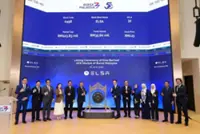
Yesterday, Affin Hwang IB launched ELIs to provide investors with customised exposure to a broad range of underlying assets, while supporting diverse market and risk-return objectives.
ELIs enable investors to pursue specific portfolio objectives, including enhancing potential yield, managing downside exposure and targeting defined return outcomes.
At present, the ELIs offered by Affin Hwang IB are linked to individual shares listed on Bursa Malaysia. — Agencies