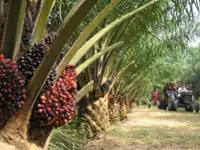
PETALING JAYA: The plantation sector could face renewed weather-related risks over the next year as the return of El Nino threatens agricultural production across South-East Asia, even as concerns over fertiliser supply disruptions linked to the US-Iran conflict begin to ease.
Analysts are offering various views on how the weather phenomenon and war prospects could affect plantation crop yields, with Fitch Ratings warning that El Nino conditions have emerged in the tropical Pacific and are expected to persist through at least early 2027, increasing the risk of drier weather in parts of South-East Asia, including Malaysia.
“El Nino brings unusually dry conditions in some regions,” Fitch said in a report published yesterday, noting that South-East Asia is among the areas historically exposed to drought-like conditions during such weather events.
Malaysia was among the countries identified by Fitch as being at risk from El Nino-related dry weather, alongside regional peers such as Indonesia, Thailand and the Philippines.
The warning comes at a time when global agricultural markets are already grappling with uncertainty over crop yields and input costs. According to the ratings agency, global grain production is expected to decline in 2026 and 2027, partly reflecting weather-related risks and higher fertiliser costs.
While Malaysia is not a major grain producer, the outlook is significant for the country’s plantation industry, particularly palm oil, as weather conditions play a crucial role in determining fresh fruit bunch (FFB) yields and crude palm oil (CPO) output.
“Fitch believes that the projected declines in output partly reflect higher fertiliser costs in 2026, stemming from the effects of the US-Iran war,” the report stated.
On the other hand, with the war in Iran apparently on the wind-down, investment strategist at IPP Global Wealth, Mohd Sedek Jantan, is cautious about linking potential lower fertiliser prices directly to a meaningful improvement in plantation earnings.
While recognising that fertiliser costs matter, he told StarBiz they are rarely the primary driver of profitability for plantation companies.
“The larger earnings variables remain FFB yields and CPO prices. If the US-Iran conflict continues to de-escalate, we could see further normalisation in energy markets, freight costs and fertiliser supply chains. That should provide some cost relief for planters,” he pointed out.
However, Mohd Sedek crucially highlighted that lower fertiliser prices are often a symptom of improving supply conditions across agricultural markets, which can also reduce upward pressure on edible oil prices.
As such, he said the net earnings impact is not necessarily straightforward, explaining that the more important issue for 2027 is whether the developing El Nino event results in prolonged moisture stress across major palm oil producing regions.
“Palm oil trees typically respond to weather shocks with a lag, meaning the production impact often becomes more visible several quarters later.
“If yields weaken across Malaysia and Indonesia, the resulting supply tightness could have a far greater effect on earnings than any reduction in fertiliser costs,” he elaborated.
From an equity market perspective, Mohd Sedek said investors tend to reward plantation stocks more for volume resilience and pricing power than for cost savings.
He said a planter that delivers stronger- than-expected yields during an adverse weather cycle can significantly outperform peers, whereas a decline in fertiliser costs generally provides only incremental margin support.
“Therefore, the dominant earnings driver will remain weather-related supply conditions and their impact on CPO prices. In fact, if El Nino materially tightens palm oil supply, higher CPO prices could more than offset any increase in operating costs, making production dynamics far more important than input cost dynamics,” he added.
Meanwhile, chief investment officer at Tradeview Capital Nixon Wong noted that fertilisers are a significant cost item for planters, accounting for approximately 30% of FFB production cost, and therefore, recent spikes in prices have been meaningful.
“Hence, lower fertiliser and energy prices should reduce unit costs in 2027, but we believe a meaningful earnings reset is less likely unless the decline is sustained,” he told StarBiz.
On the other hand, he agreed with Mohd Sedek, observing that for earnings, yield and CPO prices likely remain the bigger influencing factors, especially if El Nino affects bunch development and production.
Looking ahead at the bigger picture besides weather patterns, Mohd Sedek opined that the plantation sector is entering a new phase where investors will focus less on cost normalisation and more on productivity-led earnings growth.
The easy gains from lower fertiliser, freight and energy costs are largely cyclical, he said, and the more durable driver of shareholder returns will be a company’s ability to improve yields, enhance mechanisation, optimise replanting programmes and raise oil extraction rates.
He added that in a market where supply growth remains structurally constrained, even modest improvements in operational efficiency can translate into meaningful earnings outperformance.
“As a result, we expect the sector to become increasingly stock-selective, with valuation premiums accruing to companies that can consistently deliver productivity gains rather than simply benefit from lower input costs,” said Mohd Sedek.
Of interest, Wong believes that if the geopolitical risk premium fades, the plantation sector could lose some CPO price support from high energy linkages via biodiesel economics.
As such, he said the theme could shift to volume recovery, but that still depends on better weather, adequate amount of fertiliser application which relates again to how low fertiliser prices could go, labour availability and replanting discipline.
“Normalising fertiliser prices should help producers restore optimal application, but the FFB yield impact is usually delayed and not immediate. We may see margins improve first, and only followed by production recovery in later stages,” said Wong.
On this note, Mohd Sedek said it is essential to distinguish between cyclical cost relief and structural supply growth for the sector, as Malaysia’s palm oil production has been expanding at less than 2% annually over the past decade, reflecting land constraints, labour shortages and biological limitations.
“Even if fertiliser prices moderate by 10% to 20% over the next six to 12 months, I would expect industry-wide CPO production growth to improve only marginally, potentially by 0.5 to 1.0 percentage point, assuming weather conditions remain favourable,” he predicted.
The more significant implication, he said, is that lower fertiliser costs improve sector cash flows and encourage continued investment in replanting, mechanisation and estate maintenance.
Those benefits tend to materialise over multiple years rather than a single production cycle, and therefore, the medium-term impact is likely to be felt more through improved productivity and plantation sustainability than through a sudden surge in output.
“From a macro perspective, a mild El Niño could easily offset the production gains generated by lower fertiliser costs, whereas favourable weather could amplify them.
“In other words, fertiliser costs may influence the margin, but climate conditions will determine the magnitude of production growth,” said Mohd Sedek.