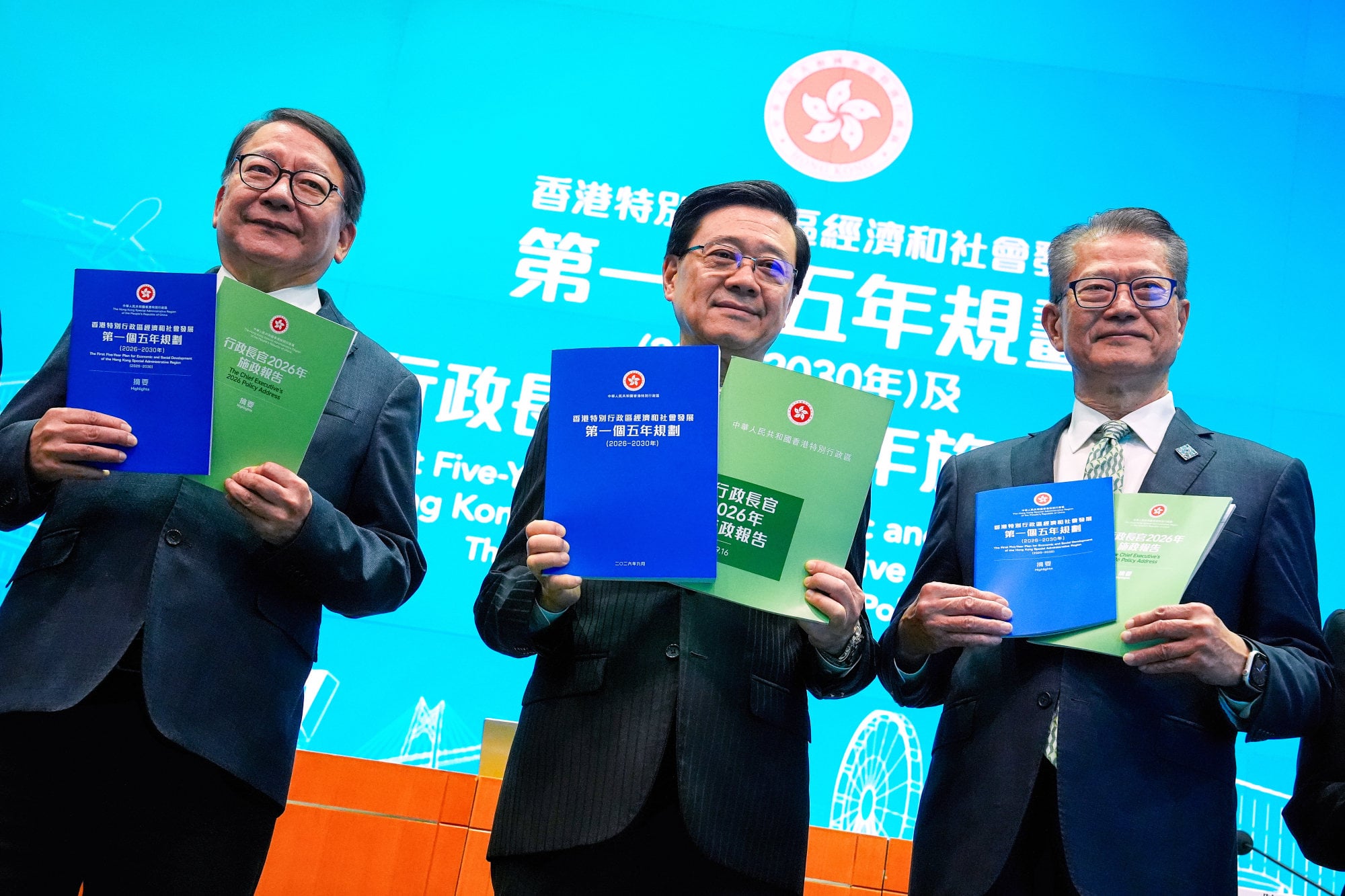
Hong Kong’s leader has unveiled the city’s first five-year blueprint, aligned with China’s national development strategy, setting targets to nearly double innovation spending and raise the share of manufacturing and new industries to 5.5 per cent of the economy.
In a historically significant new approach, Chief Executive John Lee Ka-chiu prefaced his annual policy address on Wednesday with a comprehensive set of binding and anticipatory or aspirational longer-term targets for Hong Kong up to the year 2030.
The two documents would go hand in hand, Lee said, promising to take the city’s economic development to the next level by creating a new innovation engine in the Northern Metropolis megaproject, while building on Hong Kong’s strengths in finance, aviation, maritime services, trade and technology.
He also focused on improving living standards and social well-being, announcing initiatives ranging from higher baby bonuses to encourage childbirth and increased healthcare spending to more subsidised housing and shorter waiting times for public flats.
“[China’s] 15th five-year plan, which outlines a blueprint for future national development and also places a heightened demand for Hong Kong’s better integration into and service of the overall national development, presents major opportunities and opens up new ground for the growth of our city,” Lee said in his speech to the Legislative Council.
“Hong Kong’s economic structure still leaves room for enhancement, the mission of transitioning to new growth drivers remains formidable, and deep-seated social problems still require speedy resolution.”
The five-year blueprint, a seven-part document described by Lee as “an action agenda” for Hong Kong’s medium- and long-term development, lists 105 indicators, including 22 major targets covering economic and innovation development, livelihoods, and environmental protection.
The major indicators are divided into 17 anticipatory goals and five binding targets, some of which would be affected by geopolitical uncertainties and other external factors.
“If the binding targets are not met at the end of the day, there is a need to be held accountable,” Lee said. “But we need to appreciate that some things may be out of our control, such as economic development. Some countries might suddenly change their policies.”
The anticipatory goals include 10 per cent annual increases in two key technology indicators: nearly doubling spending on innovation activities to 3 per cent from 1.63 per cent of gross domestic product (GDP) over five years; and raising the economic share of value-added manufacturing to 5.5 per cent from 3.8 per cent.
Another anticipatory target is to increase by 4 to 5 per cent annually the number of companies whose parent firms are based outside Hong Kong.
Four of the five binding targets concern environmental protection. They include cutting carbon emissions per unit of GDP by 32.5 per cent and raising the share of zero-carbon energy in Hong Kong’s electricity fuel mix to 30 per cent from 25 per cent over the five-year period.
Goals for the Northern Metropolis, the massive undertaking near the Shenzhen border to build a 30,000-hectare (74,131-acre) business, education and housing zone, include a binding target to raise the “spade-ready sites” available from 120 to 900 hectares by 2030, and an anticipatory target to increase the number of homes completed in the zone to 70,000 from the current 11,000.
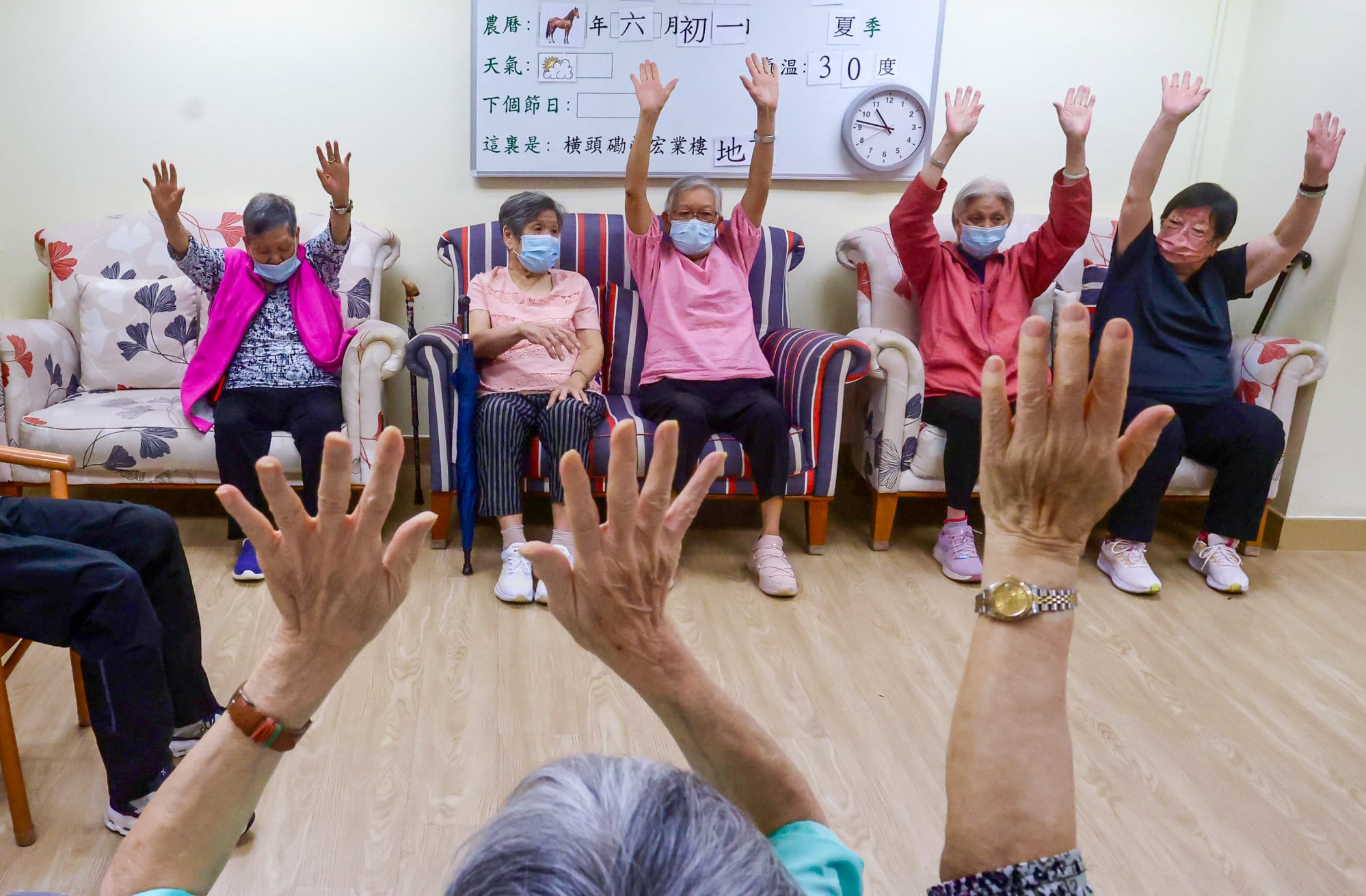
On livelihoods, Lee pledged to raise the doctor-to-population ratio to 2.43 from 2.25 per 1,000 residents, and lower the risk of early deaths caused by chronic conditions to 6.9 per cent from 7.3 per cent.
Lee’s long-term blueprint dedicates a chapter to national security as a priority for the city’s success and prosperity, stressing that “a holistic approach” will be adopted to strengthen economic resilience by improving the city’s legal system and enforcement mechanisms.
The wide-ranging, traditional policy address that followed the announcement of the five-year plan was titled “A Strategic Vision for a Bright New Era, Driving Reform and Boosting Development, Unleashing Opportunities and Enhancing Livelihood”.
The address, which was the last of Lee’s current term, set out priorities targeting five major areas of development opportunities, alongside 25 key livelihood initiatives.
Measures offering immediate benefits to residents include one-off cash incentives and subsidies.
While extending the HK$20,000 (US$2,549) newborn bonus for three years, Lee said the government would increase the amount for second and subsequent children to HK$30,000 and offer subsidies to employers providing an extra 10,000 full-time jobs to young people entering the workforce.
Expediting the development of the Northern Metropolis is a key highlight of the policy address, which matches the “dual-core planning” vision set out in the five-year plan that clusters innovation and technology (I&T) sectors near the northern border and places finance sectors south along Victoria Harbour.
Describing the northern development zone as “an important strategic vehicle” for integrating I&T and industry, Lee said selected strategic industries establishing a presence there would receive targeted tax breaks.
While developing three university towns that will span 1,000 hectares in the northern zone, the government will invite universities to build campuses in Hung Shui Kiu from this year. Authorities are also studying the feasibility of a southern extension of the Hong Kong-Shenzhen Western Rail Link to enhance connectivity.
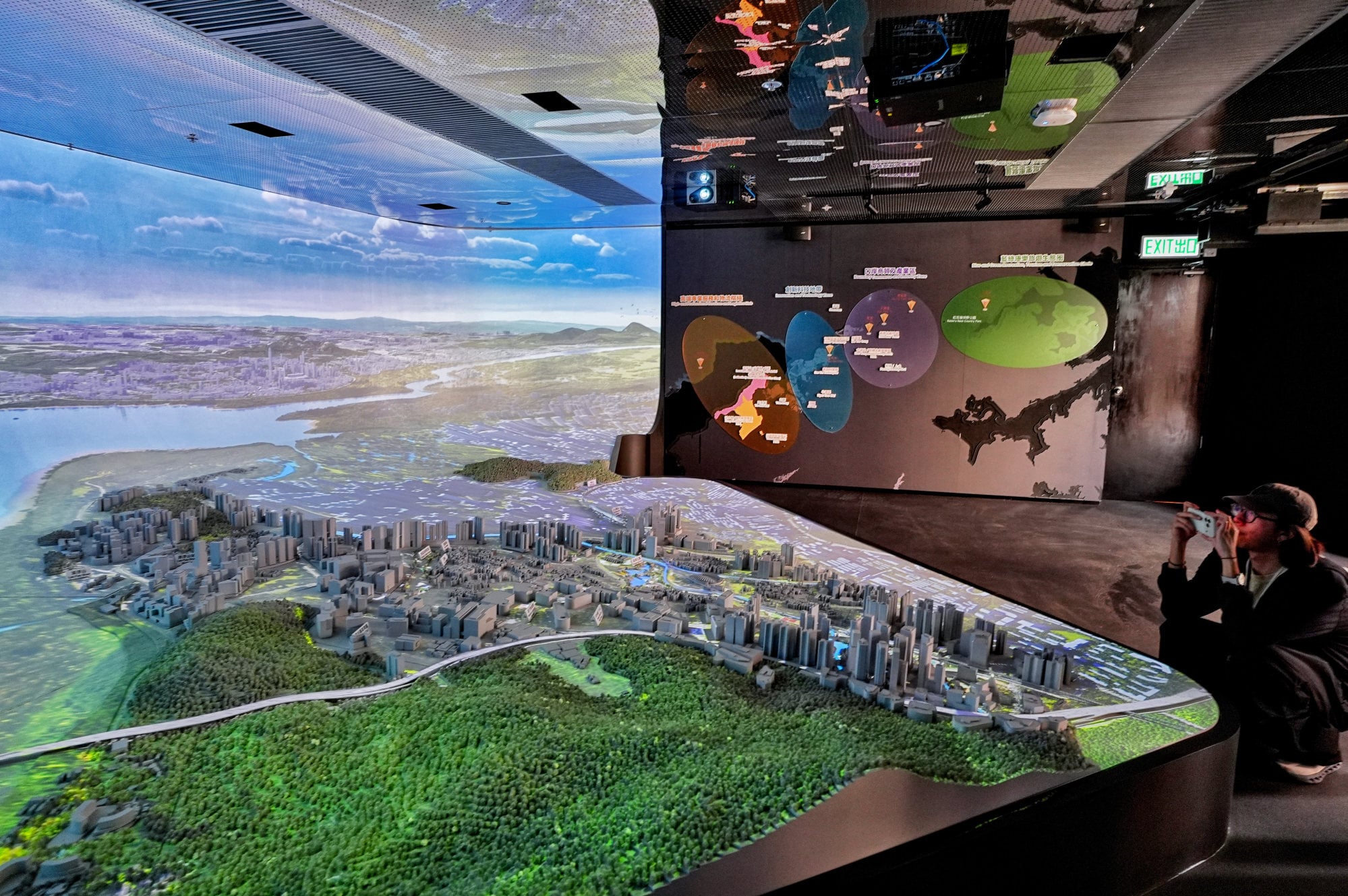
The Northern Metropolis will seek to improve living conditions in space-starved Hong Kong, with its housing projects increasing the proportion of more spacious flats with an area of about 45 square metres (484 square feet) to 25 per cent from the original 20 per cent.
Both policy documents devoted significant space to consolidating Hong Kong’s role as an international financial centre under the broader “Four Centres, One Hub” strategy.
The strategy seeks to strengthen the city’s position as an international financial, maritime and trade centre, develop it into an international innovation and technology centre, and establish the city as a hub for “high-calibre talent”.
The chief executive said the city would introduce an auction system allowing banks to bid for short-term yuan liquidity to meet their short-term financing needs.
Lee said his administration would actively promote the use of the Chinese currency to settle government expenditure, for example purchasing fresh water from Guangdong, and expand the dim sum bond market, while the operator of the city’s stock and futures markets would launch an offshore renminbi bond index and introduce new products.
Following the official launch of Hong Kong’s central clearing and settlement system for gold earlier this year, the government is considering tapping into the Exchange Fund to buy more gold and participate in the spot and futures markets.
The policy address also outlined growth strategies for emerging sectors, including dispute resolution, international property and marine services.
A new task force on frontier technology will spearhead deeper research on aerospace, marine and quantum technologies.
Addressing housing issues that Beijing has often instructed Hong Kong to resolve, Lee said the aim was to reduce the waiting time for subsidised rental flats to 4.5 years from 4.8 years by 2027, and to bring it below four years after 2030.
The long-term plan envisages public rental housing accounting for 40 per cent of total supply, with subsidised sale flats and private homes each making up 30 per cent over the next 10 years.
Lee put a heavy emphasis on leveraging artificial intelligence (AI) in various policy domains, which will include establishing an “AI City Brain” system to strengthen responses to extreme weather events, major incidents and public order management. A new AI commissioner’s post will be created to tackle emerging challenges.
Lee told the media later that while AI boosted efficiency, it also created “operational and societal risks”, prompting his administration to introduce seven risk governance guidelines, with a particular focus on protecting students.
Lee expressed confidence that the targets would improve livelihoods, strengthen economic development and deepen Hong Kong’s integration into the national development agenda.
“I hope and I’m confident that in five years, for everyone, whether it’s their income or development, there will be an improvement,” he said.
“Our industries will be more diversified, education enhanced, [the city] more international, and we will be a highly technologically empowered Hong Kong.” -- South China Morning Post