As the United States, Russia and China race to turn a melting Arctic into the world’s next major economic gateway, their strategic ambitions face a hidden threat: thawing permafrost.
Since returning to office last year, US President Donald Trump has pushed to expand America’s Arctic footprint. This includes investing in icebreakers to counter Russian and Chinese shipping ambitions, unlocking natural resources in Alaska and renewing efforts to buy or annex Greenland.
Yet, as the three powers vie for control of Arctic sea lanes and minerals, rapidly thawing permafrost in Russia’s Siberia could derail their plans. According to a new international study led by Chinese scientists, the massive cost of collapsing ground threatens to overshadow the region’s economic potential.
Warming in the Arctic is occurring almost four times faster than the global average. This phenomenon, known as Arctic amplification, has triggered a rapid thaw of the permafrost that covers most of the region.
Permafrost refers to the ground in cold regions that has stayed at a temperature below 0 degrees Celsius (32 degrees Fahrenheit) for at least two consecutive years, and its melting could release a huge amount of greenhouse gas that pushes temperatures even higher.
Around 46 per cent of the northern hemisphere’s permafrost is in Siberia.
By 2050, higher methane emissions as a result of permafrost thaw and increasing wildfires in Siberia could offset 20 per cent of the global methane reduction required to meet our climate targets, according to the study led by the Chinese Academy of Sciences and published in the peer-reviewed journal Science on August 6.
Methane is the second most abundant human-made greenhouse gas after carbon dioxide, but it is more than 28 times more potent at trapping heat in the atmosphere, according to the US Environmental Protection Agency.
Increasing methane emissions from thawing permafrost could result in a “climate-carbon feedback” loop – a cycle where permafrost degradation releases greenhouse gases that in turn further amplify climate change.
“Global targets to keep global mean temperatures below even 2 degrees Celsius of preindustrial values will be compromised, even if only a fraction of the carbon presently stored in permafrost thaws and is released to the atmosphere,” the team said.
On the ground across the Arctic, the consequences of losing permafrost are already unfolding. This includes land subsidence, landslides, soil volume loss, coastal erosion, and shifting of land from terrestrial to aquatic, because much of the region’s land is bound together by ice.
Thawing permafrost not only alters the natural landscape, but also poses a major threat to human infrastructure, according to a study published in the peer-reviewed journal Polar Science in June last year. Buildings, roads, railways, airports, pipelines, oilfields, and mines are already being affected by the current state of thaw.
By the middle of the century, about 69 per cent of fundamental circumpolar infrastructure, including industrial facilities, is at risk of damage, according to the researchers from Paris-Saclay University, the Helmholtz Centre for Polar and Marine Research, and research centre Nordregio.
They found that thawing across the entire Arctic circumpolar permafrost region – across Russia, Canada, Alaska, Denmark, Greenland, Norway, Finland, Sweden and Iceland – could result in tens of billions of dollars in economic losses by mid-century.
Russia, which has both the largest permafrost area and the most infrastructure built on its permafrost, is the most at risk of economic loss. This includes its mining, oil and gas operations, a critical corner of the country’s economy.
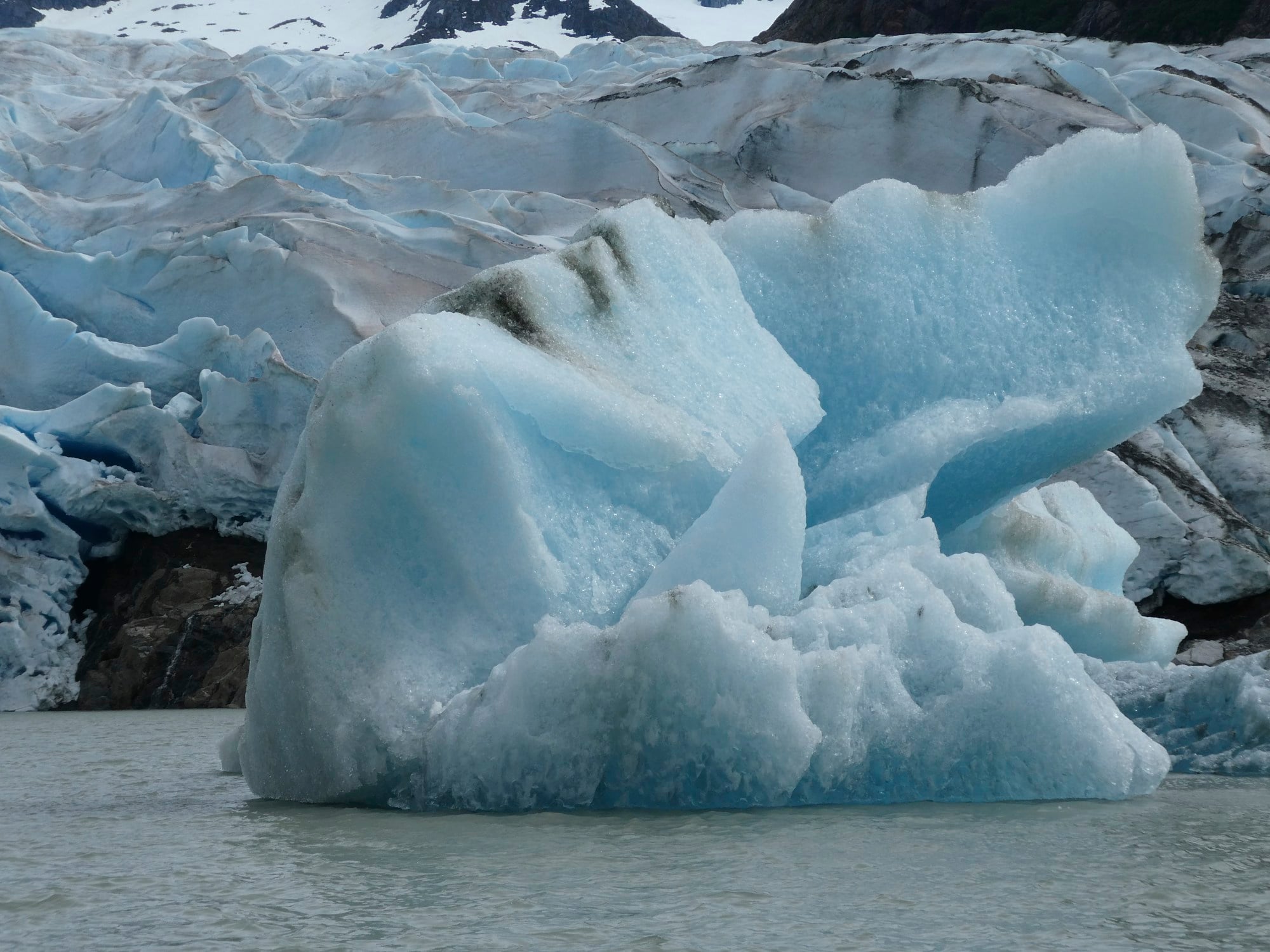
Alaska is another region that could face major losses, with permafrost present on about 80 per cent of its land surface.
The Polar Science study said there were advantages to a de-iced Arctic, including reduced heating costs, diminishing sea ice allowing for more marine and coastal development, the expansion of agricultural land and the potential to exploit more local resources.
Russia highlighted some potential positive consequences in a 2020 national action plan for climate change adaptation, including “improved conditions for transporting cargo in the Arctic seas” and greater access to the country’s extended continental shelf.
The icy Northern Sea Route – the shortest passage between the Asia-Pacific and Western Eurasia – is becoming navigable for longer periods each year because of global warming.
As the world witnesses multiple shipping crises, from the Suez Canal to the Strait of Hormuz, the promise of an alternative Arctic sea lane emerging from under the ice has drawn intense interest from Russia, China and the US.
Trump says he wants to acquire Greenland, an autonomous territory of Denmark, for “national security” reasons.
However, some believe his interest in Greenland and the wider Arctic is driven by lucrative, untapped natural resources below the ice, which will become easier to exploit as the region warms.
According to the US National Oceanic and Atmospheric Administration (NOAA), Greenland is not immune to permafrost thaw, which threatens infrastructure as the ground grows unstable and prone to collapse. Hotter conditions could also create more vegetation and peat fuel for wildfires.
For any mining ambitions in the Arctic, the Red Dog mine in Alaska – one of the largest zinc mines in the world and a major local employer – serves as a cautionary tale.
Thawing permafrost has increased particulate levels in the creek where the mine pumps its treated waste water. As a result, downstream levels have surged above regulatory limits despite no change in the mine’s actual discharge, according to a report by the Alaska Beacon in December.
To resolve the issue, operator Teck Resources may need to spend hundreds of millions of dollars and up to a decade to develop a solution, such as a waste-water pipeline to the ocean.
Last week, Trump withdrew federal support for the Arctic Report Card – an annual report on issues such as changing sea ice and thawing permafrost that NOAA has published for two decades, according to the Alaska Beacon on August 12.
In Russia, fossil fuel producers have spent years adapting to thawing permafrost – taking steps such as driving foundation piles deeper into the ground and investing in technology to keep the ground frozen to avoid disrupting operations.
Thawing permafrost also poses a risk to human health. It can mobilise environmental contaminants like the heavy metal mercury and pathogens such as emerging infectious diseases that would otherwise have remained trapped in ice, according to the Polar Science paper.
In 2016, an anthrax outbreak in northwestern Siberia’s Yamal district that killed more than 2,300 reindeer and resulted in the death of a young boy was linked to the thawing of the bacteria from permafrost, according to Russian news agency Tass.
Another Polar Science paper published in June last year noted that the Russian invasion of Ukraine had made permafrost thaw mitigation more challenging, with Russian-Western joint research suspended and Western scientists denied access to vital Russian monitoring stations.
Data collection is crucial for properly monitoring the permafrost carbon feedback mechanism and anticipating climate tipping points, but this break in collaboration is a “serious blind spot” for the Western scientific community, according to the researchers from UiT The Arctic University of Norway and France’s School for Advanced Studies in the Social Sciences.
Moscow’s most recent national action plan for climate adaptation, approved in June, targets key challenges including permafrost degradation and infrastructure resilience in thawing regions.
According to the Norway-France team, Russia is supporting the development of a state-run permafrost monitoring system and increasing monitoring infrastructure to measure emissions.
While localised measures such as rewilding and adaptive infrastructure can delay thawing, the consensus among scientists is that curbing global warming is the only viable long-term defence against widespread permafrost thaw. -- SOUTH CHINA MORNING POST