
Midwestern Americans watching television this summer may have been surprised to see China and bacon appearing together in political advertisements.
“The corrupt Save Our Bacon scam in the farm bill – it’s a giveaway to Chinese corporations,” one advertisement declared over images of the Chinese flag and Chinese President Xi Jinping. “Whose side is your senator on? America or China?”
Viewers might assume the advertisement was promoting yet another Republican-led effort to counter Beijing.
The reality is far more complicated.
Behind the aggressive campaign against the Save Our Bacon Act lies a fight over how pigs are housed – and perhaps the latest example of China being weaponised in US domestic politics.
The bill has created an unexpected collision of animal welfare, agricultural regulation and America’s growing political anxiety over China, with opponents accusing a Republican-backed farm measure of putting a Chinese-owned pork giant ahead of American farmers.
What is the Save Our Bacon Act?
The controversy traces back to California’s Proposition 12, which voters approved in 2018. The measure established minimum space requirements for breeding pigs and prohibited the sale of pork from animals raised below those standards, forcing producers nationwide either to modify their operations or risk losing access to one of the country’s largest markets.
The US Supreme Court upheld the measure in 2023 after legal challenges.
The economic impact of California’s law has become a key point of contention. A recent North Dakota State University study found that Proposition 12 was associated with a roughly 73-cent-per-pound increase in California’s retail pork price premium after full enforcement. Researchers estimated that consumers in California and Massachusetts, both of which have similar animal-confinement laws, spent an additional US$403 million on pork from 2024 to 2026.
Pork producers have argued that constructing Proposition 12-compliant housing could cost as much as US$4,000 per sow, a burden that could weigh particularly heavily on smaller family farms.
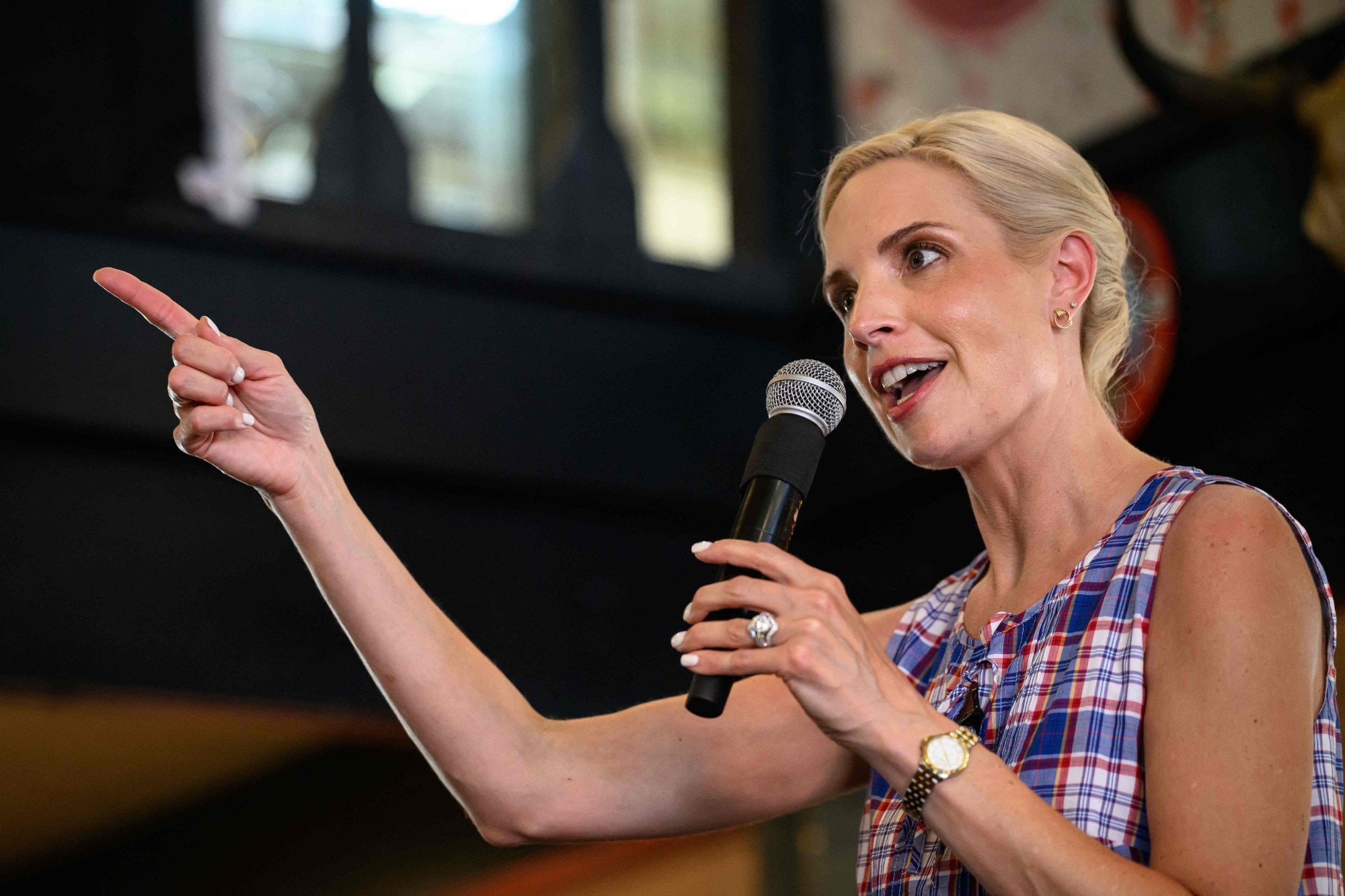
Enter the Save Our Bacon Act. Introduced by congresswoman Ashley Hinson of Iowa, the legislation would overturn Proposition 12’s requirements for pork sold in California.
Hinson, who is running for Senate and has secured the Republican nomination, has argued that the measure would protect interstate commerce for Iowa livestock producers by preventing one state from imposing production standards on farmers in another while preserving states’ authority to regulate their own producers.
Opponents, led by the American Meat Producers Association (AMPA), have launched a national campaign against the new bill in Congress.
“Farmers have built their lives and communities on fair, responsible farming,” AMPA said in a statement on its website. “If Congress eliminates these laws, those livelihoods will vanish, supply chains will shatter, and rural towns will lose the people who fuel their economy.”
AMPA was formed in late 2025 and led by Holly Bice, a government relations professional with experience lobbying on agriculture and animal welfare. The group has launched a US$30 million campaign targeting lawmakers in the Midwest over the Save Our Bacon Act.
Hinson has accused the group of being backed by meat companies that have already spent millions of dollars transitioning to Proposition 12-compliant facilities, giving them a financial stake in preserving and expanding such mandates across state lines and limiting competitors’ ability to operate under conventional production standards.
It is unclear who is funding the US$30 million campaign. Federal Election Commission filings show that the American Meat Producers PAC, an affiliated political committee, had raised about US$55,000 and spent about US$8,000 by the end of June. The filings list individual donors from across the country, including a US$5,000 contribution from Bice herself.
The campaign’s advertisements, targeting Midwestern states, have also attracted over a million views on YouTube.
Hinson, AMPA and Bice did not respond to requests for comment.
Why is China involved?
AMPA has transformed the debate into something much larger, arguing that the legislation would ultimately benefit Chinese corporations – an apparent reference to Smithfield Foods, America’s largest pork producer.
Smithfield, based in Virginia, was acquired in 2013 by WH Group, formerly known as Shuanghui International, a Chinese company listed in Hong Kong.
That acquisition, completed more than a decade ago, sits at the centre of the current political battle, as AMPA’s ads portray the legislation as a handout to Chinese-owned corporations rather than a measure intended to help American farmers.
Ray Atkinson, a spokesperson for Smithfield, said the company believes animal-welfare standards should be based on science and veterinary expertise, rather than voter initiatives.
“The reason we oppose Prop 12 is that it has raised pork prices for consumers and doesn’t objectively improve animal welfare,” Atkinson said. “The Save Our Bacon Act would prevent individual states from creating a patchwork of livestock production practices that make it difficult to keep food affordable for all Americans.”
Atkinson did not directly address how much of Smithfield’s production complies with Proposition 12. He said the company has established supply agreements for Proposition 12-compliant pork and is willing to work with retail and food service customers to expand the availability of compliant products.
The National Pork Producers Council (NPPC), one of the Save Our Bacon Act’s strongest supporters, told the South China Morning Post that AMPA’s campaign is an activist-driven effort, and pointed to a June statement describing the group’s claims as “baseless”.
In a video interview with Farm Journal in June, NPPC president Rob Brenneman said that AMPA’s campaign “is a lie”.
“It’s not about China. It’s not about any foreign-owned company,” Brenneman said. “It’s about livestock production in general and the consumption of meat in the United States, and they want to eliminate that, plain and simple.”
Smithfield, which raised about 550,000 sows in 2025, is a major player in the NPPC, with two company representatives currently serving on its board. NPPC says it represents more than 60,000 US pork producers. AMPA has not disclosed its membership, but its website features a handful of individual farmers supporting Proposition 12.
Hinson has similarly slammed AMPA as a radical animal rights activists, arguing that misinformation campaigns have falsely suggested the legislation would benefit foreign-owned corporations or harm American producers. Hinson’s Senate campaign is also being scrutinised over donations it received from organisations linked to Smithfield.
The Chinese embassy in Washington said that investment by Chinese companies in the United States had contributed to employment and economic growth while criticising the politicisation of mutually beneficial economic and trade relations.
“Actions and rhetoric that overstretch the concept of national security and politicise economic, trade and investment issues run counter to market economy principles and international trade rules,” the spokesperson said. “They undermine confidence in the US market environment and harm the interests of the American people themselves.”
China as an easy political target
The fight over the Save Our Bacon Act reflects a broader reality in American politics: invoking China has become one of the most effective ways to frame a political argument.
According to the Chicago Council on Global Affairs’ latest survey, 50 per cent of Americans view China’s rise as a critical threat to the United States, a figure that rises to 66 per cent among Republicans, making China a politically convenient target in domestic campaigns.
Democrats have embraced the same line of attack. The Iowa Democratic Party published a blog post titled: “Ashley Hinson Is ‘Holding Up the Farm Bill’ With Her Pro-China Save Our Bacon Act.”
The controversy also mirrors a political battle over Chinese ownership of American agricultural assets.
Filers whose primary investor was China reported owning 247,659 acres of US agricultural land as of December 31, 2024, according to the US Department of Agriculture. That represents roughly 0.5 per cent of the 46.3 million acres of farmland held by foreign investors nationwide.
Two of the five largest Chinese-linked landholders in the country are Smithfield entities, Murphy-Brown LLC and Murphy-Brown of Missouri, together accounting for roughly 40 per cent of all Chinese-held US farmland.
Congress has tried to address those concerns. The Protecting American Agriculture From Foreign Adversaries Act would expand federal oversight of farmland purchases by entities linked to countries such as China. But the legislation remains stalled in Congress.
The fate of the Save Our Bacon Act remains uncertain.
The House passed the measure as part of its farm bill in April, but the Senate version does not include it, and the Senate Agriculture Committee failed to advance its legislation before the August recess. Any final version would have to be negotiated if lawmakers eventually reconcile the two bills.
But the political lesson may already be clear: in today’s America, even a fight over how pigs are housed can quickly become a debate over China. -- SOUTH CHINA MORNING POST