In a public park a stone’s throw from the European Commission buildings in Brussels late last month, beer flowed, meat grilled and country music blared as revellers marked the 250th anniversary of the founding of the United States.
The fallout from the event, however, provided signs – if they were needed – that all is not well in America’s relations with its erstwhile European allies.
Just three of the EU’s 27 commissioners and none of its leaders showed up, while authorities were reportedly investigating whether fireworks damaged historic buildings in the park.
Later, US ambassador to Belgium Bill White became embroiled in a media incident that overshadowed any positive coverage the “Freedom 250” event might have garnered.
Two reporters from news start-up The European Correspondent approached White to ask why he had allegedly sent them threatening emails claiming that they had urged American country music outfit Zac Brown Band not to perform at the event.
Soon after, they found themselves “roughly” ejected from the party by Belgian police after White refused their questions. Officers told the journalists they had been described as an “active threat”.
As the US turns 250, its relationship with Europe has become transactional, unpredictable and often outright hostile – almost unrecognisable from the alliance that underpinned the post-war West.
The tensions on display in a Brussels park were hardly an isolated episode. In the 18 months since Donald Trump’s return to the White House, Washington and Europe have clashed over trade, defence spending, Ukraine, technology, Greenland and the very future of the transatlantic alliance.
The disputes have exposed a relationship no longer bound by the assumptions that prevailed for decades after 1945.
Now, as the two sides prepare for what promises to be another painful Nato summit this week, many are wondering how much road the alliance has left to run.
“It often feels to me like a badly written second series of a TV series, where there are all these narrative strands that aren’t being developed right ... where we think we know what’s happening to the story but then it’s just left hanging in the air,” said Constanze Stelzenmueller, director of the Centre on the United States and Europe at the Brookings Institution.
The first year of Trump’s second term was, from the European perspective, a car crash. He repeatedly threatened to invade Greenland, slapped tariffs on EU-made goods and demanded Brussels change its digital laws or face even higher duties.
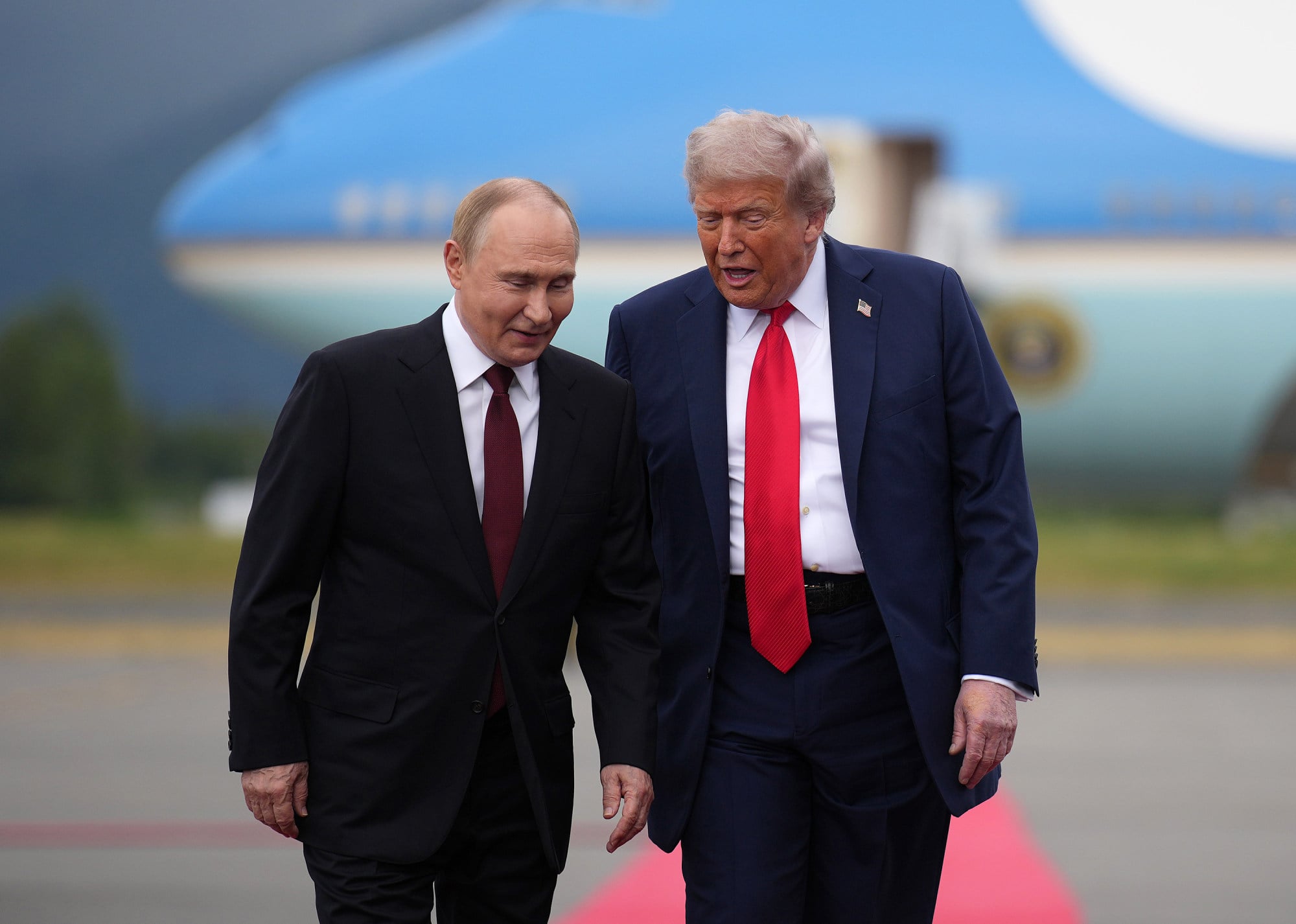
At times, he was accused of siding with Russian President Vladimir Putin, with the EU signing a lopsided trade pact described in some quarters as a “surrender deal” to keep Trump engaged in Ukraine.
This year has, by those standards, been relatively humdrum. Despite predictions of the alliance’s permanent collapse, the US remains in Nato and a full-blown transatlantic trade war has yet to materialise.
Many observers put this down to the European resolve to finally stand up for itself earlier this year.
Trump’s designs on the giant Danish territory of Greenland were not new, but gathered pace around the turn of the year, with European fears of an American attempt to seize the Arctic island peaking as the US ousted the government in Venezuela and turned its attention to Iran.
Brussels prepared tariffs on US-made goods and the European Commission was preparing to pull the trigger, for the first time, on its trade bazooka – the anti-coercion instrument that would have afforded broad retaliatory powers should another power bully a member state.
“Trump saw that would create a big economic rupture, and so the EU established a degree of deterrence ... like peace through strength,” said Max Bergmann, director of the Europe, Russia and Eurasia programme at the Centre for Strategic and International Studies.
“The fact that Europe finally stood up meant, at Davos, Trump on stage humiliatingly took the military option off the table because he recognised there would be huge costs.”
At the same time, Ukraine has shown that it can make advancements on the battlefield against Russia without full US backing.
Kyiv has become a global innovator in drone warfare, while Europe has stepped in to fund the lion’s share of its defence against Russia, taking some of the pressure off the European side to ensure Trump’s participation.
This combination has, according to Bergmann, seen the sides slip into a rhythm akin to that of the Cold War.
“In the Cold War, there was fighting, there were skirmishes on the periphery, but there was also a degree of nuclear deterrence,” he said.
“What’s happened in the last year has helped establish a degree of deterrence and to some extent reduced the leverage the US has over Europe.”
Nonetheless, any time it appears that the sides may be inching closer together, a new rift appears to force them further apart.
On June 16, EU lawmakers approved the controversial trade deal agreed with Trump last summer, which removes tariffs on many US goods without reciprocation on the EU side. Two days later, Washington threatened to blow it up with a Section 301 trade probe into Germany’s spending on new medicines.
On June 24, the EU and member states Germany, Greece and the Netherlands joined Pax Silica, a US-led coalition launched last year aimed at securing supply chains in sectors like AI, semiconductors and rare earths. Two days later, Trump pledged to impose a 100 per cent tariff on any European country with a digital services tax affecting US tech firms.
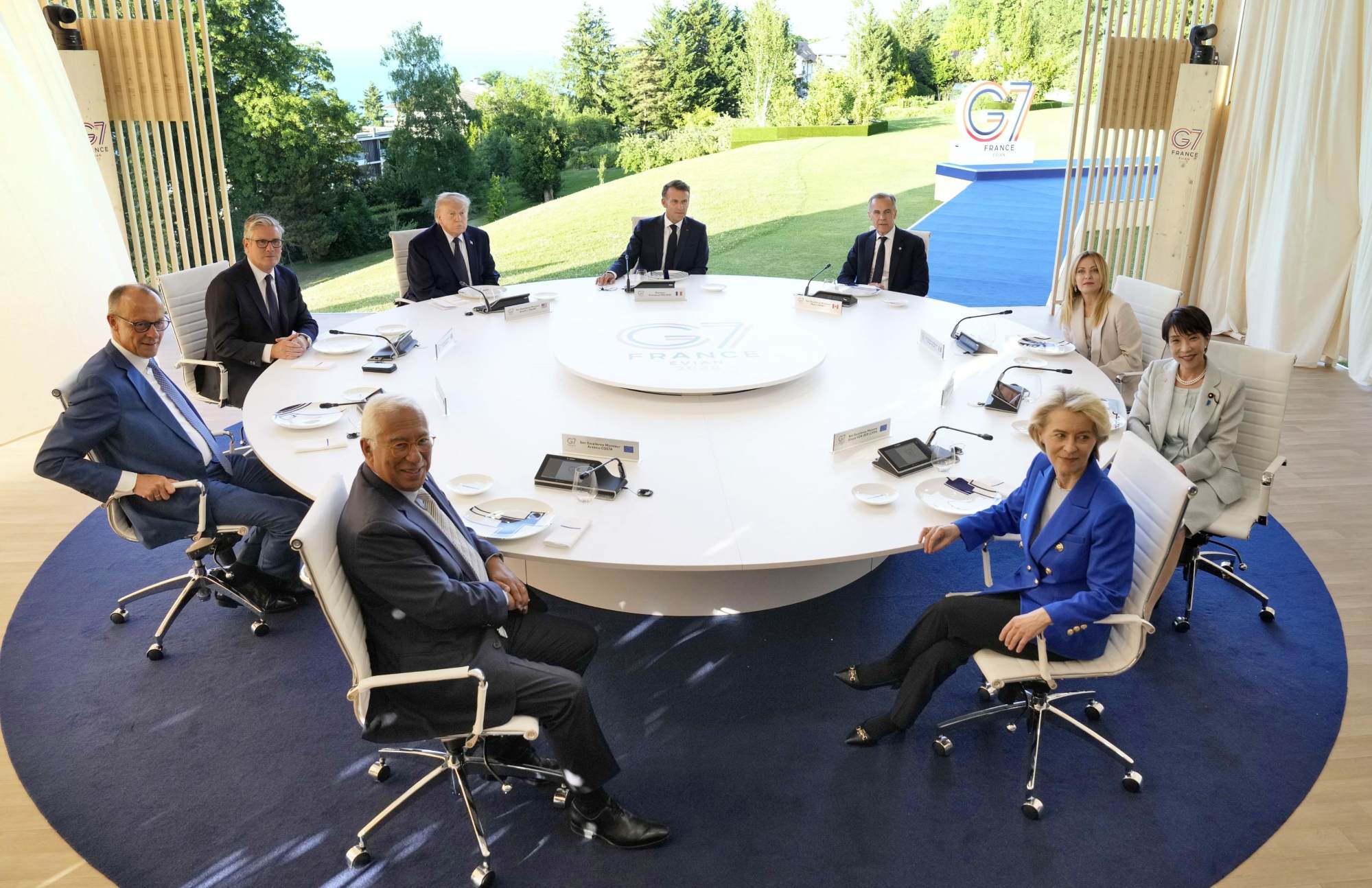
European leaders were still basking in the relief of securing Trump’s support for Ukraine at the Group of Seven leaders summit in France in mid-June when, days later, a row with Italian Prime Minister Giorgia Meloni threatened the fragile peace.
Meloni – previously seen as one of Trump’s closest allies in Europe – strongly rebuked the US leader after he claimed she had “begged” him for a picture, after the pair were caught arguing on the sidelines of the G7 event.
Trump on Sunday moved to inflame the situation by posting a picture of the Italian prime minister on social media with the caption: “Restraining order needed.”
Meloni is now the latest in a series of European far-right leaders to judge that alignment with Trump is politically toxic, placing doubts over whether the “Make America Great Again” movement can create an ideological axis spanning the Atlantic.
“The so-called civilisational axis pursued by the Maga movement was always more mirage than reality. It rested on the assumption that a shared rhetoric about tradition, Christianity and sovereignty could bind together political actors whose core instinct is, in fact, nationalist and inward-looking,” Catherine Fieschi, a visiting scholar at Carnegie Europe, wrote in a commentary on the think tank’s website last week.
“In practice, and in policy, such movements do not align – they compete. And any historical reference to an axis was shattered by Maga’s designation of Europe itself as an enemy.”
Last autumn, European newspapers screamed of a “summer of surrender” following a July and August that delivered a Turnberry trade deal many found humiliating and a Nato summit that was designed entirely to flatter Trump.
This year, EU politicos may be heading into July and August feeling that they are in a slightly better position – even if few appear to have any illusions about the well-being of the transatlantic alliance.
“The second Trump administration has made an already shaky world order highly unstable,” said Stelzenmueller at Brookings.
“The least likely scenario is that it somehow magically springs back together, like watching a reverse film of a vase falling to the ground and then reassembling itself.” -- SOUTH CHINA MORNING POST