




Nato member states unveiled a series of defence initiatives on Tuesday aimed at strengthening weapons development, production and supply chains in response to security challenges posed by Russia and China.
Speaking at the Nato Summit Defence Industry Forum (NSDIF) on the first day of this year’s summit in Ankara, Turkey, Nato Secretary General Mark Rutte announced several new projects involving member states and defence contractors to bolster the alliance’s advanced military capabilities.
Among them was a multinational initiative on defence-critical raw materials involving 12 Nato member states: Belgium, Canada, Denmark, Finland, Greece, Italy, Luxembourg, the Netherlands, Norway, Spain, Sweden and Turkey.
While not going into detail about the plans of the initiative, Rutte said that Nato’s industrial base and supply chain must be “resilient and secure” for the alliance to remain ready and strong, meaning that Nato needs a stable supply of critical materials and components “regardless of potential shocks or disruptions”.
“That’s what this new project is all about. Several allies are committed to working together to acquire, store, transport and manage stockpiles of defence critical materials, components and recycle products,” said Rutte.
“This project demonstrates allies’ strong belief in a cooperative approach as the best way to increase security.”
China is the world’s largest producer of rare earths and other critical minerals, such as gallium, accounting for more than 90 per cent of global supply.
These materials are used to make advanced military systems including radars, missile guidance components and propulsion systems.
Beijing has leveraged its dominance in critical minerals as a tool of deterrence by imposing licensing requirements, technology bans in processing, and entity-based restrictions managed by the Ministry of Commerce, as exemplified by the two waves of export controls on rare earths in April and October last year, in response to Washington’s tariffs on China.
Rutte’s announcement follows last month’s summit between the leaders of the Group of Seven – six of which are Nato member states – who agreed to “significantly reduce” their dependency on a “single supplier outside the G7” for rare earths and permanent magnets to below 60 per cent by 2030, with the ultimate goal of reaching 50 per cent “as soon as possible”.
China, Russia working together ‘should concern us all’, Rutte tells Nato
Opening the NSDIF with a keynote speech, Rutte compared Nato to a football team, saying that “no team wins because of one brilliant player”.
He stressed the importance of closer cooperation among member states, noting that Russia is devoting half of its national budget to its “war machine” in Ukraine while working more closely with China, North Korea and Iran.
“China continues to modernise its armed forces and expand its nuclear capabilities without transparency. North Korea continues to expand its nuclear programme and supply Russia,” said Rutte.
“These countries are increasingly working together, and that should concern us all, because I assure you they do not have our best interests in mind.
“So, that’s what we are up against. That’s the reality we face. To meet the challenge, we need a transatlantic defence industrial revolution.”
Nato member states are gathering in Ankara to lay out their plans for the defence spending goal of 5 per cent of GDP by 2035, established in last year’s summit in The Hague, where the cooperation for procurement and interoperability has become a major theme.
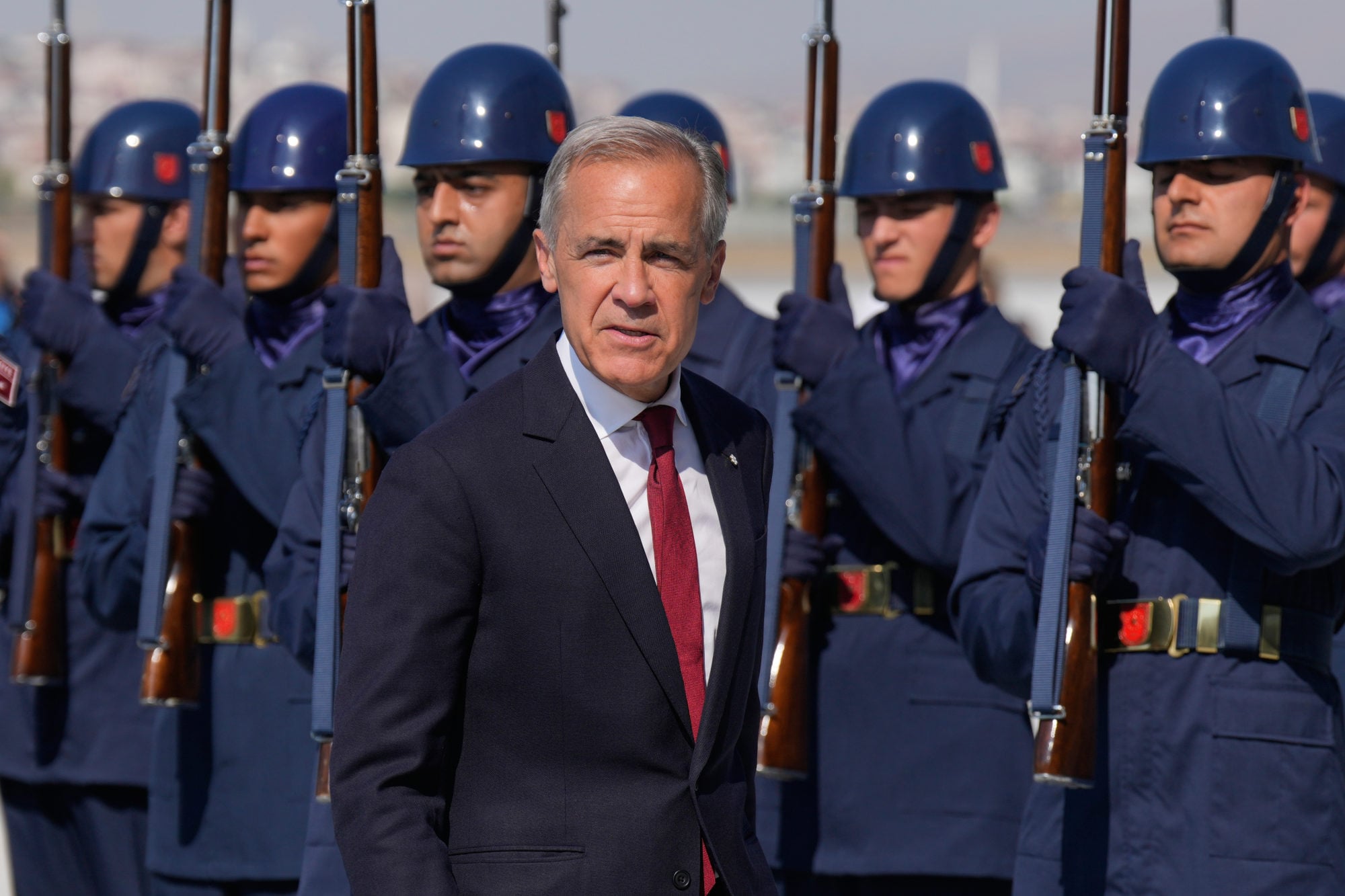
A day before his trip to Turkey for the Nato Summit on Monday, Canadian Prime Minister Mark Carney announced that his country chose Type 212CD of its fellow Nato member state Germany’s naval vessel producer Thyssenkrupp Marine Systems (TKMS) for its Canadian Patrol Submarine Project (CPSP), worth billions of US dollars, over South Korean KSS-III by Hanwha Ocean.
Ottawa has said that its procurement of new submarines was because of increased activity by the “competitors” in the Arctic region, citing that China has been “rapidly expanding its underwater fleet” as one of the reasons.
Nato Drone Edge plan to invest US$40 billion in unmanned war vehicles
The forum also featured new initiatives and procurement plans to strengthen Nato’s aerospace and drone capabilities in response to lessons from Russia’s war in Ukraine.
This includes the new Nato Drone Edge initiative, involving all 32 member states, which aims to invest US$40 billion in the next five years to expand the alliance’s ability to deploy and operate drones, in the face of increased significance of the unmanned systems in modern warfare, as demonstrated in the war in Ukraine and the Middle East.
Rutte said drones had “fundamentally altered” modern warfare, requiring the alliance to operate them “at scale” while building robust counter-drone defences to detect, identify and neutralise hostile unmanned systems.
Rising aerial threats have also underscored the importance of air defence systems, with eight Nato member states investing US$26.3 billion in integrated air and missile defence.
“The bottom line is, in order to keep all of us safe, we need more of these capabilities. We need many more,” said Nato Deputy Secretary General Radmila Shekerinska, citing “repeated airspace violations” by Russian drones and aircraft over Nato airspace, and the alliance’s interception of ballistic missiles launched from Iran against Turkey, its member state.
“We need interceptors, sensors, command and control capabilities, and to do this faster and better, integrating the newest technologies into the capabilities, we must do them together by pulling all our resources.
“This is what allies are doing. This is what we are seeing here today.” -- SOUTH CHINA MORNING POST


