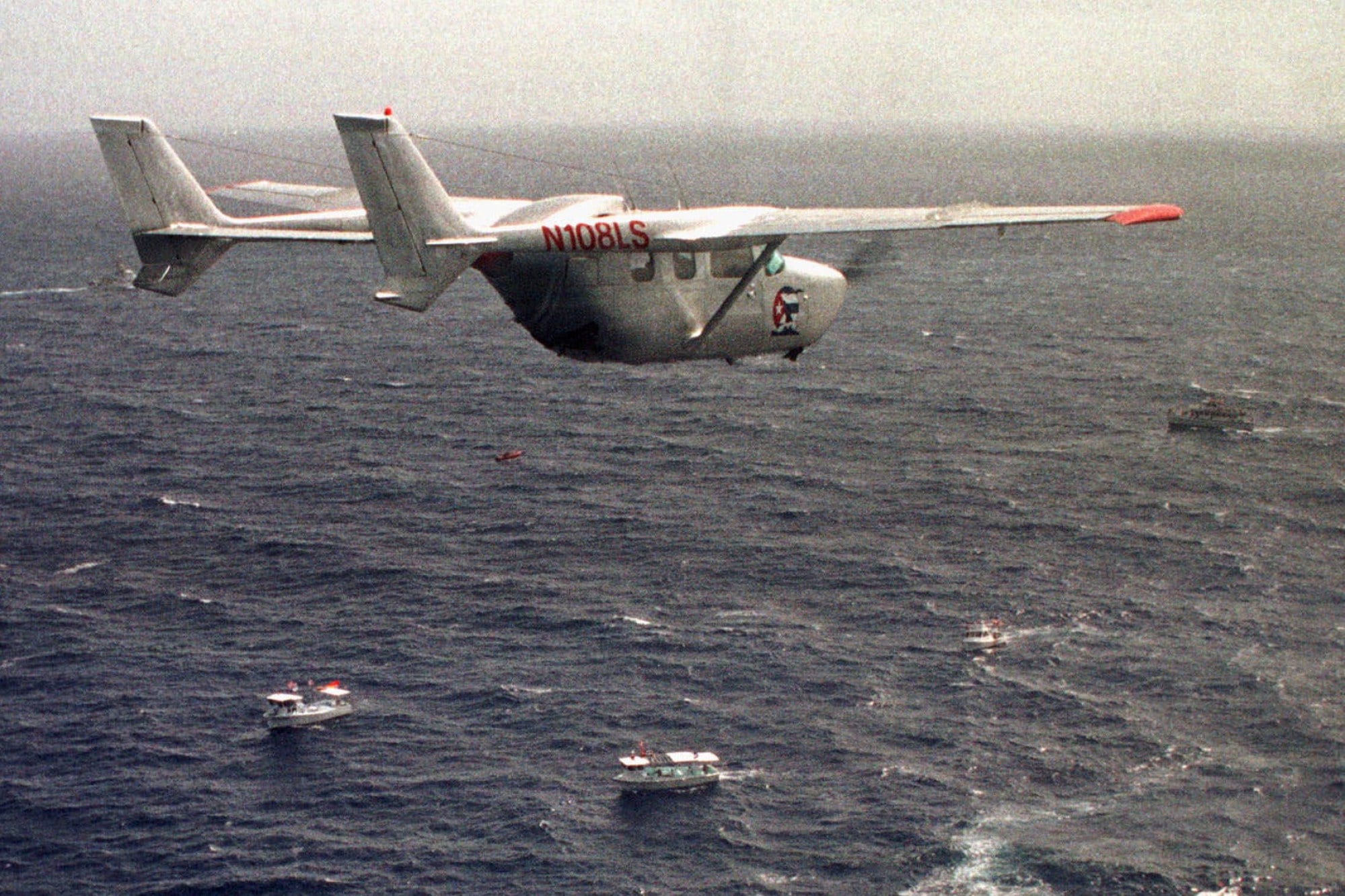
The United States announced on Wednesday criminal charges against former Cuban leader Raul Castro over his alleged role in the 1996 downing of two civilian aircraft operated by the Miami-based exile group Brothers to the Rescue, an incident that killed four people.
The indictment, unsealed by acting US Attorney General Todd Blanche in Miami, includes charges of conspiracy to kill US nationals, destruction of an aircraft, and four individual counts of murder against the 94-year-old brother of late revolutionary leader Fidel Castro and five other co-defendants. The maximum penalty for at least one of the charges is life imprisonment.
It marked the first time the US government has sought criminal charges against either of the Castro brothers, whose 1959 revolution transformed Cuba into a communist state aligned against Washington for decades.
Speaking from Miami’s Freedom Tower – where more than 400,000 Cubans fleeing the island after the revolution were processed – Blanche said: “For nearly 30 years, the families of four murdered Americans waited for justice. The US and President Trump do not and will not forget its citizens ... If you kill Americans, we will pursue you no matter the charge you hold and in this case, no matter how much time has passed”.
Blanche said the indictment was intended to lead to Castro’s eventual arrest and prosecution in the United States.
“This isn’t a show indictment,” Blanche told reporters. “We expect that he will show up here by his own will or by another way and go to prison.”
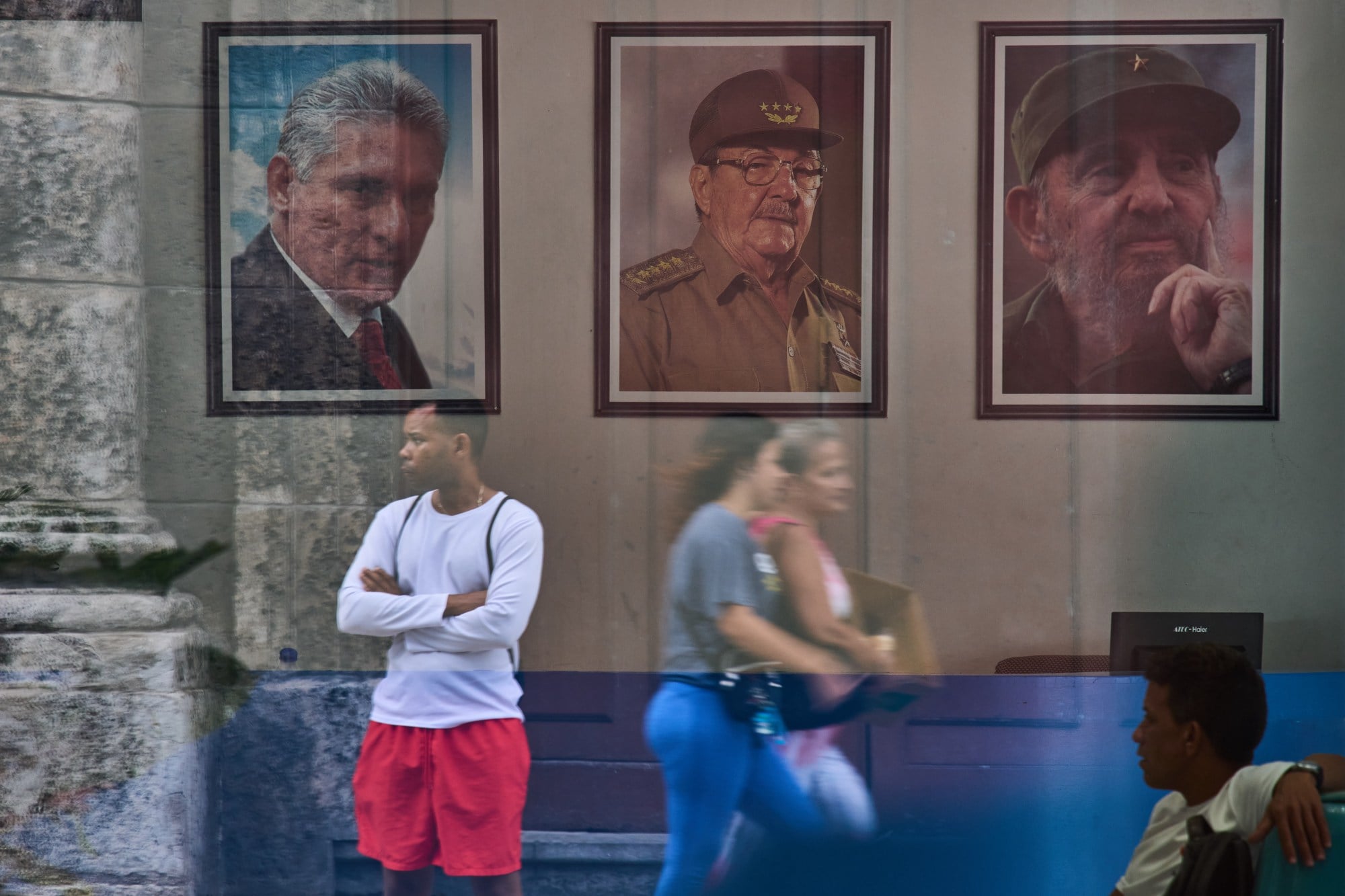
Cuban President Miguel Diaz-Canel dismissed the charges as a politically motivated attempt to justify possible future aggression against the island.
In a statement issued shortly after the indictment was announced, Diaz-Canel said Cuba had acted in “legitimate self-defence” during the 1996 incident and accused Washington of manipulating the events surrounding the shoot-down.
“The purported accusation against Army General Raul Castro Ruz only demonstrates the arrogance and frustration” of the United States, Diaz-Canel said, adding that the case had “no legal basis”.
US President Donald Trump, meanwhile, described the indictment as “a very big moment” and signalled that Cuba remained a major focus for his administration.
“We have Cuba on our mind, it’s very important,” Trump said, adding that the indictment carried special significance for Cuban Americans and others with family ties to the island. “People who came from Cuba ... want to go back to Cuba, see their family in Cuba,” he said.
The case centres on the February 24, 1996, shooting down of two Brothers to the Rescue planes by Cuban fighter jets over waters north of Cuba. Havana has long defended the operation as a response to repeated violations of Cuban airspace, while international investigators concluded the aircraft were destroyed in international airspace. Raul Castro, then minister of the Cuban Revolutionary Armed Forces, was accused of authorising the actions.
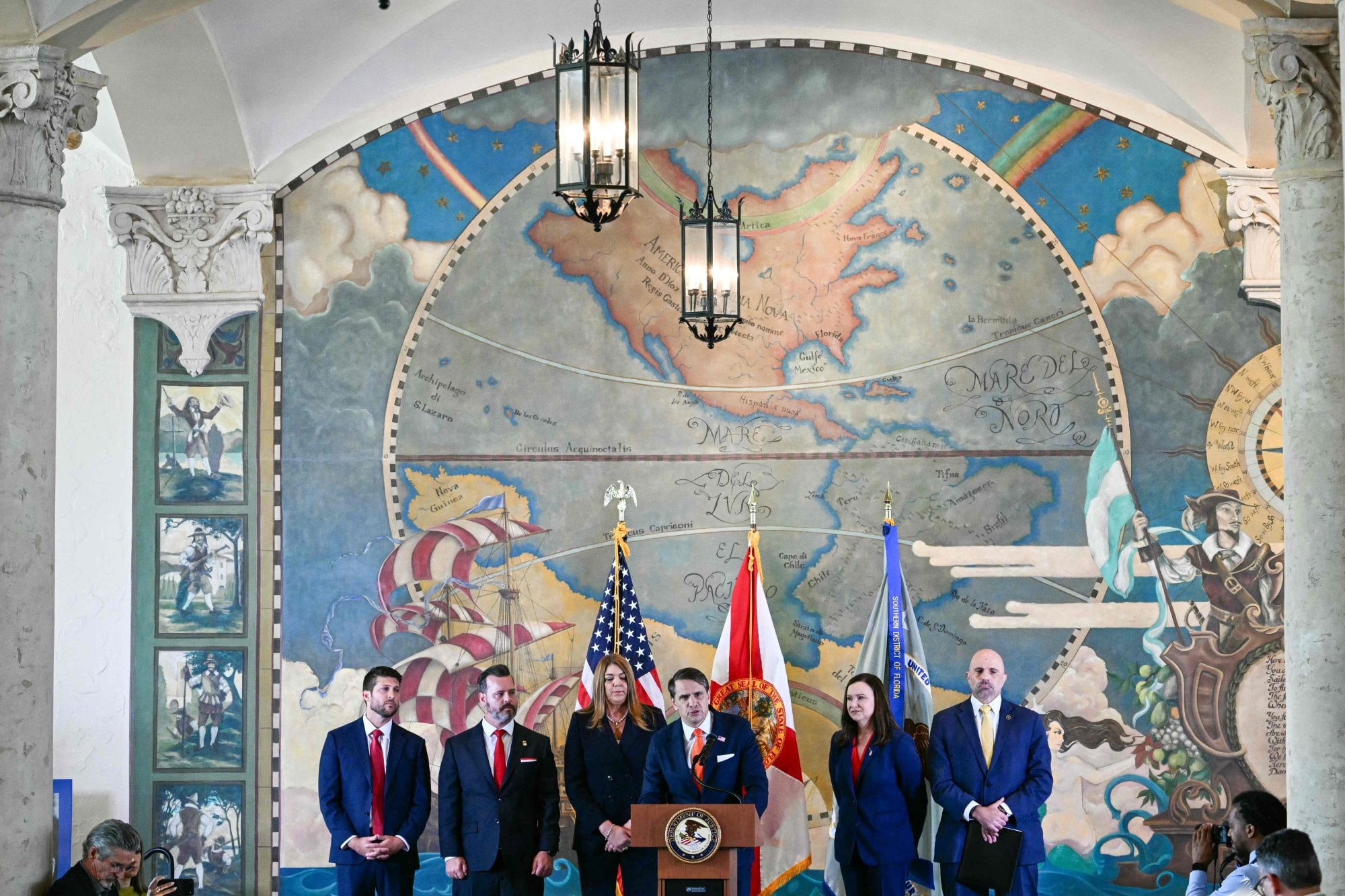
Blanche said a federal grand jury in Miami had issued the charges on April 23. In addition to Castro, the indictment also names five former Cuban military pilots accused of participating in the operation, including Lorenzo Alberto Perez-Perez, whom prosecutors identify as the MiG pilot who fired on the aircraft.
The accusation against the ageing Cuban leader is expected to rely in part on audio recordings first made public in 2006, in which a voice identified as Raul Castro appears to discuss orders to shoot down the aircraft over the sea. The recordings, first reported by Miami-based Cuban journalist Wilfredo Cancio, have circulated for years among investigators and exile groups.
Indictment comes as US takes harder line with Cuba
The indictment comes amid a broader hardening of US policy towards Cuba under Trump’s second administration, which, since January, has tightened sanctions, increased pressure on foreign fuel suppliers and openly questioned the legitimacy of Cuba’s government.
Washington has framed the measures as part of an effort to force political change on the island, while Cuban officials accuse the US of attempting to engineer economic collapse.
In a presidential message marking Cuban Independence Day, Trump said the US would “not tolerate a rogue state harbouring hostile foreign military, intelligence and terror operations just ninety miles from the American homeland”, language that echoed growing concerns within the administration over Cuba’s ties with China, Russia and Iran.
“I am taking decisive action on behalf of this long-suffering corner of our hemisphere, and to address threats to our national security emanating from the region,” Trump added.
“President Trump is offering a new relationship between the United States and Cuba,” US Secretary of State Marco Rubio said in a video message issued earlier on Wednesday, adding: “But it must be directly with you, the Cuban people, not with GAESA”.
Rubio described GAESA, the military-run conglomerate founded by Raul Castro, as “a state within the state” that “controls 70 per cent of Cuba’s economy”, arguing that the group – rather than ordinary Cubans – had benefited from decades of state control.
Cuban Minister of Foreign Affairs Bruno Rodriguez took to social media to reject Rubio’s comments, qualifying them as “mendacious script and attempts to blame the Cuban government for the ruthless damage caused by the US government to the Cuban people”.
Rubio’s remarks underscored how the Trump administration was increasingly framing its Cuba policy not only around human rights and democracy, but around dismantling the military-linked economic structures built under Raul Castro.
“In the US, we are ready to open a new chapter in the relationship between our people and our countries,” Rubio said. “And currently, the only thing standing in the way of a better future are those who control your country.”
Rubio, a Cuban American born to exiles in Miami, has delivered messages to the Cuban people on May 20 for more than a decade. The date is widely recognised as marking the birth of the Cuban republic following centuries of Spanish colonial rule and a subsequent period of US military administration.
China slams ‘unilateral sanctions’ against Cuba
After Fidel Castro took power in 1959, however, the revolutionary government shifted the symbolic focus of Cuba’s national identity towards January 1, the date Castro’s forces entered Havana, removing official commemorations linked to May 20.
Chinese foreign ministry spokesman Guo Jiakun on Tuesday criticised what he described as US “unilateral sanctions” against Cuba and urged Washington to end “its blockade and all forms of coercion and pressure” against the island.
The indictment also comes as Cuba has re-emerged as a point of geopolitical friction between Washington and Beijing. US officials have increasingly raised concerns about alleged Chinese intelligence and surveillance activities linked to the island, allegations both Havana and Beijing deny.
Analysts note, however, that while China has expanded its influence across Latin America through infrastructure and trade investment, Cuba has not become a major destination for large-scale Chinese economic projects.
“China has invested heavily in soft power and infrastructure across Latin America, but Cuba has not been a major focus of Chinese investment,” said Eduardo Gamarra, who argued that Havana’s strategic importance for Washington remains driven more by symbolism and domestic politics than economics.
Analysts wary of Cuba and Venezuela comparisons
The Trump administration previously brought narcoterrorism charges against Venezuelan leader Nicolas Maduro before US forces captured him earlier this year in an operation Washington described as a law-enforcement action.
Referring to Maduro’s capture, Trump said on Wednesday the operation had sent “a clear message to his socialist allies in Havana: this is our Hemisphere”.
But analysts cautioned against drawing direct comparisons between Cuba and Venezuela.
“Cuba is not the easy win that they might like it to be,” said Michael Bustamante, director of Cuban studies at the University of Miami, who noted that Cuba’s political and military institutions remain more cohesive than those of Venezuela.
Bustamante added that he saw little indication of a clear diplomatic “off-ramp” between Washington and Havana despite growing economic pressure on the island.
Trump has repeatedly suggested Cuba could face similar pressure, at one point warning publicly that “Cuba is next”.
“Cuba is calling us. They need help,” Trump told reporters at the White House. “We’ll do that.”
Analysts say the administration’s pressure campaign has yet to produce clear signs of political concessions from Havana, raising questions about how far Washington was prepared to escalate tensions with the island. -- SOUTH CHINA MORNING POST