




As science and technology become national priorities in China, Beijing has turned its sweeping corruption crackdown on academia, vowing to dismantle entrenched power at mainland universities amid questions over whether it can be fully eliminated.
A narrow funding pipeline, a highly centralised evaluation system and frequent overlap between administrative office and academic rank have all created a fertile ground for abuse in China, according to observers.
In recent months, the heads of several prominent mainland universities have been investigated for corruption, alongside “academic warlords” – senior scholars who hold high bureaucratic titles and control how research resources are allocated.
At a time when Beijing is doubling down on innovation to upgrade its economic structure and bolster its position in its tech competition with the West, systemic flaws in research governance carry mounting costs. Tackling misconduct in higher education has become an explicit political priority, as repeatedly highlighted in official statements.
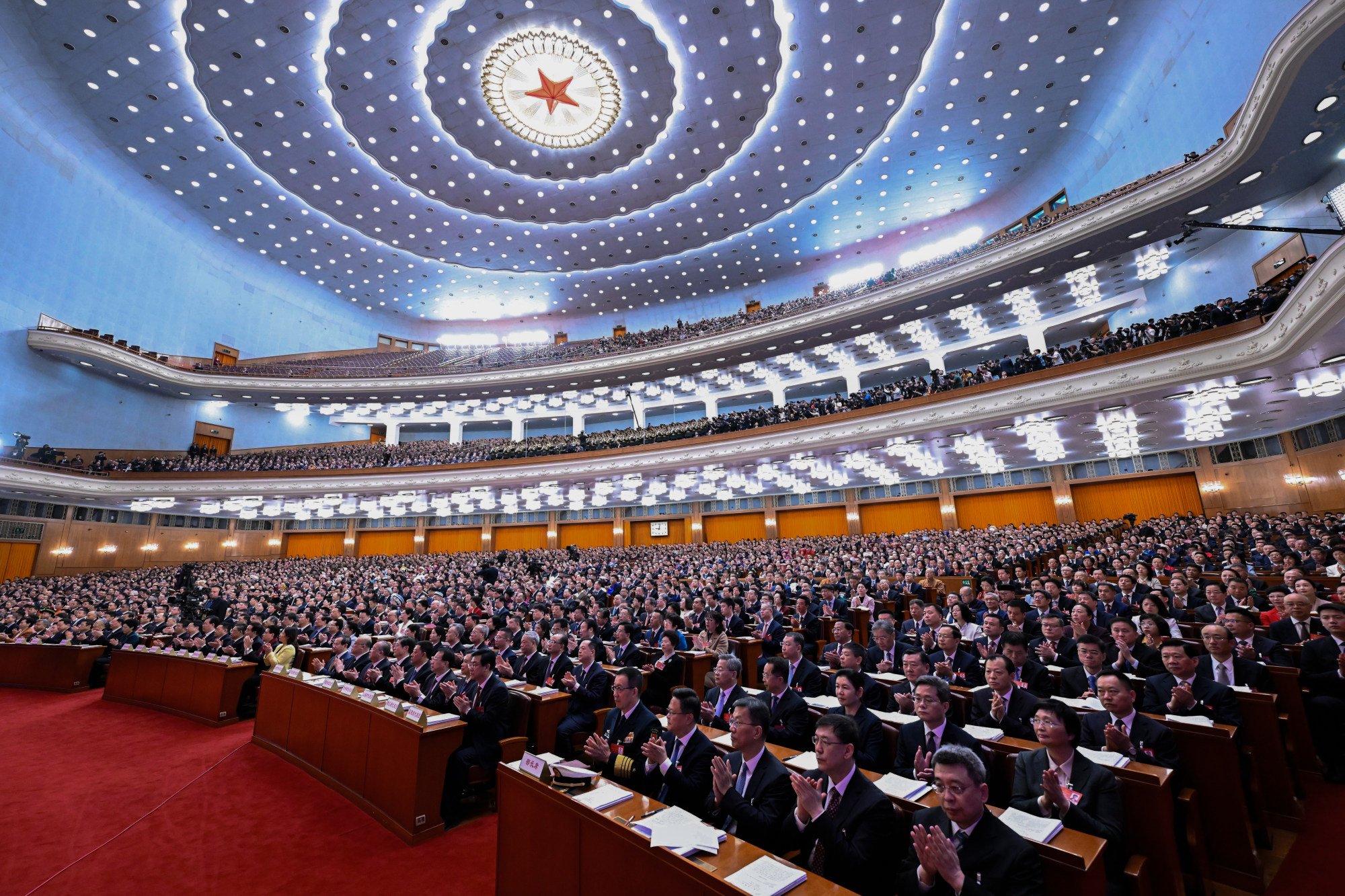
This week, China’s political leadership will convene for the “two sessions” – annual meetings of the National People’s Congress and the Chinese People’s Political Consultative Conference – where policies to promote science and technology are expected to be discussed.
Ahead of the gatherings, scientists have called for more institutionalised and effective mechanisms to curb abuses of power and foster a healthier research ecosystem.
In January last year, the Central Commission for Discipline Inspection (CCDI), China’s top internal disciplinary and supervisory body, for the first time singled out higher education as a sector plagued by “concentrated power, intensive capital and rich resources” and urged stronger oversight.
And in December, Ren Yuzhong, a vice-president of Peking University and member of the university’s Communist Party Standing Committee, was expelled from the party and removed from public office for “serious violations of discipline and law”, a phrase commonly used to refer to corruption.
The CCDI said Ren had abused his position for personal gain, engaged in power-for-money transactions, failed to report personal matters as required and used his influence in staff recruitment and other areas to benefit others “with no regard for discipline or the law”.
The senior leader at one of China’s most prestigious universities was also found to have unlawfully held shares in unlisted companies, accepted “substantial sums of money and valuables”, and used his position to secure advantages for others in education, training, university admissions and employment.
Other university leaders similarly sidelined in recent months have included Wang Hanqing of Central South University of Forestry and Technology in Changsha, Hunan province, and Guo Xueyi from Central South University.
In a communique issued last month, the CCDI called for intensified anti-corruption efforts in the 15th five-year plan period (2026–2030), vowing to “resolutely crack down” on graft in key sectors. Higher education was again named, alongside finance, state-owned enterprises, energy and other areas.
Against this backdrop, a study has shed light on how authority operates, often subtly, within academic institutions and on how it distorts the distribution of resources.
Drawing on biographical data tied to deans at elite Chinese universities and using filed patent applications as a proxy for research output, a group of economists found that patent filings rose by 15.2 per cent immediately after a professor was promoted to dean. By contrast, filings declined once a dean lost office.
Further analysis suggested that this “deanship effect” was driven less by individual productivity than by the misuse of power.
The authors argued that deans may request authorship or co-authorship on patents or be invited to join a patent as a favour in light of their political power and authority over resource allocation. The effect was found to have weakened significantly when anti-corruption campaigns targeted university bureaucracies.
The researchers also found evidence that administrative power influenced the allocation of public funding. Academics who had previously collaborated with a newly appointed dean saw their probability of securing grants from the National Natural Science Foundation of China (NSFC) increase by 1.2 per cent, with average grant amounts rising by about 7.6 per cent.
The study, co-authored by economists Wang Xuan and Chen Yuyu of Peking University and Fang Ming of Jinan University, was published in the peer-reviewed Journal of Economic Behaviour and Organisation in late January.
“We show that power generates patents and funding allocation through connections,” the authors wrote, adding that political authority appeared to have “distorted innovation activities”. The authors declined to comment for this story.
Beyond leveraging authority to claim research credit, other forms of misconduct have included misappropriating project funds, securing improper benefits for associates and obtaining grants or awards through bribery.
Wu Guangheng, founder and president of the 5GH Foundation, a non-profit watchdog for scientific misconduct, said the concentration of funding and influence in the hands of a few had generated a wide range of “absurd behaviour” across China’s research system.
According to Wu, the fusion of administrative and academic authority in China had given rise to what critics call “academic warlords” and had created a self-reinforcing cycle of increased funding, higher output and status, followed by additional funding.
A pilot study by Wu’s team found that members of elite groups – including academicians of the Chinese Academy of Sciences and the Chinese Academy of Engineering, as well as recipients of the prestigious Distinguished Young Scholars grants – were much more likely to secure NSFC funding.
Such structural imbalances undermined the academic ecosystem in multiple ways, Wu said, not only diverting public funds but also dampening morale among rank-and-file researchers, reducing the efficiency of resource allocation and contributing to talent loss.
As early as 2017, the pioneering Chinese educationalist and chemist Liu Daoyu warned that academic corruption across campuses nationwide had intensified dramatically over two decades, “spreading like wildfire”.
Liu, who once served as a senior official in China’s higher education system and as a university president, said academic corruption had “permeated virtually every university”. He added that it was far more prevalent in top universities than in ordinary institutions and that the forms of corruption were diverse and had become industrialised.
He attributed the trend in part to an excessively rapid expansion of higher education and to policy incentives that prioritised titles, awards and funding above broader measures of scholarly contribution.
“To secure these honours, some resort to unscrupulous means,” Liu wrote, including academic fraud and even vote buying.
Nearly a decade on, critics argue that the underlying problems have yet to be resolved.
Another high-profile case has further fuelled debate. Zhang Yaoxue, a computer scientist and pioneer of network technology in China who led the development of the country’s first network access router and in 2007 was elected to the Chinese Academy of Engineering, is being investigated for “serious violations of discipline and law”.
Zhang, who studied in Japan in the 1980s and from 2011 to 2017, served as president of Central South University. In 2014, he won the first prize of the State Natural Science Award – China’s highest award in the field of natural sciences – for a new “model and basic theory research on network computing”, also known as “transparent computing”.
However, the award attracted widespread scepticism at the time. Many criticised the government for allowing what they saw as political interference in the evaluation process for the award. Others said Zhang’s work was not groundbreaking, had received little recognition from his international peers and was suspected of involving plagiarism.
In October, eight years after Zhang’s retirement, authorities announced that he was under investigation, though no details have been disclosed.
Online commentators described the move as a warning to powerful figures that titles and past contributions would not shield them from scrutiny.
Writing last July in Study Times, a prominent Beijing-based governmental publication, Wang Chengwen, a CCDI official overseeing the education sector, said “the underlying conditions and soil conducive to corruption” persisted. He added that recent cases had exposed weaknesses in the system and how power was wielded within some universities.
The task of trying to rid higher education of such misconduct has been elevated to a national strategic priority.
Wang noted that science and technology as well as talent had become “the main battlegrounds in international strategic competition” and that universities “face intensified global rivalry and their responsibility to support scientific and technological self-reliance is growing”.
Wu from the non-profit watchdog identified the evaluation process as one of the structural causes of the problems.
Unlike many American universities, which assessed faculty performance across research, teaching and public service, China’s mechanisms were heavily weighted towards research output, including publications and funded projects, he said.
Moreover, evaluations on the mainland were often conducted by administrators within institutions rather than by independent external peers, creating opportunities for conflicts of interest.
Wu said oversight in China tended to rely on “campaign-style” crackdowns rather than stable, long-term regulatory frameworks. This approach relied heavily on investigation teams or task forces formed in response to specific incidents, as well as the self-regulatory efforts of universities themselves.
Another agricultural scientist, speaking on condition of anonymity, said that in the absence of independent third-party supervision, many cases were handled internally by the Ministry of Education or the Ministry of Science and Technology, with only criminal matters referred to judicial authorities.
According to a public policy scholar at a leading Beijing university who declined to be named citing the sensitivity of the matter, the “core issue remains the lack of genuine academic autonomy and effective oversight”. -- SOUTH CHINA MORNING POST



