




China has unveiled its latest photonic quantum computer, Jiuzhang 4.0, with researchers saying it can outperform the world’s fastest classical supercomputer by a vast margin, further strengthening Beijing’s push towards quantum supremacy.
The results, published on May 13 in the peer-reviewed journal Nature, mark the latest milestone in China’s rapidly advancing quantum programme led by a team of scientists at the University of Science and Technology of China headed by Chinese quantum physicist Pan Jianwei.
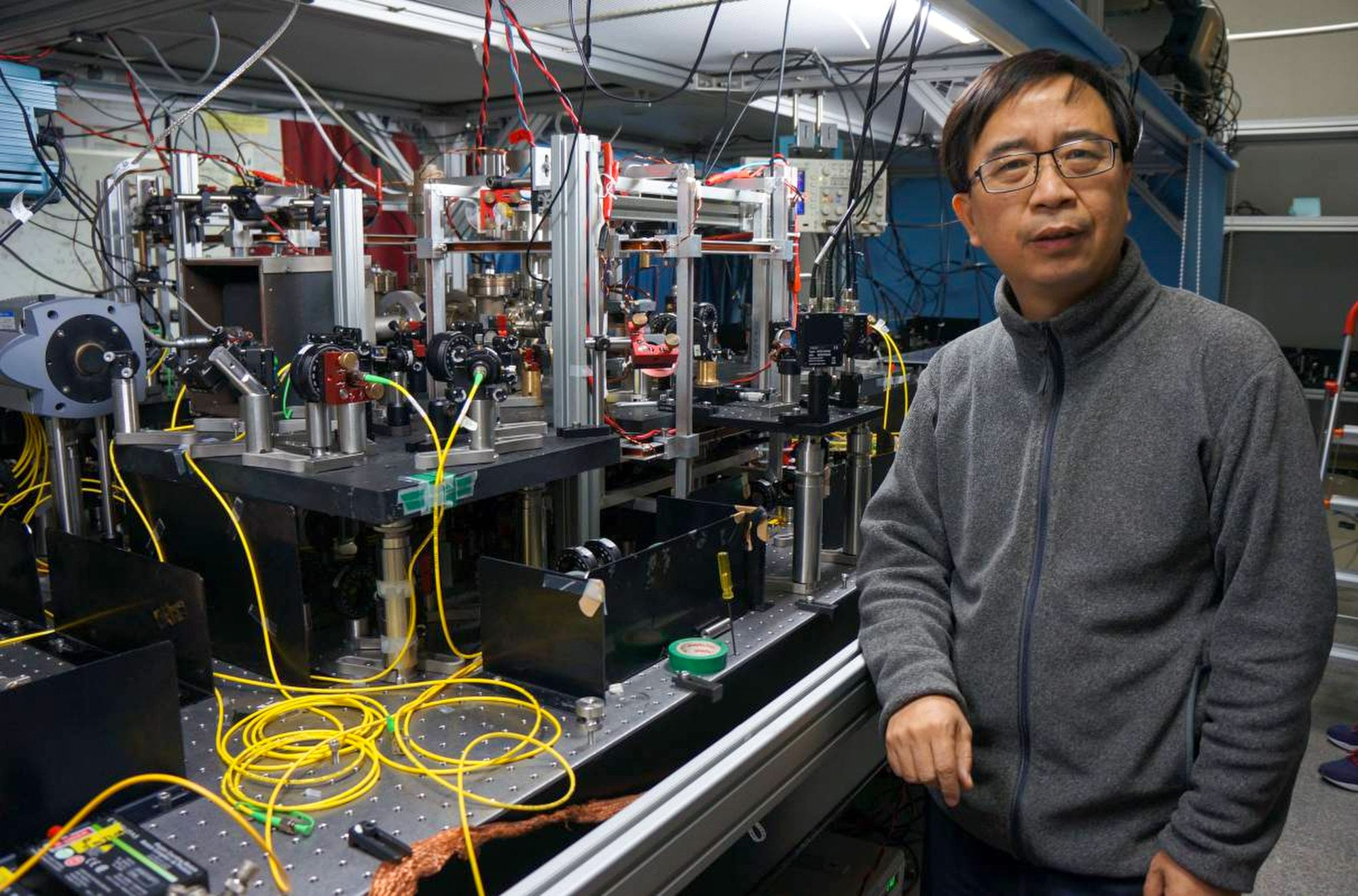
Jiuzhang 4.0 completed a Gaussian boson sampling task in just 25 microseconds – a calculation they estimated would take the world’s most powerful supercomputer, El Capitan in the United States, more than 10^42 years to finish, according to the university in the eastern city of Hefei.
A Gaussian boson sampling task is a quantum computing task that is computationally difficult for classical computers to handle.
“No realistic classical computing resources, to our knowledge, can bring the MPS [matrix product state] algorithm anywhere near the accuracy achieved by our experiment,” the team said in a statement.
Jiuzhang 4.0 operates with 1,024 squeezed-state inputs across an 8,176-mode interferometric network, and can manipulate and detect up to 3,050 photons – more than 10 times the scale achieved in previous experiments.
The processor represents “an order-of-magnitude increase in scale over previous demonstrations”, Pan and his colleagues wrote in the paper.
The team said their set-up could explore an astronomically large number of quantum states, in a range so complex that today’s most powerful supercomputers would not be able to realistically simulate it.
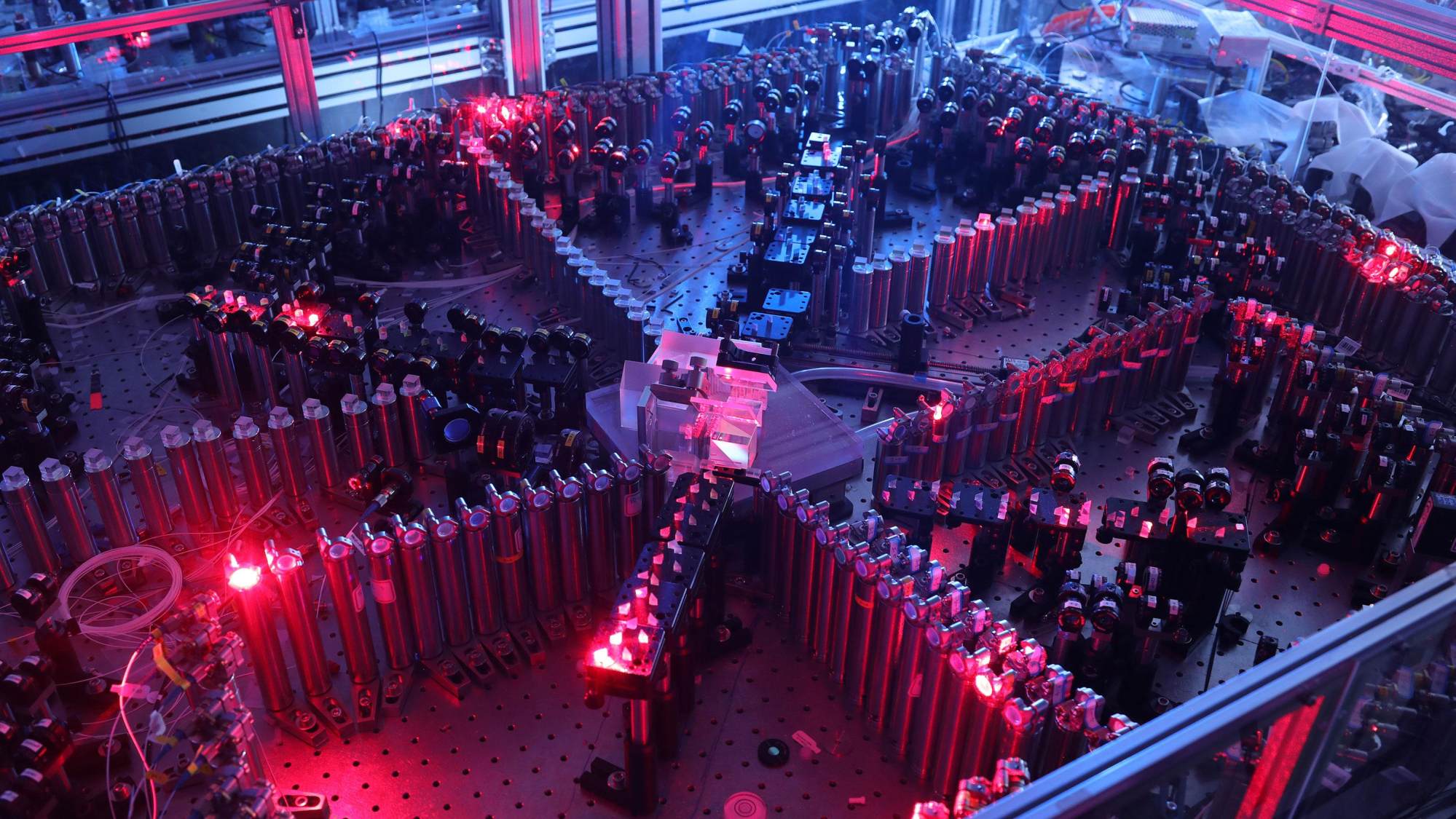
The system achieved 92 per cent source efficiency and 51 per cent overall system efficiency, overcoming one of photonic quantum computing’s biggest bottlenecks: photon loss in large-scale optical circuits, according to the paper.
“Beyond foundational interest, this architecture also enables immediate applications in the [noisy intermediate-scale quantum] era, such as image recognition and cryptographic one-way function,” the team wrote.
The advance represents another leap for China’s Jiuzhang series.
Jiuzhang 3.0, released in October 2023, showed a quantum advantage ratio of 10^16, while the original Jiuzhang machine, unveiled in December 2020, became the world’s first photonic system to demonstrate quantum computational advantage.
The announcement has reignited debate over whether true “quantum supremacy” has been reached. The controversial term refers to the point at which a quantum machine can solve problems effectively impossible for classical computers.
Unlike the superconducting quantum computers pursued by American technology companies such as Google, IBM and Microsoft, the Jiuzhang series follows a photonic approach, using light particles instead of superconducting qubits.
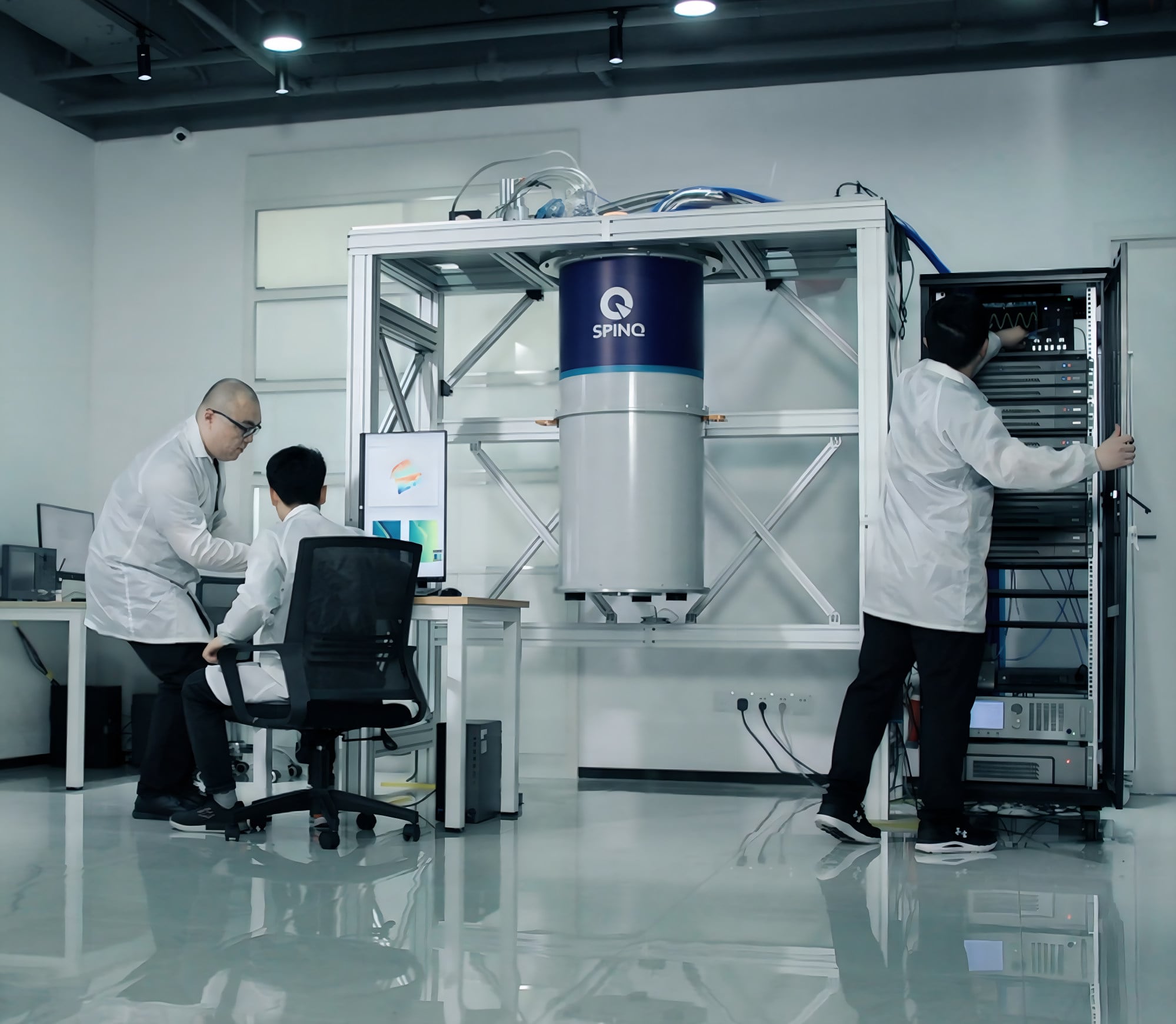
China’s rapid progress has intensified competition with the US, where companies are investing heavily in fault-tolerant, programmable quantum systems designed for future commercial applications.
American firms have largely focused on superconducting architectures aimed at building universal quantum computers capable of handling broad classes of problems. China, by contrast, has concentrated on achieving extreme performance in specialised tasks such as Gaussian boson sampling.
The distinction is important because Jiuzhang 4.0 is not a general-purpose computer. The task it performs is highly specialised and not directly comparable to commercial workloads run on classical supercomputers such as El Capitan or Frontier.
Still, the scale of the claimed performance gap is difficult to ignore.
Quantum technology has emerged as one of the most strategically important frontiers in China-US tech rivalry, with potential applications ranging from encryption and artificial intelligence to drug discovery, defence simulations and next-generation computing infrastructure.
Jiuzhang 4.0 may not yet be the final answer in the race towards universal quantum computing, but China’s latest advance further cements its position as one of the world’s leading powers in photonic quantum technology. -- SOUTH CHINA MORNING POST


