Against the backdrop of ceremonial grandeur at the Great Hall of the People on Thursday, US President Donald Trump leaned on centuries of shared history to set the stage for the future of China-US relations.
In his state banquet address capping a long day of talks, tourism and toasts, Trump blended calculated callbacks with personal touches – carefully crafted to appeal to the hosts, including President Xi Jinping.
He framed the relationship as “one of the most consequential” in world history, drawing a thread from the Confucian values admired by America’s founders to the 20th century roots of Tsinghua University, the Chinese leader’s alma mater.
“At the request of China’s ambassador, it was president Theodore Roosevelt who provided the funds to establish President Xi’s alma mater, Tsinghua University,” Trump said, in a reference seen as a calculated nod to the institution’s unique origins.
Tsinghua was established in 1911 after the United States decided to return indemnity funds following the 1901 Boxer rebellion. Acknowledging that the reparations exceeded actual damages, Washington agreed to redirect the capital into educational help.
After years of sustained efforts by the Qing dynasty’s ambassador to the US, Liang Cheng, Roosevelt signed an executive order in 1908, paving the way for the institution’s establishment.
Trump is not the first American leader to use the university as a diplomatic anchor. In 2002, George W. Bush similarly referenced that it was founded “with the support of my country to further ties between our two nations”.
Rosie Levine, executive director of the US-China Education Trust, said that while the two sides might view the historical event differently, there was no disagreement on its outcome.
“[It was] a remarkable investment that helped seed a generation of China’s top intellectual talent and educational institutions, including Tsinghua University, which, as Trump noted, shaped the educational journey of Xi Jinping himself,” she said.
Beyond educational ties, Trump highlighted that the China-US connection was rooted in the American founding, referencing the influence of The Morals of Confucius, a Chinese Philosopher, an English-language book first published in 1691.
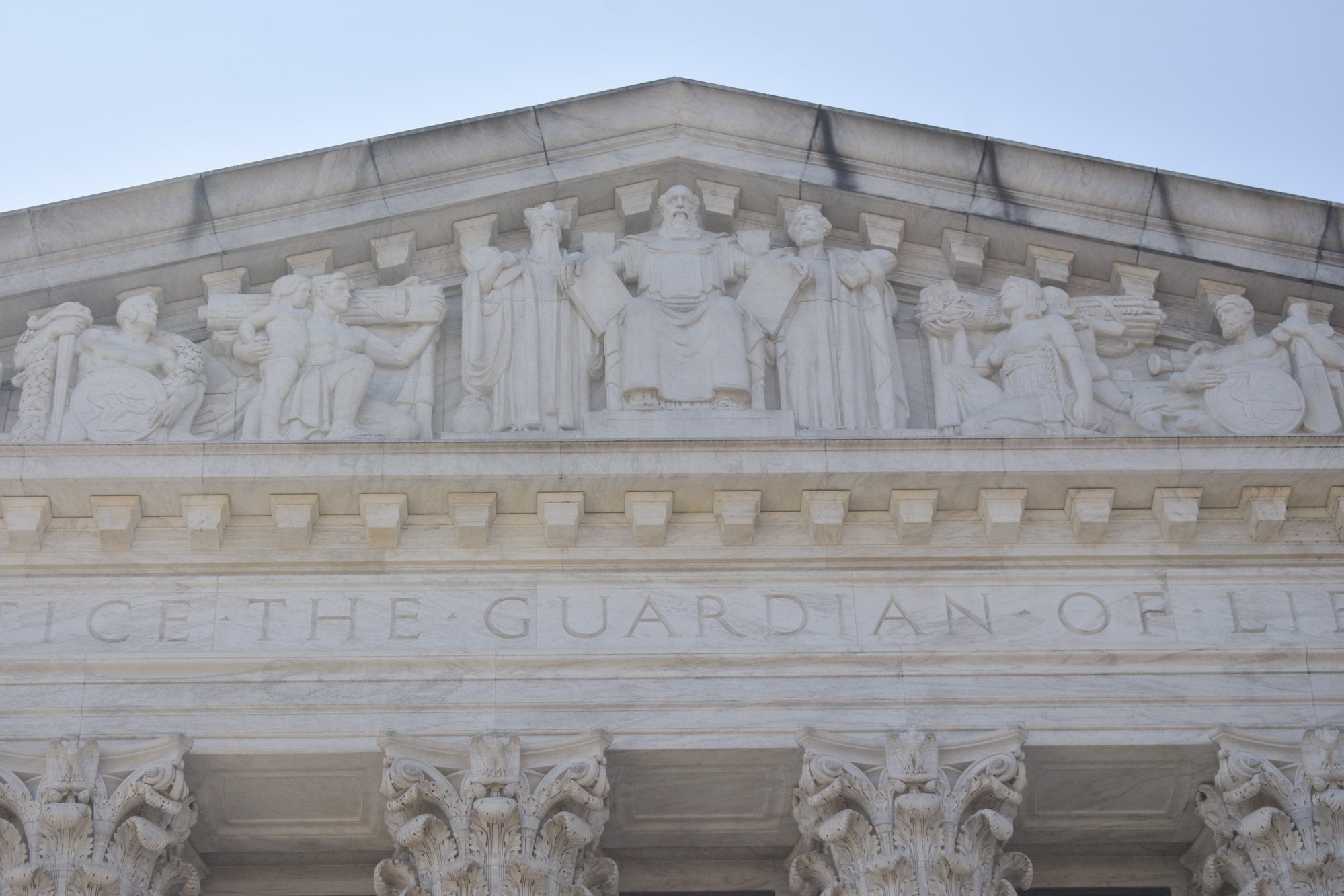
“Benjamin Franklin published the sayings of Confucius in his colonial newspaper,” Trump noted, adding that a sculpture of the sage was “carved into the face of the United States Supreme Court”.
In 1737, Franklin published excerpts from The Morals of Confucius in his newspaper The Pennsylvania Gazette and hailed its philosophy on personal virtue.
Confucius, alongside Moses and Solon, features on the US Supreme Court’s eastern pediment, completed between 1932 and 1935, representing three great civilisations that shaped the Western legal system.
The US president also touched upon broader cultural nodes, from the Chinese migrants’ role in laying “the railroad tracks that connected our Atlantic coast to the Pacific” to modern shared interests like basketball and blue jeans.
He pointed to the imprint of China’s cuisine: “Chinese restaurants in America today outnumber the five largest fast food chains in the United States all combined. And that’s a pretty big statement.”
According to Gao Jian of the Shanghai International Studies University, Trump “intentionally” downplayed the “confrontational nature of ‘America first’,” with the speech reflecting a “strategy of using a soft diplomatic posture to strengthen bilateral relations”.
“Trump has never been a US president keen on ideological confrontation, possessing a strong pragmatic spirit,” he said.
In his speech, Xi invoked the legacy of 1970s “ping-pong diplomacy”, calling US-China ties the “most important bilateral relationship in the world” and linking the two countries’ guiding philosophies.
“Achieving the great rejuvenation of the Chinese nation and making America great again can go hand in hand,” he said.
Levine from the US-China Education Trust pointed out that “once you start looking at the history of these two countries, you see how deeply intertwined they are”.
“The points of tension, as significant as they are, are not the whole of the relationship. Most Americans and most Chinese want to see healthy competition that does not spill over into conflict or the demonisation of an entire country and its people,” she added. - SOUTH CHINA MORNING POST