Hong Kong recorded a 5 per cent year-on-year rise in the number of mainland Chinese visitors on the first day of the National Day “golden week” break, with industry leaders expecting more arrivals on Thursday and higher spending from long-haul travellers.
Immigration figures showed there were 558,431 inbound trips on Wednesday, marking a 1.27 per cent decrease from last year. But the number of mainland tourists stood at 232,751, representing a 5 per cent increase compared with the same day last year.
A net inflow of 122,894 trips was logged, with 435,537 outbound ones made. Of the inbound trips, 41 per cent were by mainlanders.
About 270 mainland tour groups also arrived in the city to celebrate the 76th anniversary of the founding of the People’s Republic of China.
Timothy Chui Ting-pong, executive director of the Hong Kong Tourism Association, said both tour groups and independent travellers flocked to popular areas such as Tsim Sha Tsui, adding that busy open-top sightseeing buses and packed restaurants signalled a high demand for experiences on the first day of the eight-day holiday.
“The mainland golden week holiday has just started and some travellers chose multi-stop itineraries. Some people flew to Shenzhen or Guangzhou to spend a day before arriving in Hong Kong. I believe more of them will come [on Thursday],” Chui told a radio programme.
Chui highlighted that while nearby Shenzhen day trippers accounted for many of the 232,000 first-day arrivals, the high-speed rail station was also bringing in a large contingent of long-haul guests from provinces such as Hunan and Hubei.
“They are expected to stay for at least one or two nights and drive greater spending,” he said.
Regarding concerns that some visitors were discouraged by relatively high hotel prices and that budget travellers chose to return to Shenzhen for accommodation, Chui said that rates at top-tier hotels on both sides of Victoria Harbour were only 5 to 10 per cent higher than usual.
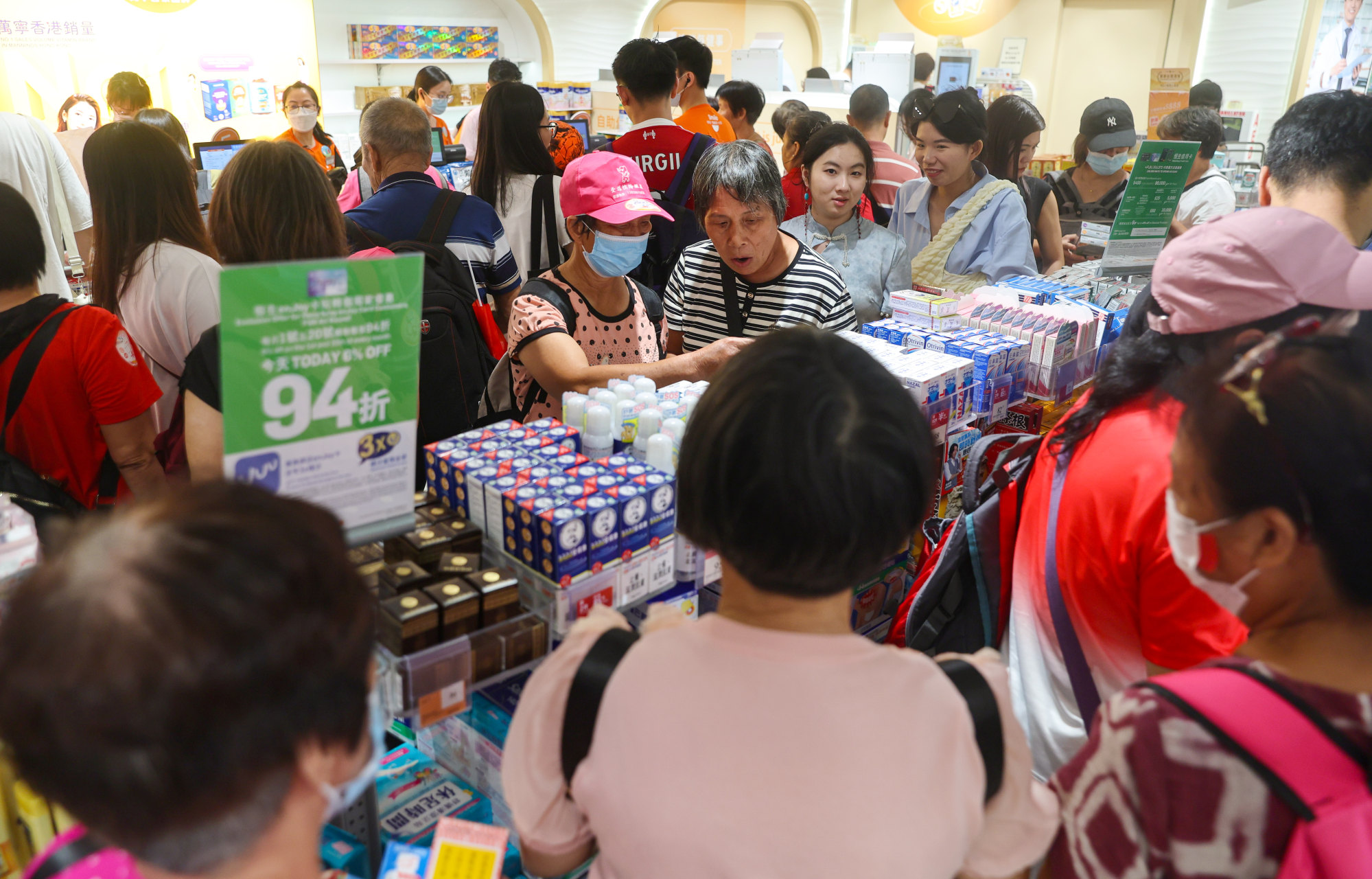
Retail sector lawmaker Peter Shiu Ka-fai said that the footfall across the city was strong, especially in the tourist areas, driven not only by visitors but also residents who worked on the mainland and had returned home, boosting demand for food, dining, cosmetics, skincare and luxury goods.
“The influx of people, combined with activities and promotions launched by both the government and the retail industry, has effectively encouraged significant local consumer spending,” Shiu said.
“We are seeing quite a lot of tourists still queuing up to shop in Tsim Sha Tsui for branded luxury items. Hong Kong has an advantage in that it has a large concentration of brands, and their stock often includes newer items. Our tax-free status adds to the advantage here.”
The lawmaker said the jewellery sector had a stronger advantage, as Hong Kong’s gold prices were lower than the mainland’s, with some chains forecasting a 10 to 15 per cent sales increase during the holiday. - SOUTH CHINA MORNING POST