THE recent rise in crude oil prices exceeding US$100 (RM396) per barrel has left Malaysia feeling the impact, with the hike affecting all Malaysians.
Meanwhile, government spending on monthly fuel subsidies has surged from RM700mil to RM4bil.
As of mid-April, petrol and diesel prices reached record highs in Malaysia, with diesel soaring to RM6.72 per litre, RON 97 hitting RM5.35 per litre and unsubsidised RON95 peaking at RM 4.27 per litre during the same period.
Although the government has assured that the subsidised rate of RM1.99 per litre for RON95 will be maintained, the Budi95 quota has been reduced from 300 litres to 200 litres beginning in April, reinforcing Malaysians’ concerns about the rising cost of living and broader inflationary impact of supply chain disruptions
This mounting pressure is equally felt within Malaysia’s automotive landscape. The decline in nationwide Total Industry Volume (TIV) signals signs of consumer hesitation.
Analysts have predicted continued softness as fuel prices and logistics costs remain elevated.
TIV for the first quarter of financial year 2026 (1Q26) came in lower than last year, contracting slightly at 2.9% compared to the same period in 2025.
With rising operating costs for internal combustion engine (ICE) carmakers and cautious consumer spending, the sector outlook remains restrained.
In contrast, the electric vehicle (EV) segment continues to grow, with Malaysia fast emerging as one of South-East Asia’s fastest-growing EV markets.
In March of this year alone, 4,717 EVs were registered, representing a 58.5% increase year-on-year (y-o-y) compared to 2,976 units recorded in March 2025.
Road Transport Department (JPJ) data shows that EV registrations from January to March breached the 10,000‑unit mark, and hit 14,591 units, representing a 7.58% share of TIV and an 113.72% y-o-y growth in Malaysia, despite the 2.9% drop in TIV.
This upward trend reflects market readiness as more Malaysians are considering alternatives beyond traditional ICE vehicles.
Analysts from CIMB Securities have also predicted that high crude oil prices are expected to accelerate Malaysia’s shift towards EVs, particularly among more expensive ICE vehicle buyers.
National EV penetration is also poised to increase throughout 2026, supported by the launch of affordable EVs, such as the Proton e.MAS 5.
Subsequently, analysts also predict that more households will lean towards plug‑in hybrid EVs (PHEVs) as subsidies tighten and petrol expenses climb.
Modern PHEVs, like the Proton e.MAS 7 PHEV, serve as a practical bridge for ICE drivers by delivering cleaner, quieter electric driving for daily trips while retaining petrol use for longer journeys.
Its EM-i Advanced Hybrid Technology also reduces overall fuel consumption and maintains strong petrol efficiency, even with a depleted battery (operating at approximately 4.3 litres per 100km).
Most importantly, the perception that hybrid vehicles are costly to maintain is becoming outdated.
Modern PHEVs show reduced wear and tear due to advanced technology. The Proton e.MAS 7 PHEV’s dedicated hybrid platform enhances efficiency through smoother transitions between electric and petrol modes, while maintaining cost‑effective ownership.
Over a 10-year period, total ownership costs for a PHEV are almost half of the cost of an equivalent ICE sports utility vehicle (SUV).
Maintenance costs are also lower at under RM8,000 for a PHEV compared to RM16,000 for an ICE SUV.
This positions PHEVs as a highly cost‑efficient option at a time when fuel‑related expenses continue to rise.
As Malaysians become more conscious of long‑term ownership costs, many are now recognising electrified mobility as the smarter, more economical choice.
This shift in awareness is reflected in actual demand. This year, one in every two EVs sold in Malaysia is a Proton e.MAS.
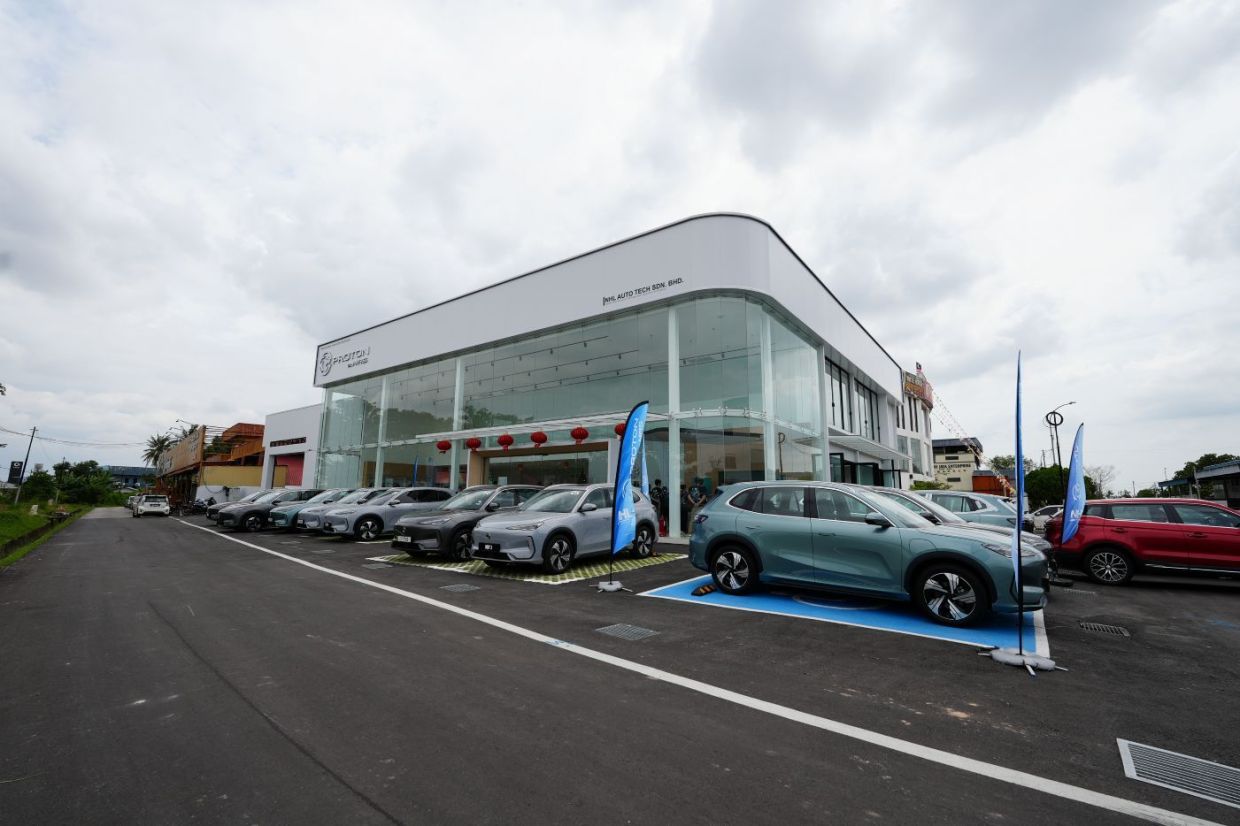
The e.MAS 5 and e.MAS 7 collectively represent about half of all EV registrations in January and February, with the e.MAS 5 surpassing 5,000 deliveries within just two months, setting a new benchmark nationwide.
Moving forward, Proton New Energy Technology Sdn Bhd (Pro‑Net), a wholly owned subsidiary of Proton Holdings Bhd, remains committed to making EV ownership accessible and attainable, breaking the perception that EVs are costly or exclusive to the premium segment.
The strong adoption of the e.MAS lineup demonstrates a clear nationwide move toward mass‑market electrification.
With that comes the need for a stronger EV ecosystem, and Pro-Net is committed to strengthening the full ownership ecosystem, not just sales.
To date, we have expanded nationwide coverage with 63 appointed dealerships (of which 51 are currently operational). Of that, 39 are 3S (Sales, Service and Spare Parts) centres, while 10 comprise Body & Paint centres.
We know range anxiety is a major contention point amongst ICE drivers considering making the switch to EV.
As such, we also want to support our customers by providing greater access to charging infrastructure.
Our proprietary, one-of-a-kind Integrated Live Charging Map and Proton e.MAS App allows drivers to search, locate, navigate and pay for charging at over 4,300 charging points nationwide.
Pro-Net is also investing in the long-term sustainability of the EV ecosystem by commencing local assembly of the Proton e.MAS 7 (and subsequently to include other models) at the Tanjung Malim EV plant.
By assembling key components like electric drive units and hybrid transmissions locally, Proton is building a local EV supply chain, accelerating adoption with lower prices and creating a robust, sustainable local EV ecosystem.
Ultimately, the local assembly of e.MAS 7 makes electric vehicles more affordable for Malaysian consumers, fostering broader consumer adoption, in line with the government’s National Energy Transition Roadmap (NETR) and Low Carbon Mobility Blueprint 2021-2030.
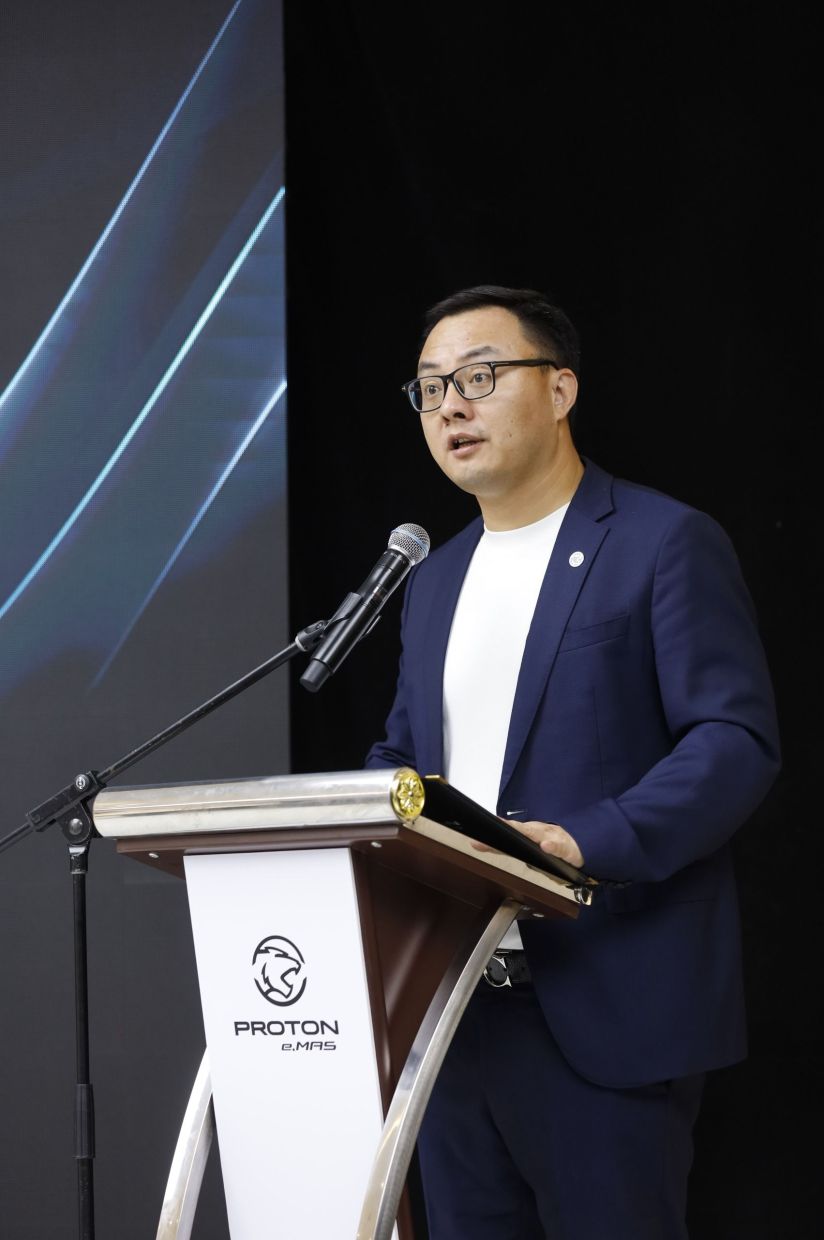
Zhang Qiang is the chief executive officer of Pro-Net. He leads the company’s efforts in developing the EV ecosystem for Proton’s e.MAS models, including charging infrastructure and dealer networks.