




IN many parts of Malaysia, schools are more than centres of learning. They are community bedrocks where confidence is built, resilience is nurtured and futures quietly take shape.
Recognising this, Yayasan PETRONAS (YP) has stepped forward in support of the Government’s Sekolah Angkat Madani (Samadani) programme, delivering its contribution through Program Duta Guru (PDG) – YP’s flagship education initiative – and reinforcing its commitment to education as a powerful driver of social mobility and national progress.
Prime Minister Datuk Seri Anwar Ibrahim introduced the Samadani programme in line with the public service reform shift, with a focus on driving social and economic development at the school level. The initiative aims to empower school communities through relevant, targeted and sustainable development efforts.
Through Samadani, YP is extending comprehensive support to 50 schools nationwide, focusing on enhanced learning resources, empowered teachers and nurtured students.
This support is delivered through PDG – a structured two-year teacher training programme that builds teacher capacity in science, technology, engineering and mathematics (STEM) and leadership, while fostering a culture of innovation that contributes to community resilience, particularly in rural areas.
At the core of this initiative is a simple principle: sustainable change begins with empowered educators and meaningful learning experiences.
Strategic alignment
YP’s support for Samadani, channeled through PDG, is structured around three out of five Samadani pillars – learning resources, academic and mentorship as well as character and skills development. Each pillar addresses a critical aspect of the school ecosystem to ensure balanced and inclusive progress.
For schools, this involves laboratory enhancement projects and the establishment of Student Innovation Centres, transforming these spaces into dynamic environments where students experiment, collaborate and apply STEM knowledge in hands-on ways.
For teachers, PDG provides structured professional development and access to Duta Guru Funding – grants worth RM20,000 that enable trained teacher ambassadors (Duta Guru) to implement STEM projects tailored to community needs.
Students benefit from initiatives like STEM Career Days and environmental education programmes, which expose them to real-world applications of sustainability. Under Samadani, schools are supported to implement environmental education programmes using a regenerative planting approach.
These initiatives instil the concept of working in harmony with nature, helping students understand conservation, sustainability and environmental stewardship from a young age.
With the Samadani programme, other teachers from the YP adopted schools are also invited to join Duta Guru and participants of the PDG programme attend the annual PDG National Symposium, which brings together educators, policymakers and education officers for knowledge sharing and dialogue sessions.
The National Symposium this year featured an opportunity for selected teachers to participate in a hands-on regenerative planting workshop at Taman Botani Putrajaya as part of the environmental education programme in schools, further strengthening their ability to integrate sustainability into teaching and learning.
Together, these efforts ensure that students are not only academically capable, but also socially conscious and environmentally responsible.
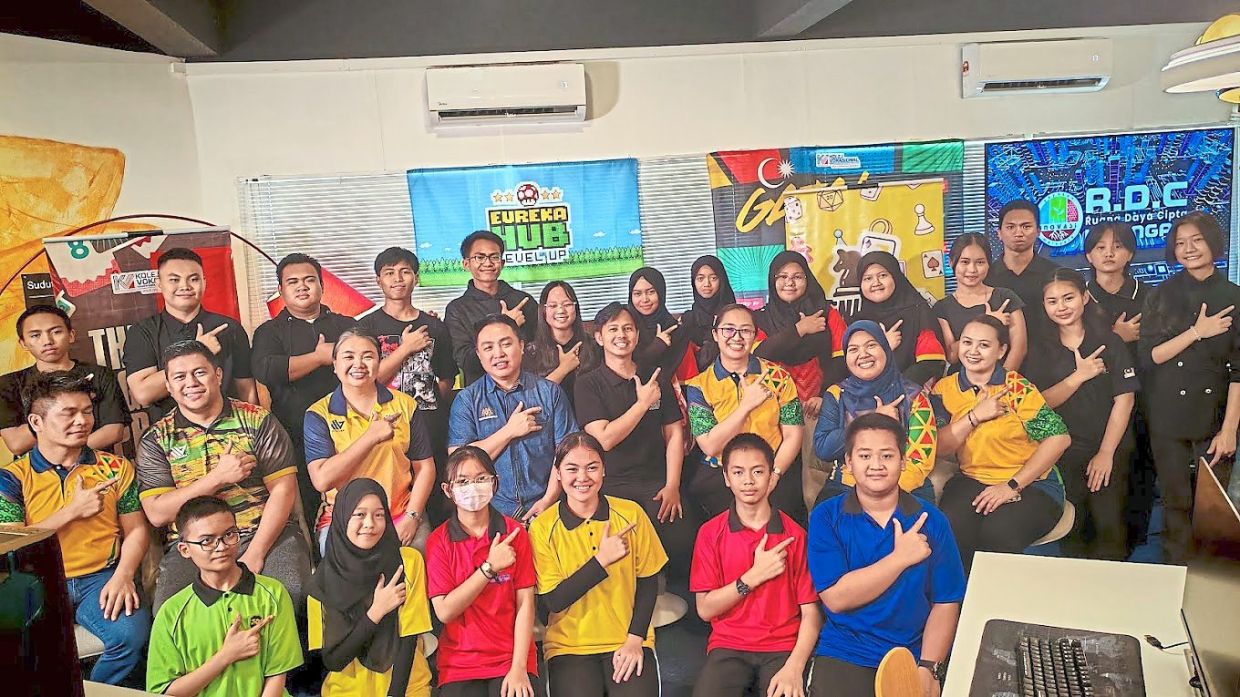
Teachers as catalysts for change
Central to PDG is the belief that teachers are the primary catalysts for transformation.When educators are provided with the necessary tools, trust and training to innovate, classrooms evolve into dynamic spaces of problem-solving and purpose-driven learning.
In Sabah, this philosophy is embodied by Cikgu Mohd Azwan Mohd Yakof, 34, of SMK Sindumin in Sipitang.
A technology design specialist, certified Google trainer and recipient of the Education Ministry’s Lead Teacher for Digital Generation award, the PDG alumnus exemplifies how STEM education can strengthen community resilience.Recognising that his school is located in a flood-prone area, he developed ‘Water Warn Alert’ —a real-time detection system powered by eco-sensors and digital dashboards to provide early warnings to local villagers.
What began as a self-funded initiative gained significant momentum through Duta Guru Funding. This funding allowed the system to be refined, scaled and shared with relevant agencies.
“Receiving RM20,000 from YP after submitting my project proposal was a turning point; it has truly inspired me to go further,” said Cikgu Mohd Azwan. The project illustrates how classroom knowledge can be transformed into practical solutions that protect both lives and livelihoods.
“STEM becomes meaningful when students see how certain ideas can help their own community,” he explained. “With the support of PDG, innovation moves beyond theory and becomes a reality.”
The impact of PDG extends across the peninsula to Johor, where Cikgu Nur Ain Abd Jabar, an exceptional teacher in Design and Technology (RBT) at SMK Convent (M) Batu Pahat, has seen her involvement fundamentally transform her students’ engagement with STEM.
While she initially found the transition to STEM-based teaching challenging due to its unconventional methods, the specialised training and community support from PDG provided her with the tools to innovate her classroom approach.
The results have been remarkable; her students have developed technical competencies in creating STEM materials that far exceed their age group, often reaching a level of technical maturity far beyond their years.
Beyond these specialised skills, Cikgu Nur Ain has successfully fostered a culture of curiosity, leading her to plan new modules that connect classroom learning to future career pathways.
The impact she has created is most evident in her student leadership programme, where eight of her students now serve as mentors, guiding peers – including those from neighbouring schools.
Unlocking potential
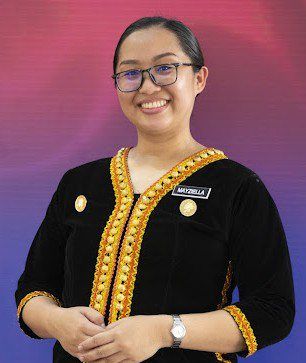
Cikgu Mayziella Primus Kayau of SMK Gunsanad in Keningau, Sabah, is redefining inclusive learning through the school’s Gunsanad Makerspace.
This Student Innovation Centre, established in 2017, was later revitalised under the Samadani programme.
As the lead teacher for the PDG-funded revitalisation project and a mentor for various STEM-related activities – including the Young Innovators Challenge – she co-founded a hands-on learning space where 100 students explore robotics, 3D printing, Arduino programming and design thinking.
What sets the Makerspace apart is its commitment to inclusivity. Cikgu Mayziella encourages the active involvement of students with special needs, ensuring that innovation remains accessible to all. The initiative has also successfully empowered 30 “Duta STEM” students from Forms One to Four as STEM ambassadors, encouraging interest and participation across the school.
With support from Duta Guru Funding and the school’s administrative team, students gained access to specialised workshops, expert mentoring and national competitions. This journey culminated in significant recognition, with the school’s team winning Gold and Silver awards at the state-level Young Innovators Challenge this year – a triumph achieved after eight years of perseverance.
“Two of our students created an app that connects to a wearable device and sends an alert if there is any incident of bullying,” she said.
For Cikgu Mayziella, 35, the mission is about unlocking potential rather than chasing accolades, as she leverages PDG’s funding and training to nurture student confidence and technical skills, building inclusive pathways that ensure every student has the opportunity to discover their strengths.
Scaling impact
The impact of YP’s support under Samadani is already taking shape across the country.
All 50 schools adopted by YP under the initiative will receive support tailored to their justified needs. To date, 23 schools across 10 states are set to receive funding to establish Student Innovation Centres, while 27 schools will benefit from enhancements to science laboratories.
Additionally, nine teachers will receive Duta Guru Funding to drive community-focused STEM projects. Students have also connected directly with professionals from the industry through STEM Career Days at schools.
These initiatives are complemented by PETRONAS’ broader support, including contributions of laboratory equipment, educational visits and volunteer-led STEM talks. Together, they reflect a coordinated, ecosystem-based approach to educational upliftment. YP worked with various PETRONAS business units such as PETRONAS Gas Bhd, PETRONAS Dagangan Bhd and its Cybersecurity unit to support the Samadani initiative. Specific regional efforts further strengthen this reach. Among others, four schools in Sarawak received contributions from the PETRONAS Sarawak regional office, while PETRONAS Dagangan together with YP facilitated an educational trip for students from SMK Felcra Bukit Kepong to Petrosains.
Future outlook
Yayasan PETRONAS chief executive officer Shariah Nelly Francis said the foundation’s support for Samadani reflects its long-term commitment to nation-building through education.
“We believe that empowering teachers is the most sustainable way to transform schools and communities,” said Shariah Nelly.
“Through PDG, we are investing not only in technical skills, but also in leadership, innovation and purpose.” She added that collaboration with government and PETRONAS’ business units strengthens delivery on the ground. “When schools, educators and industry work together, they unlock impact that is deeper and enduring.”
Looking ahead, Yayasan PETRONAS remains steadfast in its mission to expand STEM education and nurture future-ready talent. As Samadani continues into 2026, the foundation’s work demonstrates a transformative vision through STEM Career Days for another 18 schools nationwide, continued environmental education and sustained teacher capacity building.
Empowered teachers and supported schools create a ripple effect that inspires students, strengthens communities and ensures a brighter future for everyone.
To learn more about the social impact arm of PETRONAS and its initiatives, visit https://www.yayasanpetronas.com.my/


