One beneficiary who received baked goods from Rainbows Health Food was The Assembly Soup Kitchen for flood relief efforts through TLFP.
Reducing food waste one loaf at a time
EXPERTS are projecting that there will be 14 million metric tons of material solid waste, which includes food waste, by 2022 – enough to fill our iconic Petronas Twin Towers entirely every week.
Surely food waste isn’t that bad for the environment? After all, it’s all “biodegradable”.
The truth of the matter is that food waste that ends up in landfills contributes to carbon dioxide and methane emissions.
According to Malaysian Nature Society president Prof Dr Ahmad Ismail, about 7% of greenhouse gases produced globally was due to preventable food waste.
Logically then, the best course of action is to make sure that we’re as efficient as possible in food production and consumption. After all, there’s no food waste if everything gets eaten in time.
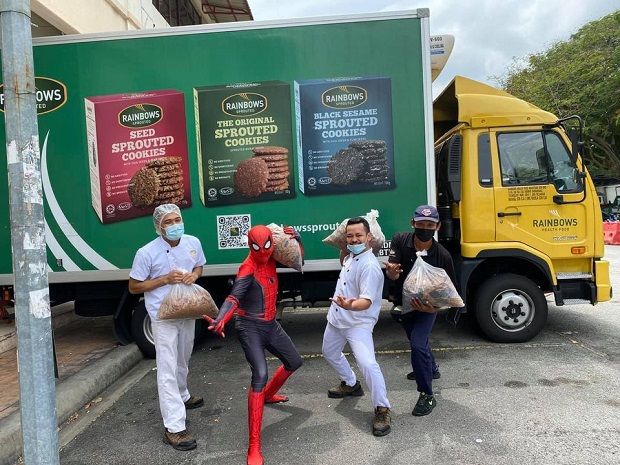 Rainbows Health Food staff and friendly neighbourhood Spiderman on behalf of fundraising platform GoCare Donation Crowd Funding, an initiative by MCA's Crisis Relief Squad, to collect surplus bread.
Labour of “loaf”
Since 2015, Rainbows Health Food has been known for their sprouted breads – a type of bread that is created by allowing whole grains to sprout, or germinate, before milling them into flour.
The homegrown bakery operates in Kota Damansara, Petaling Jaya, but will be moving its operations to Eco Business Park V in Puncak Alam by next year.
Prolonging a food’s shelf life is important in reducing food waste – whether it’s through artificial preservatives or canning, freezing, pasteurisation or even sprouting.
Foods like Rainbows Sprouted Bread come “baked-in” with its own natural preservative through the germination process, which gives the bread its sourdough-like tang, while allowing it to last a week on its own with proper storage.
Noting the rising costs or raw materials too, Rainbows Health Food co-founder John Tan, who is also sales and marketing director, said: “To reduce waste, we forecast supply and demand as accurately as we can to ensure there’s no glaring overproduction.
“The cost of raw materials has gone up with all the current supply chain disruptions, so as a business, it makes sense for us to work towards reducing food waste.
“Since our sprouted breads take a lot of time and effort to make, we try and salvage what we can for human consumption. If a batch doesn’t come out per our standards, we donate those edible loaves to non-governmental organisations (NGOs) that distribute them to vulnerable communities.”
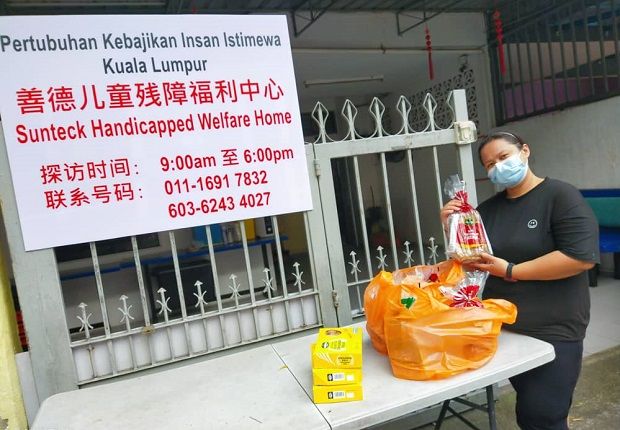 Rainbows Health Food collaborates with The Lost Food Project to rescue tons of surplus food and other products from landfills and feed urban poor families.
‘Sharing is caring’
Here’s where The Lost Food Project (TLFP) and other NGOs come in to assist with Rainbows Health Food’s goal to reduce food waste. Working with their main partner, TLFP, Tan donates surplus unexpired loaves to the communities they serve.
“We try to give out as many loaves as possible by working with our partners, so that they can arrange for the dispatch and distribution to the communities they serve since we lack the human resources to reach everyone in need,” he added.
Tan is no stranger to food donations as he has personally donated to multiple NGOs, orphanages and old folks homes around the Klang Valley.
“We started collaborating around two years ago before the movement control orders. They have a team of volunteers that come to our factory almost every day – rain or shine – to collect our surplus bread.
“In the last four months this year, TLFP collected about 2,000kg of our bread, which was converted into over 5,000 meals. This also helped to reduce our greenhouse gas emissions (since the food doesn’t reach our landfills) by 4,800kg,” he said.
For Malaysians trying to reduce their own food waste at home, Tan believes that sharing is key.
“If you have extra food that you know you’ll not be able to finish, why not share with your friends or neighbours?
“If you have a surplus, you can also visit local food banks to give your extra food items, instead of letting them expire and throwing them away.”