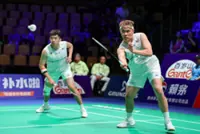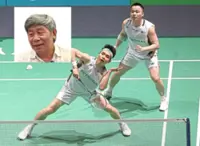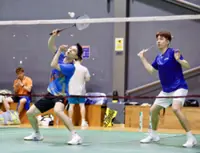
PETALING JAYA: World No. 2 men’s doubles pair Aaron Chia-Soh Wooi Yik face a daunting route as they attempt to defend the Asian Championships title they captured last year, while also chasing a piece of history achieved by Choong Tan Fook-Lee Wan Wah 19 years ago.
Since the tournament’s inception in 1962, Tan Fook-Wan Wah remain the only Malaysian men’s doubles pair to have retained the Asian crown.
To emulate that feat in Ningbo from April 7-12, Aaron-Wooi Yik are expected to navigate a field packed with top contenders, including Japan’s Takuro Hoki-Yugo Kobayashi who are now, interestingly, under the guidance of Wan Wah.
Other potential threats in their half of the draw include India’s Satwiksairaj Rankireddy-Chirag Shetty, China’s Chen Boyang-Liu Yi and Indonesia’s Fajar Alfian-Shohibul Fikri.
Awaiting in the opposite half are top seeds Kim Won-ho-Seo Seung-jae of South Korea, who loom as the biggest hurdle should the Malaysians go deep into the tournament.
Men’s doubles head coach Herry Iman Pierngadi is aware that defending a title is far more difficult than winning it, but he personally does not want Aaron-Wooi Yik to think too far ahead.
Instead, he wants them to focus on one match at a time, starting with their opening round clash against Taiwan’s Chiu Hsiang-chieh-Wang Chi-lin.
“There are strong pairs from Indonesia and China. If we go step by step, the first round is against the Taiwan pair. We have played them several times, but every tournament is different,” said Herry.
“I hope Aaron-Wooi Yik stay focused and do not look too far ahead. Do not think about the final yet. Take it step by step because the Taiwan pair are not easy opponents.
“Defending is always tougher because of the pressure. You start thinking, ‘I was champion last year, I cannot lose this time’.
“When you are chasing a title, there is less burden. It feels lighter. It is always easier to chase than to defend.”
As part of their preparation, Herry has placed strong emphasis on video analysis, particularly in high pressure situations late in matches where lapses have proven costly.
“Before tournaments, we usually review matches through video. Recently, we focused on points in the third set where Aaron-Wooi Yik made mistakes. We replay those moments and highlight what went wrong.
“When we only tell the players, they just hear it. But with video, they can see and hear at the same time, so it is easier to understand. We will also simulate situations. This helps them replay those moments in their minds and correct the mistakes,” he added.