



The price of diesel in Peninsular Malaysia hit RM6.02 per litre this week, the highest in Malaysia's history and nearly double the RM3.04 just five weeks ago. During the same period, Malaysia's monthly fuel subsidy bill has surged from RM700mil to RM3.2bil. Can the government continue to fund subsidies and its development obligations this way if situation continues?
This is not the first time Malaysia has been caught fiscally exposed by a global energy disruption and it will not be the last. The pattern is now familiar – prices surge, the subsidy bill escalates beyond what the budget can sustain, the government is forced into reactive cuts and households bear the adjustment with little warning or preparation. The question the country must confront is why, after repeated episodes, the underlying fiscal vulnerability has never been addressed.
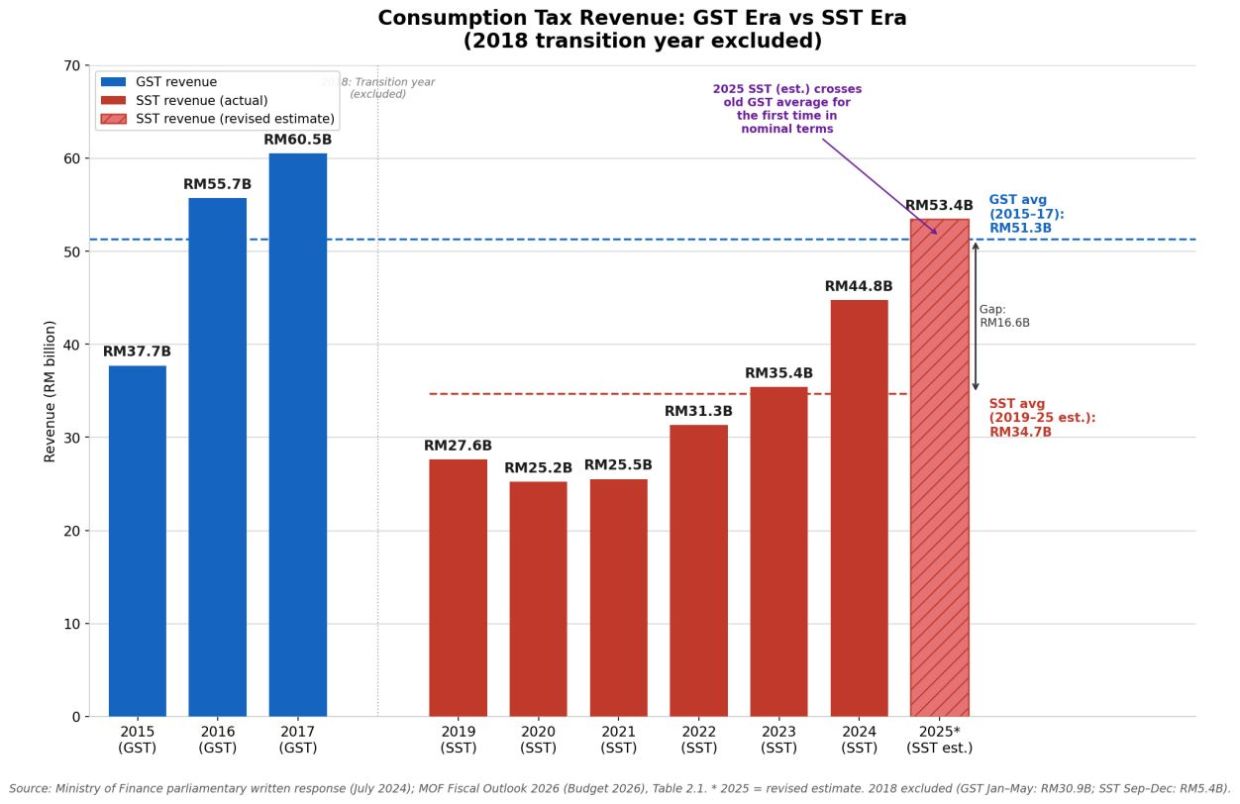
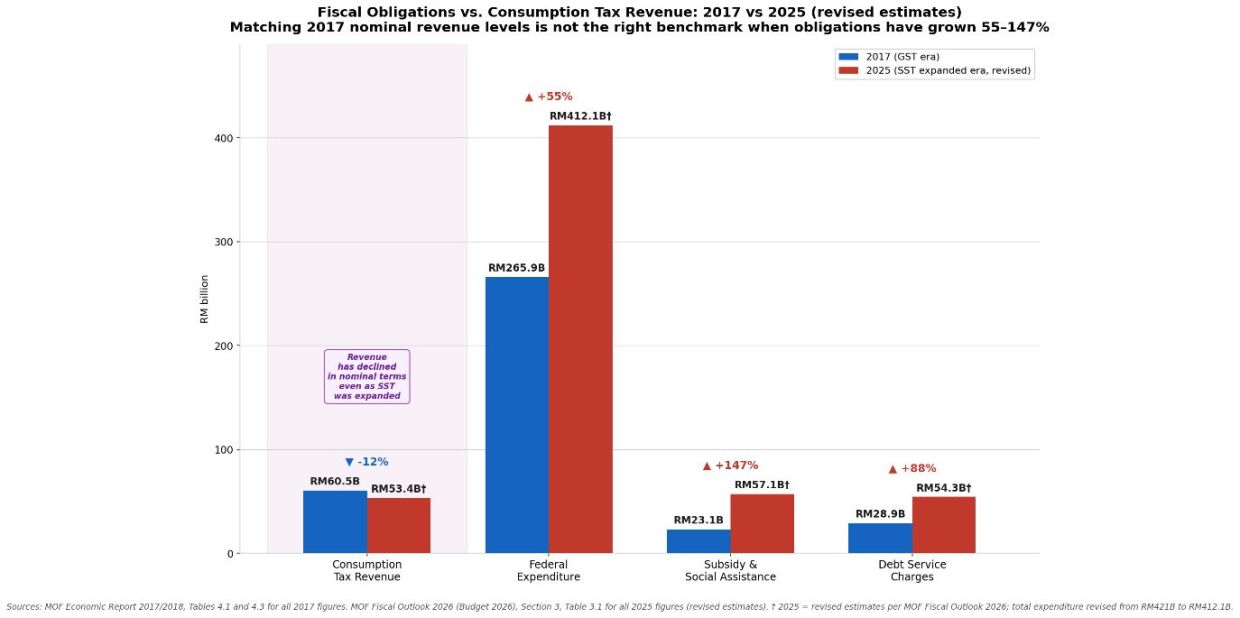
The answer is a revenue structure that has been running a structural deficit since 2018. GST collected RM60.5bil in 2017 at a flat 6% rate across 76% of goods and services. Even with the service tax increase to 8% in 2024 and expanded SST scope from July 2025, SST collection for 2025 is now projected at RM53.4bil, nominally crossing the 2015-2017 GST average for the first time but matching a 2017 number in 2026 is not the measure of a sufficient revenue base.
In GDP-adjusted terms, the structural deficit persists. GST in its final full year of operation yielded approximately 4.4% of GDP. SST with expansion is projected at roughly 2.6% of GDP in 2025, a gap of around 1.8 percentage points. At today's economic scale, that represents roughly RM35bil to RM38bil in foregone annual revenue, the difference between a government that can absorb a global energy shock and one that must ration its way through it.
Insap is not calling for GST to be reintroduced while Malaysian households and businesses are absorbing the full force of a supply-driven price shock. The inflationary effects of the diesel surge have not yet fully passed through the supply chain, and layering a consumption tax adjustment on top of that would compound the burden on the groups most in need of protection.
What Insap is calling for is the government to use this crisis as the catalyst to begin, now, the serious institutional and consultative work required for a GST reinstatement roadmap, so that when conditions stabilise, Malaysia is ready to implement a system that prevents the next crisis from producing the same outcome.
A properly designed GST is the only broad-based consumption tax that allows those who consume more to contribute proportionally more to the public purse, while giving businesses full input tax credit recovery so that costs do not cascade invisibly through supply chains as they do under SST.
This means a lower initial rate to ease transition, time-bound refund processing backed by published KPIs so that businesses are never again left in cashflow distress waiting for money owed to them, meaningful SME support during the transition, and transparent reporting on how the revenue is allocated.
This is not a partisan question. Every administration since 2018 has governed with a revenue base that is structurally insufficient for the subsidy commitments and development obligations Malaysia carries. The fiscal strain visible today is the predictable consequence of that gap, not an accident of geopolitics. Addressing it is in the national interest and deferring it until the next crisis will only ensure the same cycle repeats with fewer options available.
Insap calls on the government to establish a formal government revenue reform working group, with private sector and civil society consultation, a published terms of reference and a clear timeline, so that Malaysia enters the next global disruption with the fiscal foundation to protect its people rather than ration its way through.
Datuk Dr Pamela Yong
Insap chairman
