LAST November, Natural Resources and Environmental Sustainability Minister Nik Nazmi Nik Ahmad told the Dewan Rakyat that a total of 80,375 human-wildlife conflict incidents were reported nationwide from 2018 to 2024.
He was responding to a question on whether the land acquisition process for the East Coast Rail Line (ECRL) project met the ecological sustainability requirements and that the wildlife ecosystem was well managed.
He said a Wildlife Management Plan, including creating ecological corridors to allow wildlife to move safely and reduce habitat fragmentation, has been implemented.
The ECRL alignment, which spans 665km, crossing from Gombak to Kota Baru, includes several forest reserves that serve as wildlife habitats.
The ecological impact of railways and trains on wildlife and the environment is a significant concern, especially when the primary consideration during the planning of the ECRL routes was cost rather than wildlife habitats.
Although an environmental impact assessment, a tool designed to identify and predict the impact of a project, was done for the ECRL, in reality there will be definite felling of trees, subsequent river siltation due to forest loss, risks of flooding and landslides in the affected areas, and impacts on wildlife habitats.
Railway routes are predominantly located in shrinking wildlife habitats, posing risks to their survival.
The clearance of these areas makes it easier for poachers and those involved in illegal wildlife trade to access endangered species, such as the Malayan tiger, elephant and tapir.
Railway tracks through forests and protected areas also obstruct wildlife access to food and water sources, forcing them to encounter fast-moving trains during their natural movements.
Not only is wildlife affected, but the scope and scale of the ECRL has also led to community displacement with villages in Gombak being forced to relocate.
In the Kemasul Forest Reserve in Temerloh, Pahang, an elephant barrier fence is set to be constructed to prevent wildlife-train collisions, as the route cuts through several agricultural plantations and elephant habitats. However, fencing will impact wildlife movement, particularly elephant migratory routes.
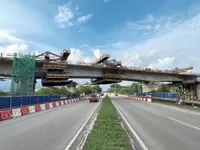
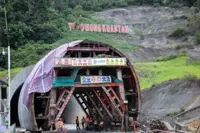
Regarding the construction of tunnels (pic), the question of whether these structures genuinely facilitate wildlife movement and connectivity across fragmented landscapes is also pertinent. Researcher Gopalasamy Reuben Clements, co-founder of the research group Rimba, who investigated a 70km stretch of road through the Kenyir Wildlife Corridor on the north-eastern edge of Taman Negara, discovered that only 14 of the 42 mammal species living in the surrounding jungles used the viaducts.
He observed that animals, particularly tigers, avoided the viaducts due to lack of vegetation providing cover. This highlights the importance of maintaining forest and vegetation on both sides of the road or railway.
If deforestation continues on one side, the entire viaduct will become unusable because animals would have no reason to cross. Viaducts could become death traps if not regularly patrolled, as Clements’ research found that they are popular entry points and camping sites for poachers.
The Consumers’ Association of Penang (CAP) advocates for regular consultation with local communities, stakeholders, NGOs, wildlife departments, forestry departments, local governments, and railway authorities to address these issues and implement solutions to reduce the social and environmental impact of the ECRL’s construction.
MOHIDEEN ABDUL KADER
President
Consumers’ Association of Penang