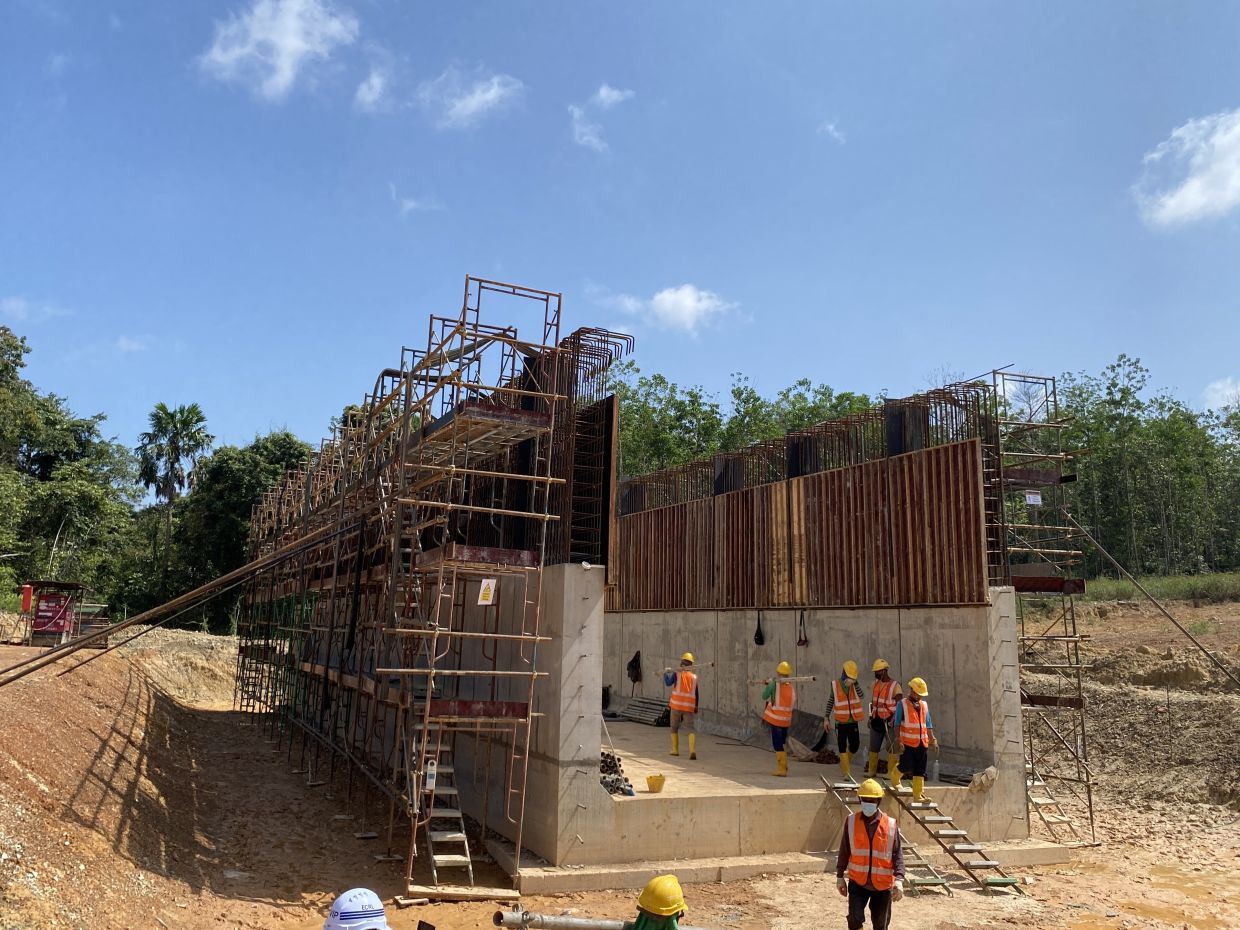
In the Kemasul ForestRreserve, some 9km from the town of Mentakab in Pahang, Malaysia, rail workers decked out in neon orange high visibility safety vests are busy amid slabs of concrete and towering steel reinforcing bars.
They are making a culvert – a box-like concrete structure – some 5.3m tall and 6m wide that will be large enough to accommodate some of the elephant herds that call the forest home.
The culvert is one of several wildlife crossings that are part of the East Coast Rail Link (ECRL) project owner’s plan to minimise the impact of the construction of the 665km-long rail line on wildlife and their habitats, especially when the line cuts through wilderness areas, like it does in the 21,900ha Kemasul reserve.
Wildlife crossings are human-made structures – including bridges, underpasses, overpasses and culverts – that allow wildlife to cross safely into habitats fragmented by developments such as highways and rail lines.
“This is to facilitate primarily elephants as well as tapirs and sun bears to traverse the area safely. We’ve designed larger wildlife box culverts here [in Kemasul] as we anticipate herds of elephants roaming the area,” he was quoted as saying by national news agency Bernama during a press briefing at wildlife crossing sites in Kemasul on March 6, 2023. MRL is the project and asset owner of the ECRL.
The project’s Wildlife Management Plan was formulated through collaboration between the project’s main contractor, China Communications Construction (ECRL) Sdn Bhd (CCC-ECRL), and the Wildlife and National Parks Department (Perhilitan). It proposes 27 wildlife crossings, 11 of which will be in the Kemasul Forest Reserve. The plan, which was signed off on in 2018 and supplemented in 2022, sees CCC-ECRL setting aside a grant of more than RM9mil for Perhilitan to carry out wildlife surveys, surveillance, and conflict mitigation.
“The wildlife crossings in Kemasul forest vary in lengths of between 15m and 75m after taking into consideration the topography and the size of animals.
“All the crossings in Kemasul are expected to be completed by the end of this year,” he said, adding that less than 40ha of the Kemasul forest reserve was used for the crossings and the rail line.
The Kemasul Forest Reserve has a reputation for being the area with the highest number of human-elephant conflict incidents in Pahang. In fact, just in January this year, a 15-year-old male elephant had to be moved to a state park in Terengganu after it encroached into a housing area.
Of central importance
When completed in December 2026, the ECRL will connect Port Klang on the west coast of Peninsular Malaysia with Kota Baru on the east coast. The alignment of the line is designed to reduce travel time between Kuala Lumpur and Kota Baru to four hours from the nine to 10 hours that it takes now.
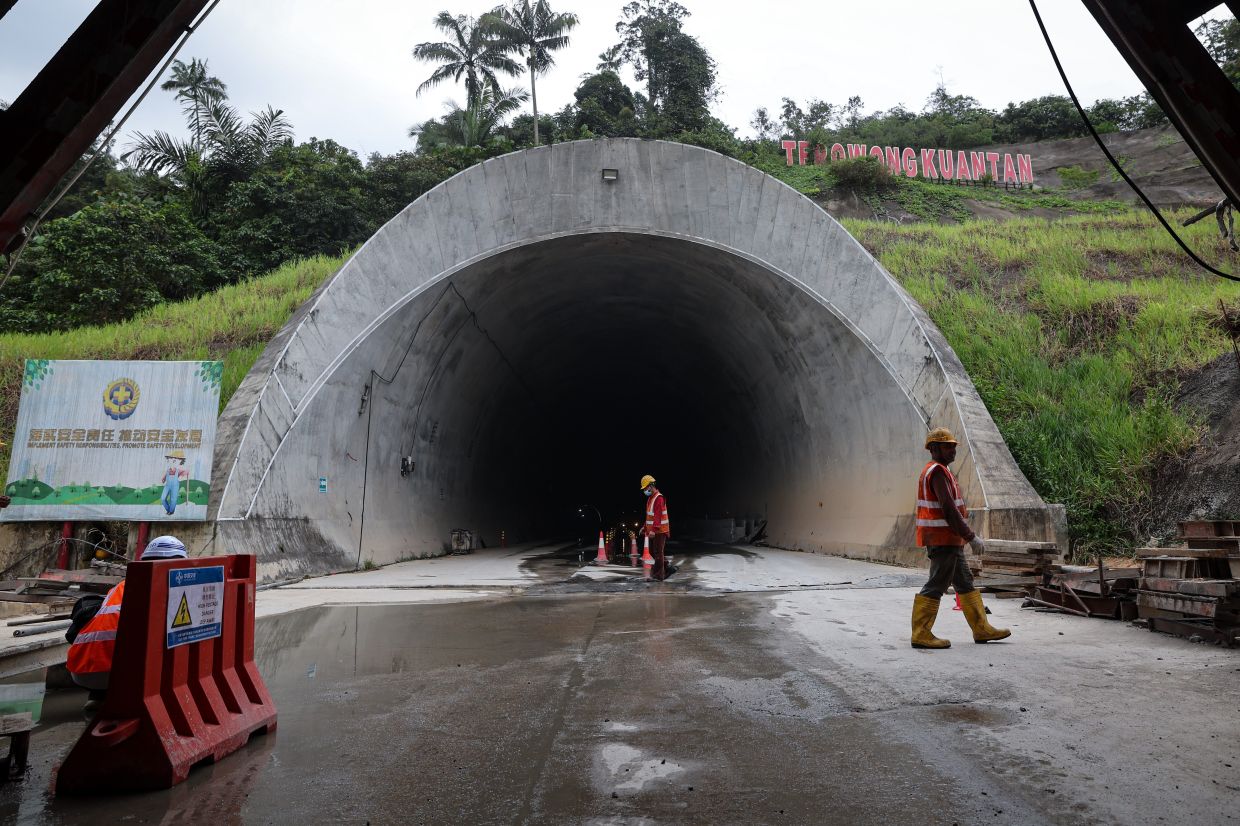
The line will either cut through or pass by the Kemasul Forest Reserve, Lepar Forest Reserve, Bukit Galing and the Balok Forest Reserve in Pahang alone. This means it straddles the environmentally-sensitive Central Forest Spine where much of the country’s wildlife make their home, and which is also a source of water for many of the rivers on the peninsula that supply potable water.
Apart from the obvious danger to wildlife from trains hurtling down the tracks at up to 160km an hour, there is also the fear of the forests becoming further fragmented, inhibiting animals’ movement as well as access to prey and mates for reproduction.
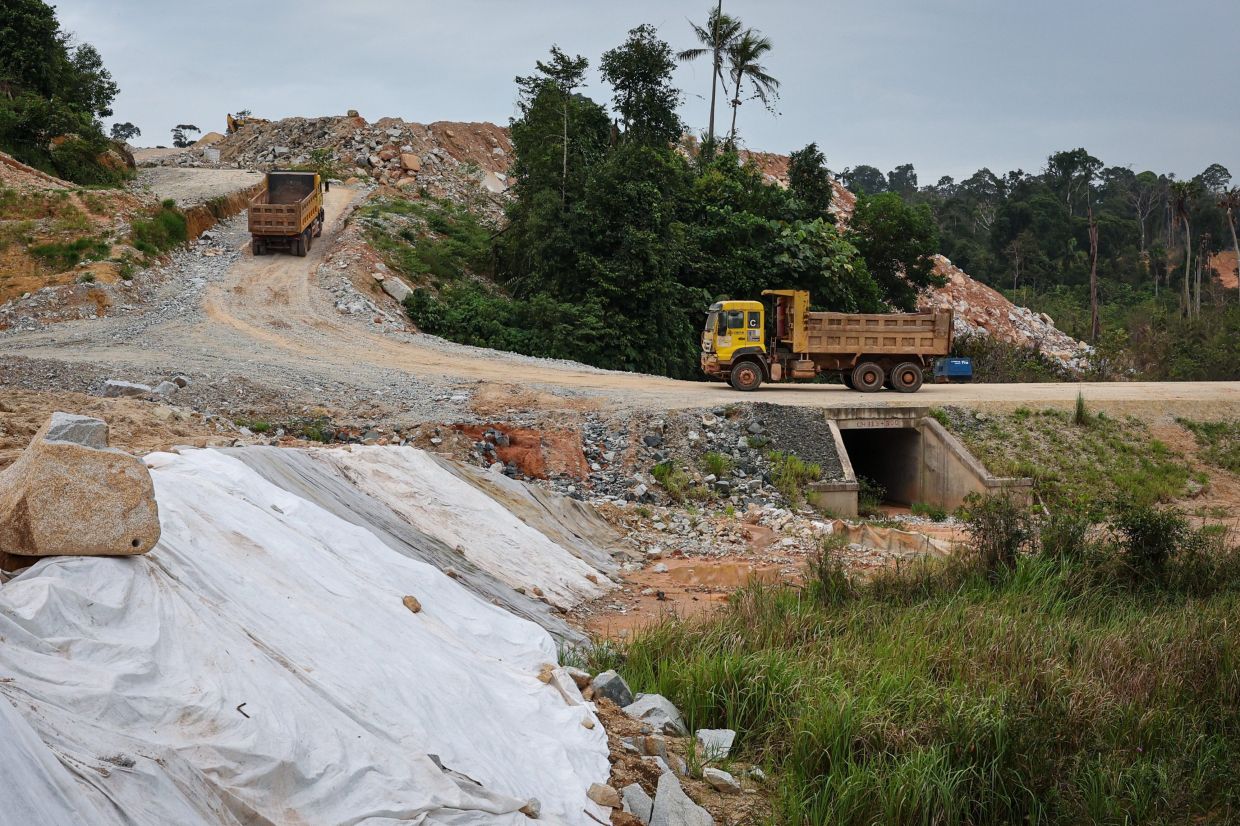
In addition, it has been found that building infrastructure like highways and timber roads that cut across important wildlife habitats often gives poachers easier access to protected animals.
It is for these reasons that when the ECRL project was first proposed conservation groups called for it to be scrapped or, at the least, put on hold while a comprehensive cost-benefit analysis of the project was worked out.
However, Norhasrul explained during his press briefing that the project has taken environmental safeguards into consideration with design modifications along its alignment.
“The original provision was for us to use about 2,000ha of forest land for the construction. But we’ve managed to reduce the forest land usage by 90% to 276ha with the construction of over 50 tunnels totalling 61km in length as well as modifications to the alignment,” he said.
Crash impact
However, with vehicle fatalities involving wildlife on the rise in Malaysia each year – especially the tapir with their famously poor eyesight – will the crossings be enough or effective in keeping our wildlife safe?
According to Perhilitan, in 2021 alone, 24 Malayan tapirs – already endangered – were reported to have been killed as the result of collisions with vehicles. Overall, 92 Malayan tapirs died in road accidents between 2015 and 2020 in Johor, Kelantan, Melaka, Negri Sembilan, Pahang, Selangor, and Terengganu.
And all the areas the ECRL traverses – Kemasul, Lepar, Bukit Galing, and Balok – harbour tapir populations.
“I would recommend some monitoring studies,” says Dr Wong Ee Phin, principal investigator with Malaysian Elephant Management Ecology (MEME) when we ask her about the efficacy of wildlife crossings.
“Technically, in other places, there is some proof that wildlife learned to use these structures. But we need to confirm that. If the wildlife are using them, then it is good. If not, then we need to check why and try to rectify the situation
“Engineers should work with wildlife biologists and conservationists to carry out monitoring and studies.”
MEME helps design human-elephant conflict management strategies for local communities, among other wildlife management solutions.
Wong believes that, nowadays, engineers are more aware of wildlife ecology and take this into consideration during construction of infrastructure.
“Their guidelines recommend avoiding the fragmentation of habitats as the first priority, failing which they then fall back on using wildlife crossings,” she says.
The Kemasul Forest Reserve, she points out, has been developed a fair bit. There is, for example, the Gemas-Johor Baru Electrified Double Tracking Project, which is expected to be fully completed in the middle of this year – and this in a state that is a hotspot for elephant-vehicle collisions, including with trains. Wong says there are some areas where elephants can cross the double tracking project and “it is worrying”.
“You don’t want elephants to cross the tracks. We don’t want the trains to be operational and having wildlife crossing lines and getting into accidents. So we need to work with the engineers to ensure that we minimise the risk to both people and wildlife,” she says.
Safe passage
More importantly, how do we get wildlife to actually use the safe crossings?
While the effectiveness of these crossings has been proven in various studies globally, recently, a study by the British Columbia Ministry of Forests, Lands, and Natural Resource Operations and Rural Development in Canada showed that wider overpasses of between 40m and 60m in the North American region were associated with a more diverse set of species use and had nearly twice the average crossings rate compared with narrower overpasses.
“In reviewing various studies from around the world, we conclude that wide overpasses (of around 50m) continue to present ecologically sound and cost-effective solutions for decreasing the barrier of roadways,” say the authors of the 2022 study.
To encourage wildlife to use the crossings built by the ECRL project, Wong suggests minimising sound pollution and creating safe conditions for the animals at these sites.
“Avoid human pathways and presence [such as walking or camping] in sensitive areas,” she advises.
Malaysian Nature Society (MNS) president Vincent Chow says while such crossings could minimise the ECRL’s impact on wildlife, this is only if they are “correctly located, based on sufficient wildlife movement studies from camera trapping, and not based on locations that allow for the easy construction of viaducts”.
“There is no guarantee that wildlife, including tapirs, will use these crossings unless camera trapping shows them [doing so]. Long-term monitoring using such cameras at these crossings would also be a good way for Perhilitan to keep an inventory of the wildlife in situ.
“Such cameras could [also] discourage wildlife poachers from targeting these crossings as an easy way to locate and pick their source of wild meat,” explains Chow, whose organisation uses the image of a tapir as its logo.
All crossings, he adds, should be lighted to aid wildlife.
“Of course, the location must not be overcleared to use it as an excuse to extract timber,” he says, urging for conservation groups like MNS to be invited to be part of the project's environmental mitigation efforts as part of the transparency process.
During the press briefing, Norhasrul said that prior to designing and building the animal crossings, MRL had worked with Perhilitan to identify animal habitat areas.
“Wildlife surveys and camera traps were used to determine the species living in the area and the design of the animal crossings,” he said.
To attract the animals into using the crossings, suitable plants or trees will be identified to be planted near these structures.
“Perhilitan will assist to identify the suitable nourishment plans for the animal and this will be planted near the crossings to encourage the animals to frequent the area and become familiar with the crossings,” said Norhasrul.
Already a subscriber? Log in
Get 20% OFF The Star Digital Access
Cancel anytime. Ad-free. Unlimited access with perks.