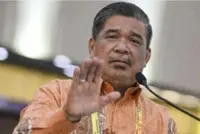
Appreciating a notable Malaysian achievement


Signs of war: Cambodian soldiers reloading a rocket launcher on July 24, when hostilities between that country and Thailand escalated. There has been a ceasefire in place since last Monday, thanks in large part to Malaysia’s diplomatic efforts. — AFP

SOMETIMES we only appreciate our own country’s achievements through the eyes of outsiders.

I lived in Bangkok for more than three years in the late 2000s. I am also in contact with top journalists in Asean thanks to my association with the Asia News Network, of which The Star is a founding member.

Several of these people, including those in Thailand and Cambodia, texted me to express their appreciation after Malaysia successfully brokered a ceasefire between Thailand and Cambodia last Monday.

Not in so many words they said that the regional leadership of Prime Minister Datuk Seri Anwar Ibrahim, who heads Malaysia as Asean Chair this year, offered a “face-saving” solution to the border conflict between Bangkok and Phnom Penh that was threatening to escalate into a full-blown war.

Seasoned Asean watcher Kavi Chongkittavorn messaged me on Thursday to say that credit was due to PMX (as Anwar is known, as he is Malaysia’s 10th PM) for the ceasefire meeting.

I’ve known Kavi since 2006, and he is the expert on Asean; he’s regaled me with many a tale over the years, such as how Sri Lanka was invited to be an Asean founding member back in 1967 but declined, and has also explained many of the regional bloc’s intricacies over the years.

I asked him why credit was due to Anwar and what he thought was the Prime Minister’s role was in brokering the pause in hostilities.

Kavi explained that Anwar brought together all the key players necessary to host the ceasefire talks, including the United States and China as witnesses.

“He knows the composition of a great optic,” said the senior fellow at the Institute of Security and International Studies, Chulalongkorn University.

“He has good chemistry with the Asean leaders. He is an astute Asean hand. He knows how to frame regional politics within broader geopolitics, especially the US and China competition.”

According to Kavi, Anwar’s charm offensive worked as US President Donald Trump “rewarded” Malaysia by confirming his participation in the 47th Asean-related summit nearly three months in advance.

“Never happened before. Normally, the Chair has to wait until the last minute for the US, and it often came with downgraded representations,” he said.

A Cambodian journalist also praised Anwar’s role: “Our Prime Minister, Hun Manet, has expressed gratitude and respect for Malaysia’s leadership and Anwar’s proactive diplomacy in facilitating the ceasefire,” said the reporter, who did not want to be identified as he did not want to be seen as speaking on behalf of his government.

“This shows a continued trust in Malaysia as a neutral venue for the ongoing peace process.”

Journalists from other Asean countries also acknowledged the effect the US and China had in resolving the conflict. They said that Trump played a significant role by pressuring both Thailand and Cambodia to agree to a ceasefire. Trump threatened to halt tariff discussions with both countries if the conflict continued, it seems.

They also said that China played a “constructive role”, and that it had been useful to have Chinese and American ambassadors attending the meeting in Putrajaya last Monday as observers.

These journalists pointed out that the ceasefire was a multi- faceted diplomatic effort, not just the result of one country’s leadership.

Some of my regional media friends asked me whether Anwar should be nominated for the Nobel Peace Prize. Interestingly, days after Anwar became Prime Minister on Nov 24, 2022, I was at a forum in Bangkok and the audience asked me what kind of prime minister Anwar would be.

“He will want to mediate peace in southern Thailand and the southern Philippines. If he is successful in either one, he is set for a Nobel Peace Prize,” I said, and the audience applauded.

Looks like I got it slightly wrong, it is not southern Thailand or southern Philippines, but perhaps the Thailand and Cambodia conflict.

“For Anwar to get the Nobel Peace Prize, he is competing with Trump, who has also claimed credit for brokering the ceasefire. And between Anwar and Trump, you know who will win,” an Indonesian journalist joked with me.

A South China Morning Post article on Friday reported that “Trump has long launched a campaign for a Nobel, with White House Press Secretary Karoline Leavitt saying it was ‘well past time’ that he received the accolade, citing his role in solving conflicts between Israel and Iran, Rwanda and the Democratic Republic of Congo, India and Pakistan, Serbia and Kosovo, and Egypt and Ethiopia.

“But in that time, the US has also bombed Iran, failed in Trump’s stated aim of ending the Ukraine war, and fuelled Israel’s destruction of Gaza with billions of dollars of weapons while offering a diplomatic shield against accusations of a Palestinian genocide,” the article pointed out.

Nobel Peace Prize or not, it is good that my Asean peers are acknowledging Malaysia’s role in efforts to maintain regional peace.

Get 20% OFF The Star Digital Access

Monthly Plan

RM 13.90/month

RM 11.12/month

Billed as RM 11.12 for the 1st month, RM 13.90 thereafter.

Best Value

Annual Plan

RM 12.33/month

RM 9.87/month

Billed as RM 118.40 for the 1st year, RM 148 thereafter.

Follow us on our official WhatsApp channel for breaking news alerts and key updates!

Next In Columnists

Make Penang AI plan a bridge for majority
Giants fall, England survive – World Cup quarter-finals take shape
Who shapes global AI rules: Asean-China cooperation role
Why the Johor election is good for Malaysian democracy
Confessions of a durian season sinner
Looming threat to social security
More predictable than the World Cup
America at 250
Coexistence with wildlife key for public safety
Jitters all round in Johor

Others Also Read