That strange, unpredictable thing called ‘voting trends’


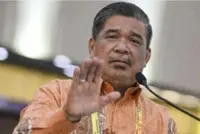
Hard to predict: Voters can go against trends and vote for the candidate that pollsters deem likely to lose. — Filepic/The Star

Everything from the price of chicken to an unruly artist could affect the mood of voters.

HERE’S why pollsters sometimes get their election results forecasts wrong.

Not that they are often wrongfooted (unless it’s those unreliable survey firms affiliated with politicians or political parties). At the given time, they make a prediction and get it right.

But politics is fluid.

The voting trends that the pollsters develop from on-the-ground polling is usually spot on (I favour this approach over those pollsters who do it by phone). Spot on in that given time. However, trends change, especially after nomination day.

Here’s an example.

According to data for the Tuaran seat months before the 15th General Election (GE15) in November last year, Upko’s MP Datuk Seri Wilfred Madius Tangau was forecasted to lose it. But during the final week of campaigning, I sensed a Red Wave – aka Pakatan Harapan – sweeping through semi-urban seats in Sabah.

Among the factors contributing to the Red Wave in my state were:

1) Pakatan chairman Datuk Seri Anwar Ibrahim’s campaign in Sabah was exciting, and fencesitters wanted to give him a chance to become prime minister.

2) The prospect of Barisan Nasional winning GE15 and, consequently, its chairman and Umno president Datuk Seri Dr Ahmad Zahid Hamidi becoming PM was turning off voters.

“There’s a Red Wave coming to Tuaran,” I told a political operative who was part of a Tuaran candidate’s inner circle.

True enough, it happened. Tangau retained his parliamentary seat with a 233 majority.

Let’s talk about the six state polls happening on Aug 12.

The conservative prediction from my pollster friends is that it will be status quo: 3-3. Perikatan Nasional will retain the three states it currently rules – Kelantan, Kedah, and Terengganu – while Pakatan Harapan/Barisan Nasional will keep the three states Pakatan holds – Negri Sembilan, Penang, and Selangor.

If there is an upset, it will depend on certain factors. Right now, the elements are unknown as voters have a mind (or mood) of their own. Little missteps by political coalitions or politicians can change their minds (or moods).

“PN [Perikatan] making inroads into the three PH [Pakatan] states?” a politician asked me in a political WhatsApp group I belong to.

“Selangor possible. But need a big Malay swing and low non-Malay turnout,” I replied.

A Malay swing and low non-Malay turnout are among the factors influencing the outcome.

Let’s take a Selangor seat with 60% Malay voters and 40% non-Malay voters. If 90% of the non-Malays and 30% of the Malay voters support Pakatan/Barisan, the unity government wins the seat.

But the outcome changes if non-Malay voters’ turnout is low and there’s a – tsunami-like – swing of Malay voters to Perikatan.

The other factor is the Undi18 voters.

My pollster friends tell me that these young voters are fickle. Who they voted for in GE15 might not be the same in the state polls.

Starting with nomination day yesterday until polling on Aug 12, the fickle voters will be bombarded with TikTok campaign videos and promises by politicians and political parties. Some will only decide at the last minute who they’ll vote for.

The turnout and swing will also be determined by the sentiment created by the two opposing sides: Pakatan/Barisan versus Perikatan.

On the surface, it looks like a vote for Pakatan/Barisan is a vote for multiracial Malaysia, and a vote for Perikatan is a vote for a conservative Malaysia. But a pollster friend warned that it might not be as simple as that.

“From the on-the-ground polling we’ve done, bread and butter issues are significant to voters,” he told me over coffee in Petaling Jaya.

“The voters are worried about the rising cost of living, the ringgit versus the US dollar, and job opportunities.”

From my observation, it is rather difficult for the Anwar government to use facts to counter the creeping feeling that life is getting expensive in 2023.

Cost of living – even though it is a factual issue – is viewed by many Malaysians through an emotional lens. They feel that their life is difficult as salaries remain stagnant while the price of chicken or rice increases. They won’t – or can’t – believe the government when it says the cost of these two items has stabilised.

If Pakatan/Barisan cannot put together the correct narrative to address the bread-and-butter issues, it might be in trouble. After all, it is always easier for the Opposition to attack the government than for the government to defend itself.

What is my prediction for the six state polls?

There might be other factors at play. For instance, non-Malays might get fed up that an “emperor” dropped popular incumbents in Penang and, therefore, not go out to vote. A gay kissing incident might happen and move the voters’ mood.

However, I will stick to 3-3, with the possibility of a Selangor upset. My prediction might be correct today, but things might change on Aug 12. So go easy on me if I get it wrong, OK?

Get 20% OFF The Star Digital Access

Monthly Plan

RM 13.90/month

RM 11.12/month

Billed as RM 11.12 for the 1st month, RM 13.90 thereafter.

Best Value

Annual Plan

RM 12.33/month

RM 9.87/month

Billed as RM 118.40 for the 1st year, RM 148 thereafter.

Follow us on our official WhatsApp channel for breaking news alerts and key updates!

Next In Columnists

Make Penang AI plan a bridge for majority
Giants fall, England survive – World Cup quarter-finals take shape
Who shapes global AI rules: Asean-China cooperation role
Why the Johor election is good for Malaysian democracy
Confessions of a durian season sinner
Looming threat to social security
More predictable than the World Cup
America at 250
Coexistence with wildlife key for public safety
Jitters all round in Johor

Others Also Read