Two young parties, two very different results


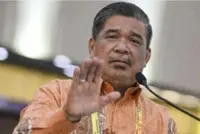
Young guns: MFP’s Limjaroenrat (left) and Muda’s Syed Saddiq represent a new generation of political leaders in their two nations, though they have had very different election experiences. — Bloomberg/The Star

YOU could say Thailand’s Move Forward Party (MFP) and Malaysia’s Parti Muda are “same same, but different”, as the Tinglish (Thai-English) phrase goes.

MFP, headed by Pita Limjaroenrat who is gunning to be prime minister, won the most seats in the May 14 general elections in Thailand. To be exact, MFP now has 151 MPs out of 500.

As the Tinglish phrase expresses, there are indeed similarities between Muda, led by Muar MP Syed Saddiq Syed Abdul Rahman, and the MFP.

Both parties are led by young and (arguably) handsome leaders. Pita is 42 years old and Syed Saddiq is 30. Muda and MFP are seen as parties representing the below 40 voters. They are also social media sensations.

(An aside: I met an MFP leader in Bangkok in November last year, and the first thing I said to him was, “You look like Syed Saddiq”. He was probably miffed and thought, “Syed Saddiq looks like me!”)

But there are differences.

In the numbers game that is politics, MFP won 151 seats in the Thai polls, while Muda only won one seat in Malaysia’s 15th General Election in November 2022.

Syed Saddiq registering Muda – in full, Malaysian United Democratic Alliance – at the Registrar of Societies in Putrajaya on Sept 17, 2020. — Filepic/The Star

Why such different political fates for two similar-seeming parties seen as representing Gen Z-ers and millennials?

On Friday, I had a meal with Federal Territory Muda leader Derek Eng and put the question to him.

Eng, who is Muda’s Wangsa Maju representative, told me that his team had discussed the success of MFP. While he admitted there are striking similarities between the two parties, he also said that, currently, Muda didn’t have the same level of momentum as MFP.

“The Move Forward Party benefits from strong funding primarily due to the presence of wealthy leaders within its ranks. These leaders possess significant personal wealth, allowing the party to have a robust financial foundation,” Eng told me.

“This financial strength provides the MFP with various advantages, including the ability to support its activities, run effective campaigns, and meet the organisational needs that arise during political campaigns and operations.”

In contrast, Eng said Muda didn’t possess the same strength of having wealthy leaders within its ranks. As a result, he argued that Muda faces challenges in terms of financial resources.

“This could potentially limit the party’s ability to carry out large-scale activities, reach a wider audience, or invest in extensive campaigns,” he said.

The Muda FT leader also said that the prevailing anger against the establishment in Thailand played a crucial role in garnering strong support for younger politicians. He believes this sentiment stems from various factors, including frustration with longstanding political dynamics, calls for reform, and a desire for fresh perspectives in governance.

Younger Thai politicians have emerged as a potential solution for those dissatisfied with the traditional political establishment.

“The anger against the establishment in Thailand has created a fertile ground for younger politicians to receive strong support. Their fresh perspectives, diverse backgrounds, and ability to connect through social media have allowed them to resonate with a disillusioned electorate seeking change and reform,” he said.

“How about the ‘third force’ mood for Muda in Malaysia?” I asked Eng.

“The readiness of Malaysians for a third political force is currently perceived as lacking, primarily due to the prevailing sentiment among voters who want to give PM [Datuk Seri] Anwar Ibrahim a chance to govern at least for this term,” he said.

Moreover, Eng explained that the voter base of Muda, often associated with the concept of a third force, primarily consists of supporters from the Pakatan Harapan coalition.

“Consequently, winning in a multicornered fight can prove challenging for Muda in the upcoming six states polls,” he said, referring to the elections set to take place in Kedah, Kelantan, Negri Sembilan, Penang, Selangor, and Terengganu next month.

During the run-up in April to the May elections in Thailand, I took a political tourism trip to Bangkok. I met Thai politicians and analysts to get an update on which parties were leading.

One of the Thai analysts who got it right was Sean Boonpracong. The Yingluck Shinawatra government advisor from 2011 to 2014 told me that Pheu Thai, the party of ousted prime ministers and siblings Thaksin and Yingluck Shinawatra, was losing its lead. Boonpracong had just visited the Isaan region in north-east Thailand, a Pheu Thai stronghold. He said the party was struggling there as it seems to have picked the wrong candidates.

True enough, the Shinawatra party lost seats that it should have won in Isaan.

I called Boonpracong on Friday to get his take on MFP’s upset victory in the elections. He texted it to me on WhatsApp as follows:

“1. MFP spread consistent messages among 40 million Thais via social media platforms Facebook, TikTok, and Twitter.

“2. They work the streets hard.

“3. They didn’t use old politics to buy votes.

“4. Pheu Thai got too lazy after its big early lead and didn’t work the streets as much.”

I asked him whether MFP had big money backing it – mysterious and influential powers-that-be, after all, are an open secret in Thai politics.

“No,” he said quite decidedly.

During my Bangkok visit in November 2022, I visited MFP headquarters to get an insight into the party’s election strategy. At that time, there was speculation that the military junta would dissolve Parliament as early as March 2023.

From my hour-long chat with two MFP leaders, Parit Wacharasindhu and Pannika Wanich, I got two important takeaways: big data and social media.

I covered Thai politics when I was based in Bangkok from 2006 to 2010 and so was familiar with the major players but the impression I got from my chat was that MFP was not your granny’s dinosaur party. Pheu Thai – a reincarnation of Thai Rak Thai, the most successful albeit short-lived political party in Thai political history – was in the process of becoming a dinosaur party, I felt.

Some analysts told me in April that Thaksin’s 36-year-old daughter Paetongtarn, who was one of the three Pheu Thai prime minister candidates, would be giving the MFP a run for its money in winning over young voters – but that turned out to be inaccurate.

So, going back to Muda – could it ever become Malaysia’s MFP and win enough seats to lay claim to the PM post?

Well, in my opinion no (or at least not yet) as Muda can’t even get a seat under Anwar’s unity government in six state elections.

Muda and MFP might be “same same”, but the big difference is that the Thai party went into elections on its own, whereas Muda had to plead with Pakatan for seats in Malaysia’s elections.

Perhaps Muda needs to think outside of the Pakatan umbrella before it can make a difference.

Get 20% OFF The Star Digital Access

Monthly Plan

RM 13.90/month

RM 11.12/month

Billed as RM 11.12 for the 1st month, RM 13.90 thereafter.

Best Value

Annual Plan

RM 12.33/month

RM 9.87/month

Billed as RM 118.40 for the 1st year, RM 148 thereafter.

Follow us on our official WhatsApp channel for breaking news alerts and key updates!
It's just politics , Philip Golingai ,

Next In Columnists

Make Penang AI plan a bridge for majority
Giants fall, England survive – World Cup quarter-finals take shape
Who shapes global AI rules: Asean-China cooperation role
Why the Johor election is good for Malaysian democracy
Confessions of a durian season sinner
Looming threat to social security
More predictable than the World Cup
America at 250
Coexistence with wildlife key for public safety
Jitters all round in Johor

Others Also Read