




BANGSAR is one of Kuala Lumpur's most recognisable addresses, a neighbourhood synonymous with rooftop bars, brunch spots and property prices that make your eyes water.
But long before the boutiques and the banana leaf restaurants moved in, the area was a rubber estate, and the name on every Malaysians lips today was coined by two men most Malaysians have never heard of.
Did two European planters really give Bangsar its name?
Verdict:

TRUE
In 1906, Malaya was still under British administration and the global rubber industry was booming. The modern motor car had arrived, and with it came an insatiable demand for pneumatic rubber tyres to replace the horse-drawn carriages still clopping through American and European cities.
That year, the London-based Kuala Lumpur Rubber Co. Ltd was incorporated on May 19 to plant rubber trees around Kuala Lumpur and ride the wave. Among its first board members were two Europeans who would inadvertently name one of KL's most famous neighbourhoods: Edouard Bunge, a Belgian, and Alfred Grisar, a Frenchman.
When the time came to name their new rubber estate, the two men did what any self-respecting European businessmen of the era would do. They merged their surnames. Bunge and Grisar became the Bunge-Grisar rubber estate.
The name may have sounded distinguished in the boardrooms of London, but in the heat and humidity of Malaya it proved a mouthful. Local workers, busy tapping rubber trees and presumably lacking the energy to pronounce the full double-barrelled European name after a long day, began to shorten it. Bunge-Grisar became Bungsar.
As the decades passed, the plantation gave way to urban development and the name was polished one more time. Bungsar became Bangsar, and a neighbourhood was born.
The estate itself sat at the crossroads between what is now Jalan Damansara and Jalan Maarof, and was owned by the plantation firm Societe Financiere des Caoutchoucs, better known as Socfin.
In its early days, the Bungsar Estate was considered a model estate that drew curious expatriates and colonials who wanted a taste of plantation life.
Socfin eventually began selling the land to private buyers, and in 1969 Bangsar Park became the first housing area to be developed in the neighbourhood. The rest, as every KL resident who has ever sat in traffic on Jalan Maarof knows, is history.
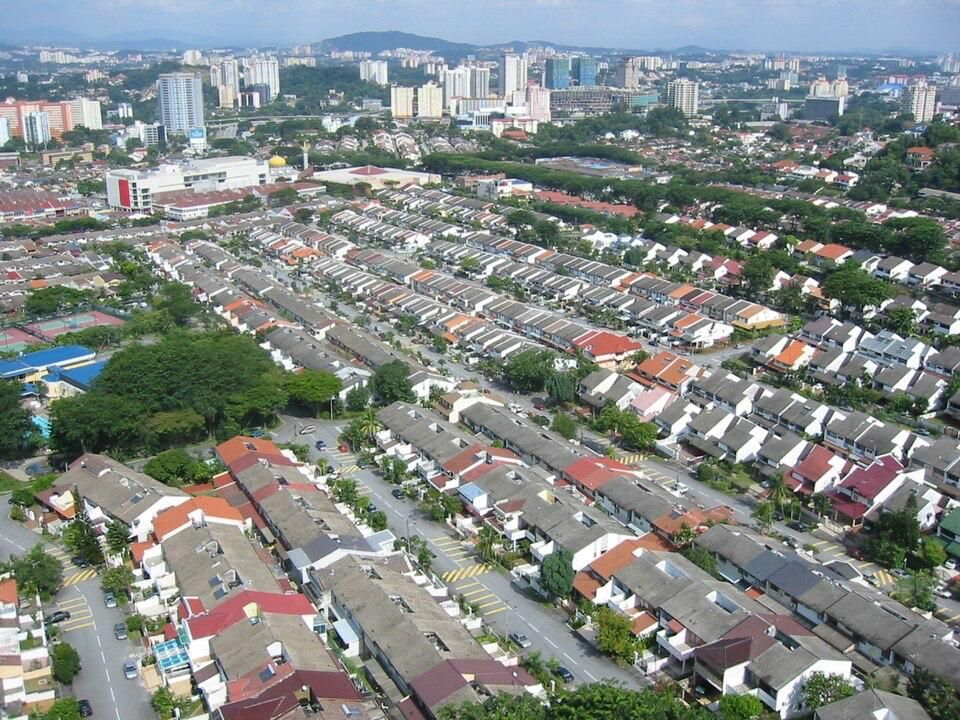
After independence in 1957, the rubber plantation era began giving way to residential development as Kuala Lumpur's population surged.
Socfin began selling off parcels of the estate land to private buyers and developers.
In 1969, Bangsar Park became the first area in the neighbourhood to be developed for housing, marking the beginning of Bangsar's transformation from plantation to suburb.
Five years later, in 1974, Eng Lian Enterprise Sdn Bhd developed Bangsar Baru, a neighbourhood of 1,125 houses and a thriving commercial area that would become the heart of modern Bangsar.
The shophouses along Jalan Telawi that now house the cafes, boutiques and restaurants the area is famous for trace their origins to this development.
The 1970s and 1980s saw Bangsar grow rapidly as a housing suburb catering to the wave of baby boomers settling in Kuala Lumpur, with its population eventually reaching around 40,000.
By the 1990s, the arrival of upscale boutiques, trendy cafes and fine dining restaurants had begun Bangsar's transformation into the cosmopolitan neighbourhood it is today.
The Kuala Lumpur Rubber Co. Ltd itself went through its own transformation.
It was re-incorporated as a Malaysian company in 1973 under the name Kuala Lumpur Kepong Berhad, or KLK, which today is one of the largest plantation companies in Malaysia with a land bank of more than 250,000 hectares across Malaysia and Indonesia.
There is an alternative academic theory worth noting.
A research project by six professors at Universiti Kebangsaan Malaysia, funded by the Tourism, Arts and Culture Ministry, found that "Bangsar" may refer to ethnicity in the Kerinchi dialect originating from Sumatra, and that the name was chosen to reflect the racial unity of the three communities, Malay, Chinese and Indian, who all played a role in the founding and growth of the township.
Both accounts carry weight, but the Bunge-Grisar origin is the more widely documented and commonly accepted explanation, supported by corporate records from KLK itself and a 2002 exhibition at Muzium Negara jointly organised by the Museums and Antiquities Department, the French Embassy and the Ecole Francaise d'Extreme-Orient.
Either way, the next time you are nursing an overpriced latte in Telawi and wondering how this neighbourhood got its name, the answer involves a Belgian, a Frenchman and a rubber estate that no longer exists. It sounds like the opening line of a joke, but it is how one of KL's most storied postcodes came to be.
Sources:
1. https://www.thestar.com.my/business/business-news/2025/07/07/unpacking-the-legacy-in-plantation-names
2. https://www.thestar.com.my/metro/metro-news/2023/11/06/developer-ordered-to-clean-up-bangsar-project-site
3. https://www.thestar.com.my/metro/metro-news/2018/07/19/bangsar-south-name-stays-but-kerinchi-heritage-to-be-highlighted
4. Kuala Lumpur Kepong Berhad Annual Report, 2005
5. French Memories in Malaysia exhibition, Muzium Negara, Department of Museums and Antiquities, the French Embassy and the Ecole Francaise d'Extreme-Orient, September 2002


