
CHIANG RAI: Four members of a Thai schoolboy football team have been rescued from the flooded cave where they had been trapped for over two weeks, a senior member of the rescue team said.
Earlier reports said six boys have safely been brought to the mouth of the cave.
Elite divers entered the Tham Luang cave at 10am local time yesterday to carry out the dangerous rescue mission to bring out the 12 boys and their coach, who had been trapped underground since June 23.
Officials had said the earliest time the first survivor could emerge was 9pm, but local media reported that the first boy was out at 5.37pm and a second boy came out at 5.50pm.
Bangkok-based journalist Florian Witulski tweeted that an Australian doctor who was in the cave with the boys decided to get the weakest boys out first as the conditions in the cave had been “the best in days”.
The boys and their coach would receive treatment at Chiang Rai Prachanukroh Hospital for at least 24 hours after they were rescued, Bangkok Post reported.
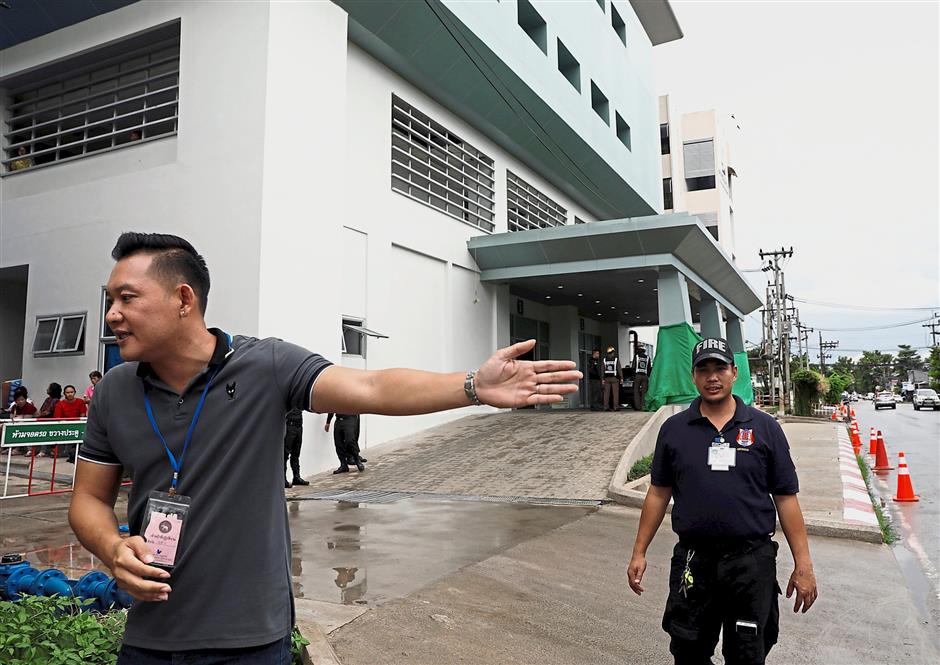
Their family members would not be allowed to visit them during the first 24 hours. Family visits would be allowed only after their medical check-ups were completed in 48 hours.
Dr Thongchai Lertwilairattanapong, an inspector general of the Public Health Ministry in charge of Chiang Rai, said the teenagers and the coach, once freed from the cave, could be discharged from hospital within five days.
Thirteen international and five Thai divers were racing against time to get the trapped footballers out through a treacherous network of narrow and submerged passageways, which claimed the life of a former Thai Navy Seal diver before the onset of heavy monsoon rains.
Light rain turned into intermittent downpours yesterday afternoon, threatening to undo days of round-the-clock drainage of floodwater from the cave.
Officials had earlier said that it would take at least 11 hours to bring a boy out of the complex cave network and that the operation to safely free all the boys will take two to three days to complete.
“The time duration is ... about two to three days, which depends on other factors like the weather,” Major General Chalongchai Chaiyakorn, an army commander, told reporters.
Narongsak Osottanakorn, a former provincial governor who was leading the rescue efforts, told reporters the rescue operation was “at peak readiness”.
“Everything is ready. The boys are ready and willing to come out. The doctors and medics are ready. The parents are ready.
“The divers will work with medics in the cave to assess the boys’ health before determining who will come out first.
“They cannot decide how many of them will be able to come out for the first operation. Based on the complexity of the cave environment, it is unknown how long it might take and how many children will exit the cave,” he said.
He added that the rescuers had carried out rehearsals on Saturday.
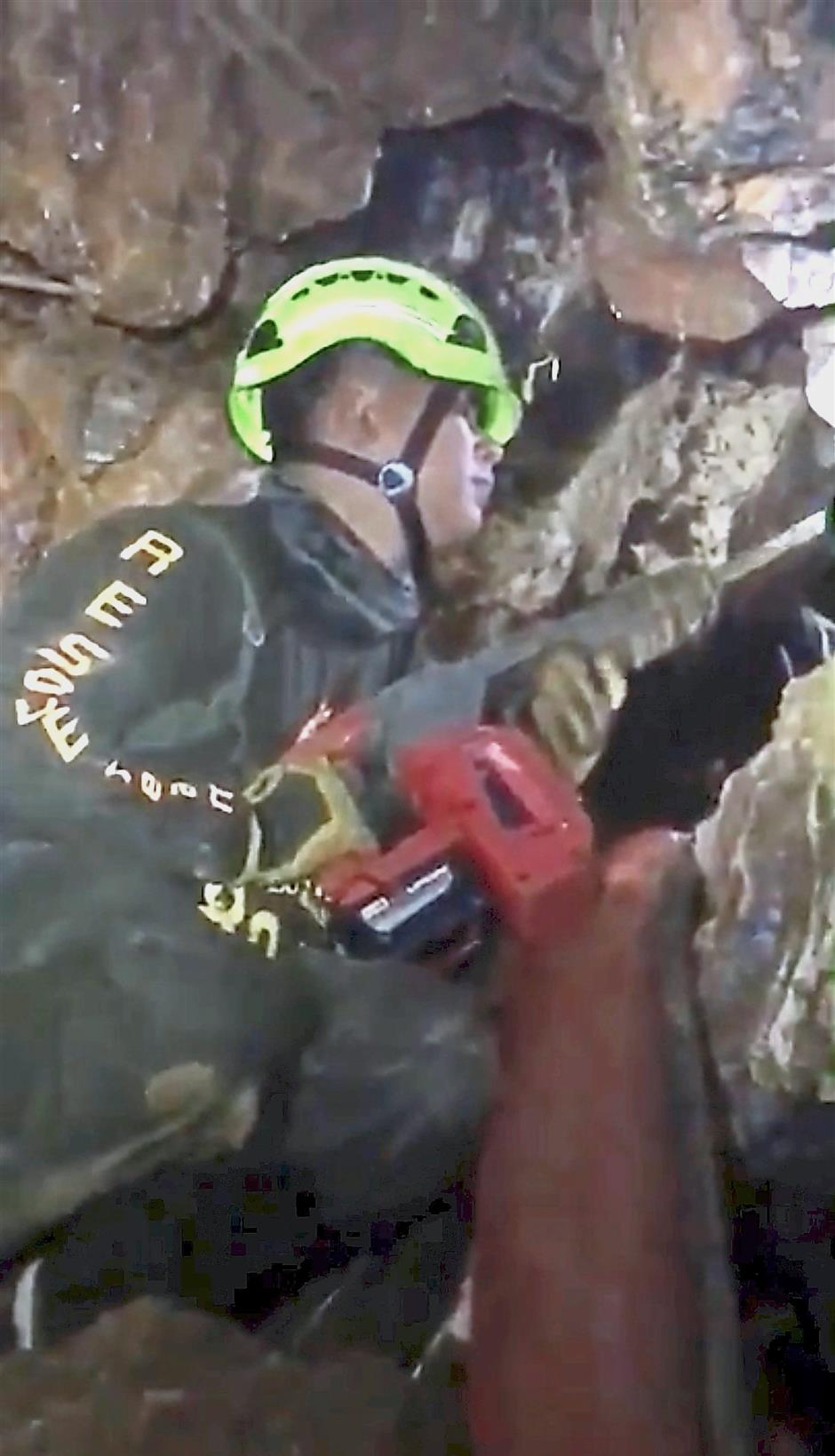
Thai officials and world experts had debated for days on the safest way to evacuate the boys.
The authorities appeared to have settled for the “swim and dive” option, which involves getting the boys to swim and dive through a complex network of narrow, muddy and submerged passageways inside the cave.
Maj Gen Chalongchai said: “Every plan must be practical. We chose the best option and rehearsed it. Once we were confident, we got started.”
Rescue alternatives included stocking the cave with supplies and an oxygen line to keep the boys alive in the cave for months until Thailand’s monsoon season ends, or drilling shafts down into the cave from the forest above.
Other alternatives, including drilling, had proven unsuccessful, officials said yesterday.
The boys, who are non-swimmers, were given a crash course on how to swim and dive while underground.
Fast-flowing torrents deterred even seasoned Navy Seal divers during the early days of the search and rescue operation last week.
Rescue officials said yesterday was the best day to attempt the 5km journey because water levels at many areas inside the cave were currently at their lowest in 10 days, rendering most of the escape route “walkable”.
The narrowest stretch required divers to remove their scuba gear in order to pass through.
“The biggest crisis spot for diving is on the left from the T-Junction,” said Narongsak in a briefing on July 2, referring to the tiny passageway near T-Junction, or Sam Yak in Thai.
“There is a tunnel that has a passageway going up and coming down narrowly and you have to turn a bit. It’s very small.”
After that though, the tunnels widened, the waters subsided and walking was possible, according to Thai authorities.
The rest of the 5km journey expected to be relatively safe, reported AFP.
A source told Bangkok Post the football team had been divided into four groups for the extraction: The first group had four people, while the second, third and fourth had three people each. Each boy would be escorted by two divers, who would help the boy carry his oxygen supply.
The boys had to do a mixture of walking, wading, climbing and diving in low visibility along guide ropes already put in place by rescuers.
The boys were given full-face diving masks, which are easier for novice divers compared to traditional respirators.
Medical teams were also ready to treat the group when they emerged from the cave.
There were 13 ambulances – one for each of the trapped footballers – parked near the cave entrance to take them to the Chiang Rai Prachanukroh Hospital located 60km away.
The journey would take around one hour.
Anyone in critical condition would be taken to a nearby airfield, where helicopters were on standby to transport them to the Wing Division 416 airbase in Chiang Rai city. From there, ambulances would take them to hospital.
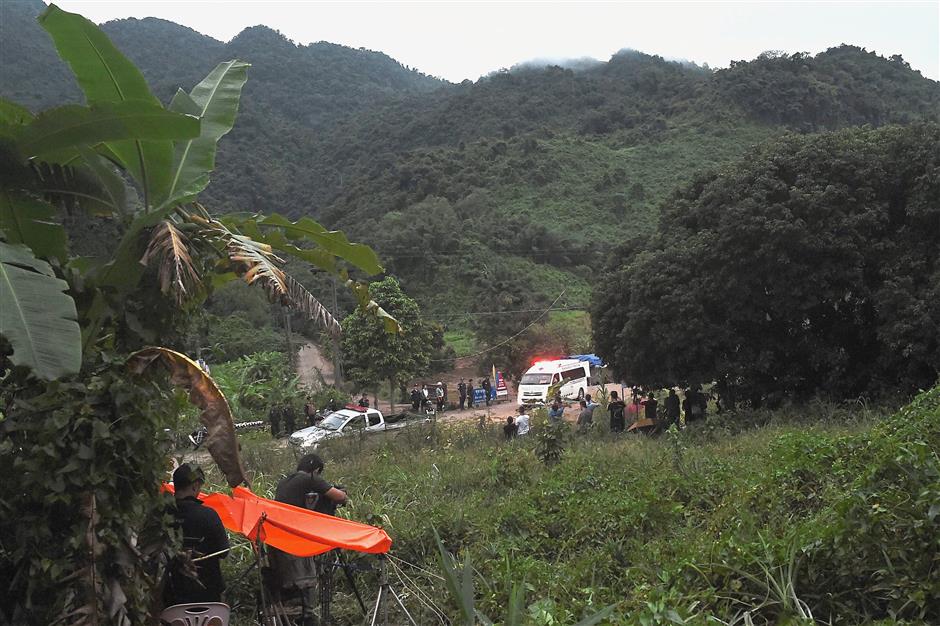
Earlier yesterday, the Thai authorities evacuated an area around the cave entrance to make way for the rescue operation.
“Assessing the situation now, it is necessary to evacuate the area for the rescue operation,” said Mae Sai police commander Komsan Saardluan over a loudspeaker.
“Those unrelated to the rescue operation, please evacuate the area immediately.”
A large media contingent began packing up equipment such as tripods and cameras, and moving down a muddy hill away from the mouth of the limestone cave.
Cave divers and experts feared that downpours expected in coming days would raise water levels in the Tham Luang Cave and reduce a dry ledge where the boys were seeking refuge to less than 10sq m. — The Straits Times/Asia News Network
Already a subscriber? Log in
Get 20% OFF The Star Digital Access
Cancel anytime. Ad-free. Unlimited access with perks.