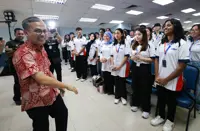
MELAKA: Thailand, Brunei and Cambodia want to move in tandem with Malaysia, Indonesia and Singapore in dealing with social media giants, says Datuk Seri Fahmi Fadzil (pic).
The Communications Minister said he met Indonesian Communication and Digital Affairs Minister Meutya Hafid and Singapore’s Digital Development and Information Minister Josephine Teo at Bali Tech Week last month, where they agreed on the need to work together.
“When we are together, we are stronger, especially in facing the giant social media platforms,” he told reporters after a ministry event at Multimedia University here yesterday.
Fahmi said a united regional approach would help, as the platforms had indicated they would consider the entire market.
“So if the entire or majority market in South-East Asia starts talking about the same things, then it’s easier for them to implement.”
Fahmi said they had also taken note of recent legal cases in New Mexico in the United States and Australia’s implementation of social media restrictions.
In March, a New Mexico jury ordered Meta to pay RM1.52bil (US$375mil) after finding that it had misled users about the safety of its platforms and endangered children.
In August, a judge ruled that Facebook and Instagram were a public nuisance in the state, ordering Meta to pay a further RM2.30bil (US$567mil) and tighten age checks for young users. Meta has said it will appeal.
Australia’s ban on children under 16 holding social media accounts took effect on Dec 10 last year, with platforms required to take reasonable steps to keep them off their services or face fines of up to RM137mil (A$49.5mil).
Fahmi said the Kuala Lumpur Declaration on Safe and Responsible Use of Social Media Platforms for Asean, adopted at the Asean Summit in October last year, had helped pave the way for these discussions.
“We can see the results now, through closer cooperation between the three countries,” he said.
On a separate matter, Fahmi said the misuse of social media accounts to spread false information and deepfakes was being detected more frequently ahead of the Melaka election.
“So we see that the misuse of social media accounts to spread false information, deepfakes or grossly offensive content is increasingly being detected, and this is rather worrying.”
Fahmi said a pattern had emerged in which content was posted by fake accounts that disappeared shortly afterwards.
He added that this was happening frequently and was not limited to the state election period.
He said the Malaysian Communications and Multimedia Commission (MCMC) relied on two mechanisms, active monitoring and reports from the public, to assess content being circulated during the campaign.
“MCMC does not interfere, but if there are any complaints from any party MCMC will take action.”