
KEPALA BATAS: At first glance, it could easily be mistaken for a mango, but its distinctive teardrop shape and pointed tip give away the fact that this golden-yellow fruit is something quite different.
Known as buah kuning telur, buah mentega or canistel (Pouteria campechiana), the unusual fruit has been drawing curious customers at a fruit stall in Pongsu Seribu, Penang.
Native to Central America, canistel is rarely found at local fruit stalls or supermarkets.
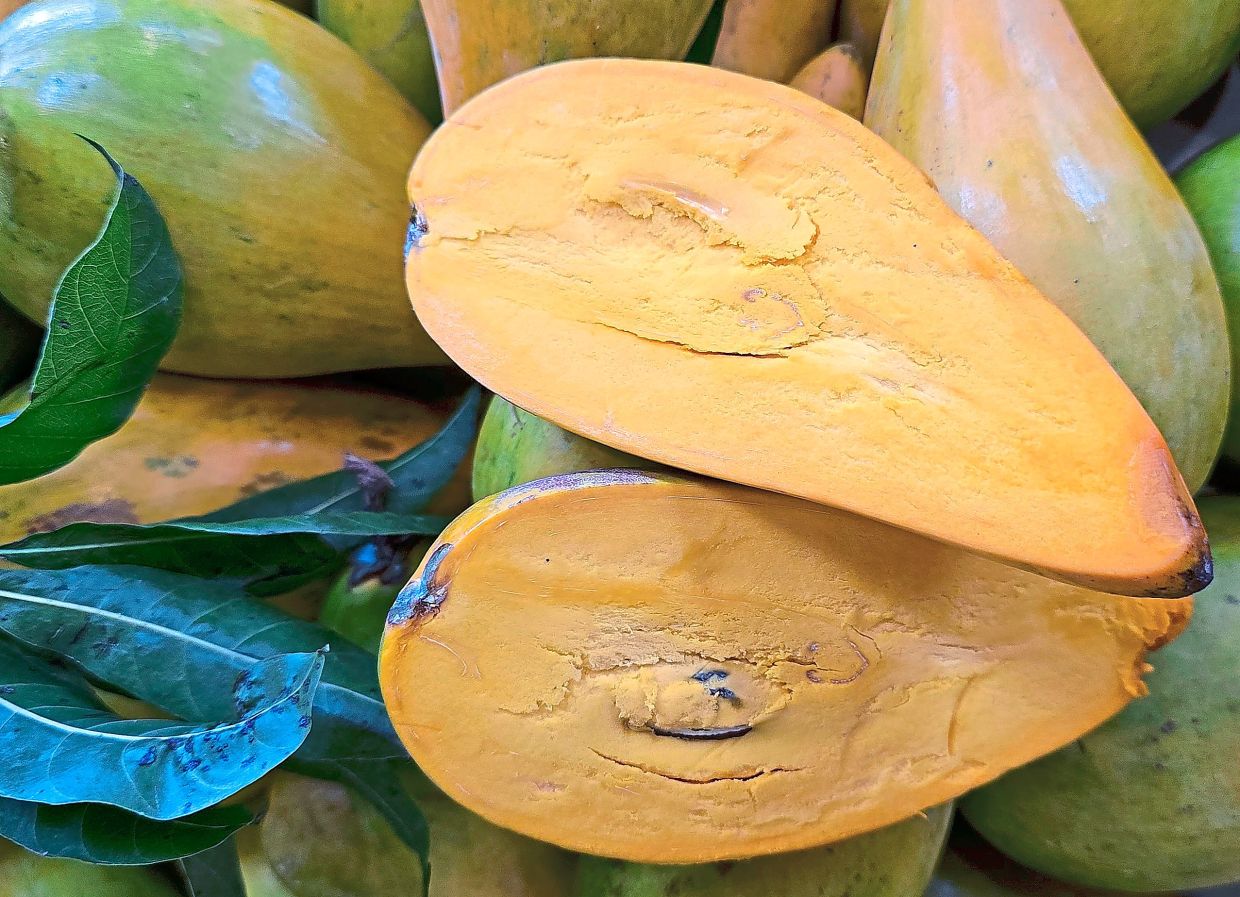
Unlike mangoes, it is not juicy. When fully ripe, its deep yellow flesh has a soft, dry texture resembling steamed pumpkin, with a rich, mellow sweetness.
It can be halved and eaten with a spoon, although those trying it for the first-time may find its texture unusual.
Fruit seller Muhammad Zulhilmiee Abdul Hamid, 38, said he obtained the fruits from a supplier who told him they were grown in Indonesia, where they were called “sawo mentega”.
“It goes by several names. Some call it buah kuning telur, while others know it as avocado cheese or canistel egg fruit.
“It is best eaten when fully ripe, when the flesh becomes soft,” he added.
Zulhilmiee said the fruit sells for RM15 per kg.
“More people have been stopping by to check it out,” he said.
Although unfamiliar to many Malaysians, canistel is not new to the country.
The Agriculture Department has recorded its cultivation at agricultural centres, including the Hulu Paka Agriculture Centre in Terengganu, where its plant inventory lists three trees under the species’ botanical name.
The fruit has also been cultivated in Sabah for years.