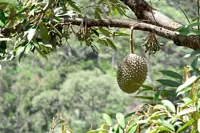
PETALING JAYA: Durian production for the coming season between December and February appears uncertain as the haze and changing weather conditions have affected flowering and fruit development, says Durian Manufacturers Association president Eric Chan Yee Hong.
He said some orchards had produced fewer flowers, although flowering could continue if weather conditions remained favourable, potentially supporting supplies in February and March.
“If there is not enough fruit to meet demand, there is little the industry can do,” he said in an interview.
Chan said hot and dry conditions associated with El Nino could be more manageable than prolonged wet weather, as farmers could use irrigation to regulate water supply.
ALSO READ : Uncertain season for farms
“If there is heavy rainfall, the flowers may not develop properly,” he said, adding that the industry was also concerned about fruit quality.
However, Chan said the industry was looking ahead to the June and July season, although its prospects would depend on how the trees responded to weather conditions in the coming months.
He said Johor appeared to have experienced difficulties with flowering in some areas, while Pahang and northern regions remained important durian-producing areas.
Beyond production, Chan said fruit quality problems could cause significant losses for manufacturers because defects, such as the seeds turning black, might only be discovered after a durian was opened.
“If we buy from a farm and discover a problem, we may choose not to buy from that farm again. But if a manufacturer has already bought the fruit, the loss falls on the manufacturer.”
Durian consultant Andrew Yeon said the transition between monsoon conditions and the possible onset of El Nino had brought unpredictable weather, with hot, sunny mornings followed by sudden afternoon thunderstorms.
He said some durian farms in Pahang had entered the flowering stage in the past two weeks, a critical period when sudden rainfall could interfere with pollination and reduce fruit setting.
Yeon said the current conditions could affect production in January 2027.