PETALING JAYA: More rainfall is expected until year-end before drier-than-usual conditions return early next year due to the El Nino phenomenon.
According to the Malaysian Meteorological Department (MetMalaysia), the country is currently at the tail end of the southwest monsoon and is expected to transition towards the intermonsoon period from this month.
It said there are also conducive conditions for the formation of storm clouds during the intermonsoon period.
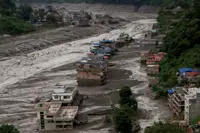
“This can result in heavy rains and strong winds for short periods during the evening and early parts of the night in most places.
“These conditions can potentially result in flash floods, uprooting trees and causing damage to unstable structures,” it said in its long-term weather outlook report up to February next year.
In the same report, MetMalaysia said the current El Nino is expected to further develop with a 90% chance of it being within the strong and extremely strong category up till January next year.
There is also a 69% chance that the El Nino’s intensity between October and December could be the strongest since 1950 when it was first documented in the country.
The phenomenon meanwhile is expected to last until March next year.
“Based on current forecast trends, dry conditions may ease due to factors such as wind directions.
“However, it is expected to return from January to February owing to the El Nino’s influence alongside the tail end of the northeast monsoon period which usually results in drier conditions across the north of the peninsula and Sabah,” said MetMalaysia.
There is an almost 100% chance of a Super El Nino forming by year-end.
“A strong El Nino is commonly associated with the haze as Malaysia has recently experienced and this condition is expected to last until the end of the month.
“Dry weather alongside extreme heat are expected to begin in January next year and potential last until May,” it said.
In its drought monitoring report, MetMalaysia said several locations have been identified to potentially receive a 35% drop in rainfall for a period of three to six months if drier-than-usual conditions continue to persist.
Parts of Sabah, it said, also have a high potential of experiencing drought due to an anticipated drop in rainfall between November and January next year.
“A prolonged dry spell will potentially stress the availability of water sources of impacted areas,” it added.