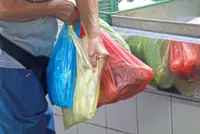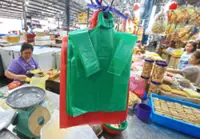
GEORGE TOWN: Penang is exploring biodegradable and bio-compostable alternatives to conventional plastic bags used by traders and hawkers, with a pilot project expected to begin by the end of the year.
The project will involve selected vendors at food courts, markets and wet markets at one location each on the mainland and island.
The alternatives can break down naturally more quickly than conventional plastic bags under suitable conditions, although the time taken varies according to the material and the environment.
Conventional plastic bags cost about RM5 per 100 pieces, while biodegradable alternatives cost about RM15 per 100, depending on their size and specifications.
Bio-compostable bags also vary in price according to their material, size and certification.
Penang Green Council chief executive officer Josephine Tan said prices were expected to fall as demand increased.
She said participating vendors would be able to trial different products and determine which ones best suited their operations.
After the pilot, procurement would be handled directly between businesses and suppliers, she added.
Tan encouraged businesses to choose alternatives with recognised Sirim eco-labels.
“It will be good if they have eco-labels, such as Sirim ECO 001 and ECO 098, so consumers can be assured that the products are biodegradable or bio-compostable.
“Our priority is for people to bring their own reusable items. But when single-use items are unavoidable, we encourage the use of the Sirim products,” she said.
Sirim ECO 001 covers bio-compostable plastics that break down into harmless material suitable for composting, while Sirim ECO 098 sets requirements for degradable plastics intended to reduce long-term microplastic pollution.
Penang environment committee chairman Datuk Seri S. Sundarajoo said the state was also sourcing an alternative that could replicate the characteristics of conventional plastic bags but contain no plastic.
“We understand people’s concerns. For now, we still need to use plastic bags to dispense drinks and food.
“We are sourcing material that looks, smells and feels like plastic, can perform like plastic, but is not plastic. Once we are ready and there is an economy of scale, making the alternative cheaper, then we will enforce its use by stall operators,” he said.
Sundarajoo said hawkers and market traders could continue using conventional plastic bags for now, as the state recognised that a sudden transition could be costly.
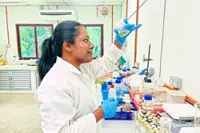
He said one of the alternatives being explored was made from coffee waste and could naturally decompose after being discarded.
Penang began enforcing its No Single-Use Plastic initiative on Sept 1, covering hypermarkets, supermarkets, department stores, convenience stores, fast-food outlets, petrol station convenience stores, chain stores, pharmacies and clinics.